Did you know that malware accounts for 20% of all security incidents?
And that’s just one threat! Your data, no matter how proactive you are from a security standpoint, is constantly vulnerable to a multitude of security threats, the list of which is constantly growing. From ransomware, worms and phishing attacks to human error, your data needs to have a multi-layer defense in place to not only prevent downtime but recover quickly in the event that disaster strikes.
The following are just a few staggering facts about just how vulnerable our systems are to attacks and outages:
• According to Microsoft, the potential cost of cyber-crime to the global community is a $500 billion, and a data breach will cost the average company about $3.8 million!1 • A whopping 1 in 131 emails contain malware2 • 230,000 new malware samples are produced every day, and that number is projected to continue growing3 • It will take the average business about 197 days to detect a breach on their network4
Entrepreneurs face the same cybersecurity challenges and threats that larger businesses face but with limited resources, capacity, and personnel. Cybersecurity is especially important for entrepreneurs because they have the unique opportunity to integrate cybersecurity practices at the onset of their investments and business development.
DID YOU KNOW?
Approximately 77 percent of small firms believe their company is safe from a cyber attack, even though 83 percent of those firms do not have a written security policy in place.
Unlike larger firms that can absorb the cost of a cyber attack, the consequences can be catastrophic for smaller ventures and entrepreneurs.
SIMPLE TIPS
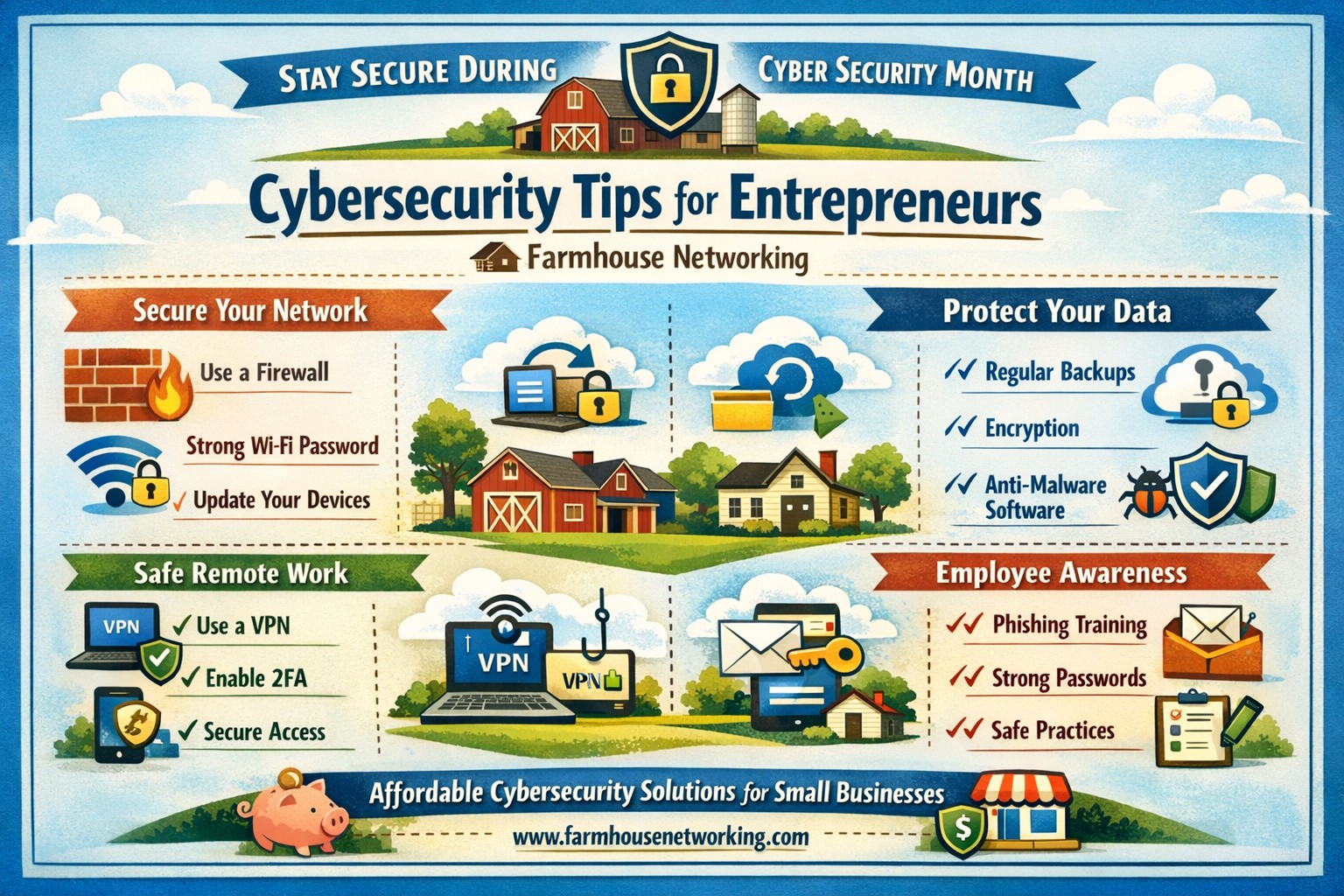
Use and regularly update anti-virus software and anti-spyware on all computers. Automate patch deployments to protect against vulnerabilities. (Our monthly maintenance takse care of this.)
Secure your Internet connection by using a firewall, password protecting your Wi-Fi network, and changing default passwords for your wireless network and router. (Most businesses who buy a router from a local office supply store don’t take the time to change the default password and don’t know these devices are rarely updated by vendors.)
Establish security policies and practices (e.g., using encryption technology) to protect sensitive data, including customer information and intellectual property.
Use strong passwords and change them regularly. (Minimum recommended password length is 10 characters with upper and lower letters, numbers and symbols. Changing passwords should be monthly or quarterly if possible.)
Protect all pages on your public-facing websites, not just the sign-up and checkout pages.
Invest in data loss prevention software and use encryption technology to protect data that is transmitted over the Internet.If your company is concerned about cybersecurity and wants to take the needed steps to protect yourselves, then contact us for assistance.
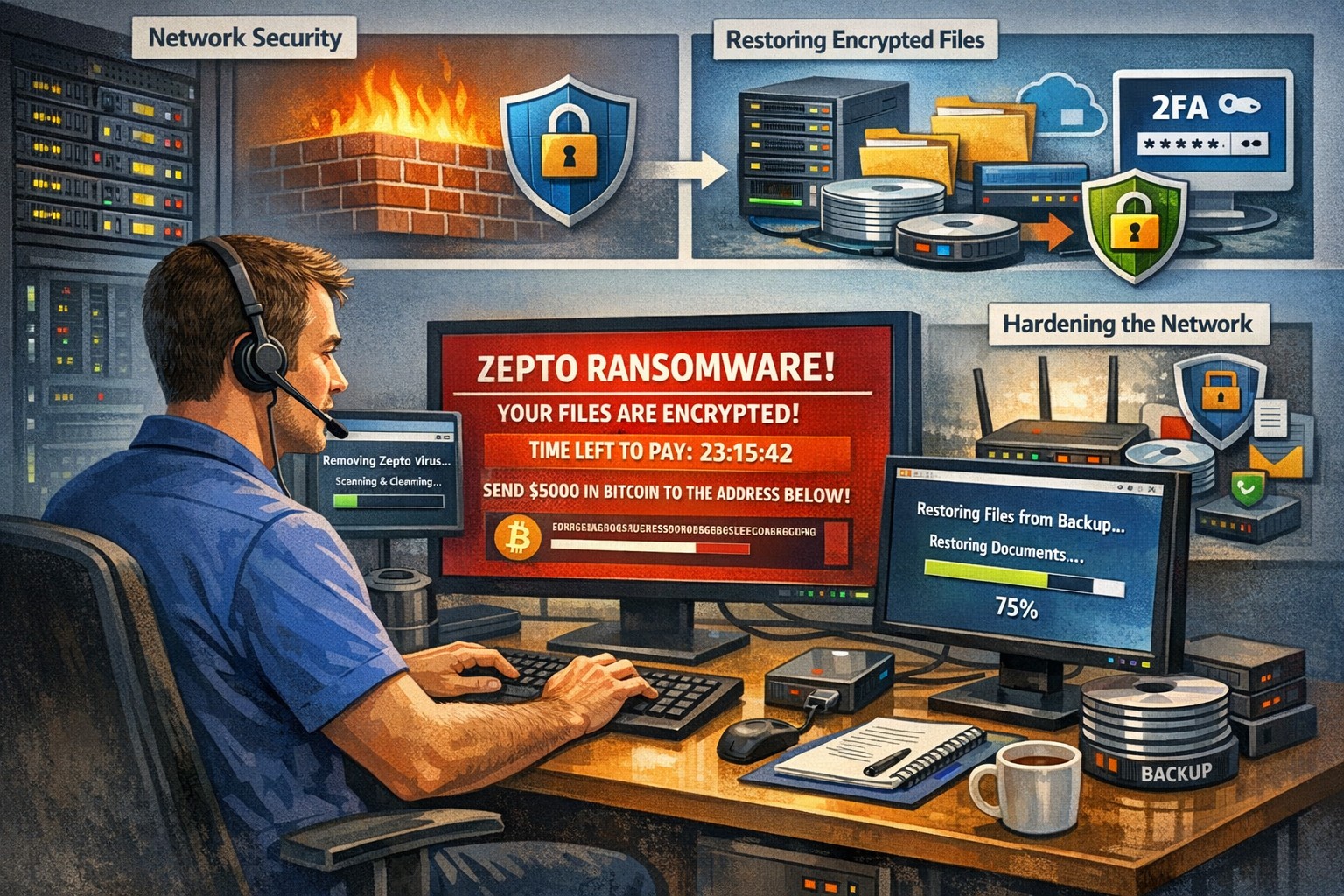
Recently had a client get infected by the Zepto variant of crypto malware without even knowing it. The call originated when they could not find some of the shortcuts they were used to seeing on the desktop. I began to search for the shortcuts and found some files with the .ZEPTO extension on them. A quick Google search found that this was indeed an infection of crypto malware but something was different about this one – there was no ransom note or instructions on where to send the money for the decryption key. After investigating the problem it seems that the user got an image file that they could not open and forgot about. They noticed some slow down of the computer the day that these files indicated that they were created but nothing else presented itself that day, so they dismissed it.
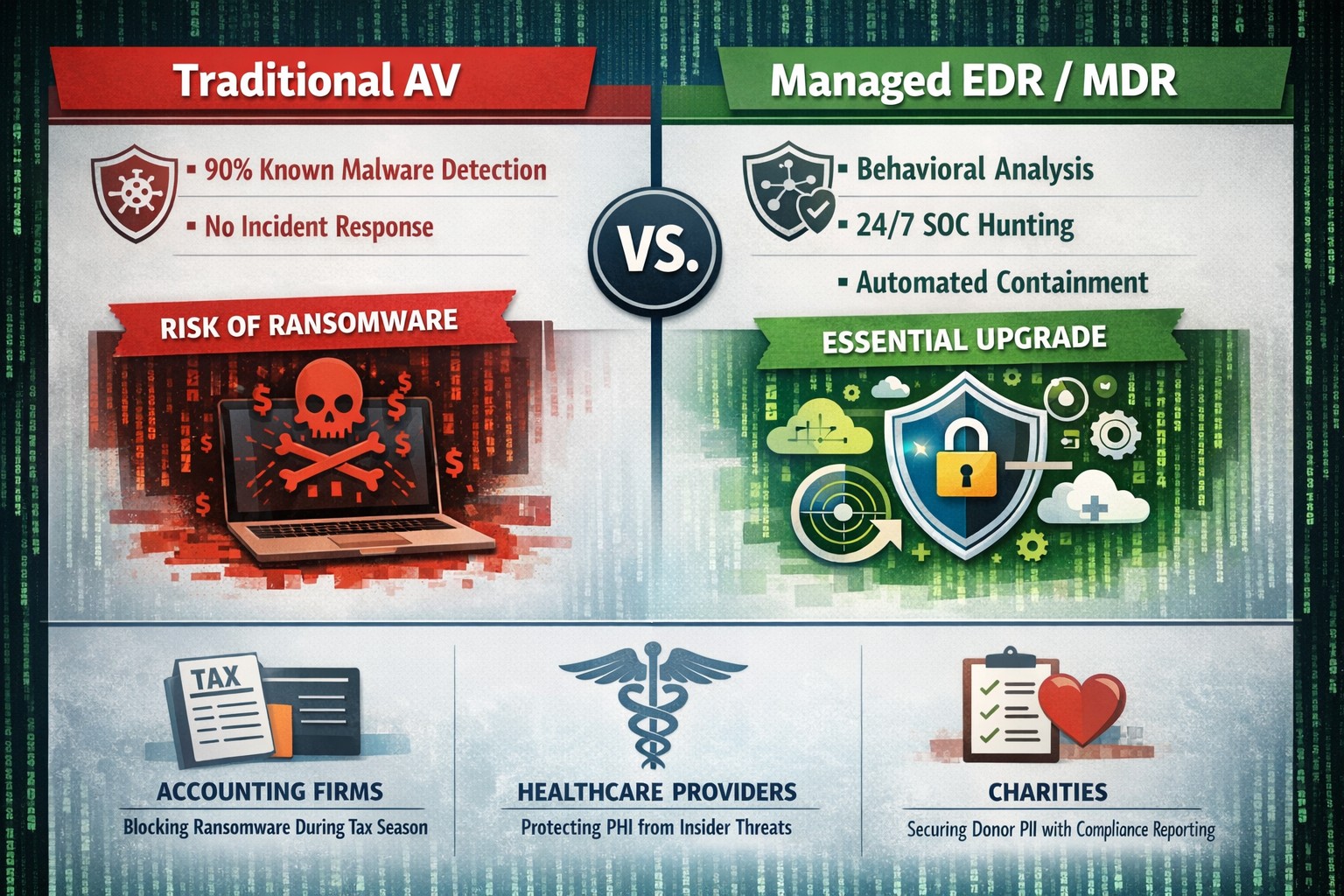
So here is breakdown of what actually happened. They were protected by Norton Antivirus and when the infection began to spread across the network (only a couple files were affected there) it removed the infection and left the damage done by Zepto encryption of some of the files in place with no notice to the user about what was done. The customer had a partial backup from a poorly designed backup scheme that was able to recover some of the files, which left them in a state of not knowing what was missing from their local file directories. Needless to say that I will be recommending a different antivirus and backup / recovery plan for them going forward.
If your company is not sure about whether your antivirus software is capable of handling this type of situation properly or are not sure about the status of your backup / recovery procedures, then contact us for assistance.
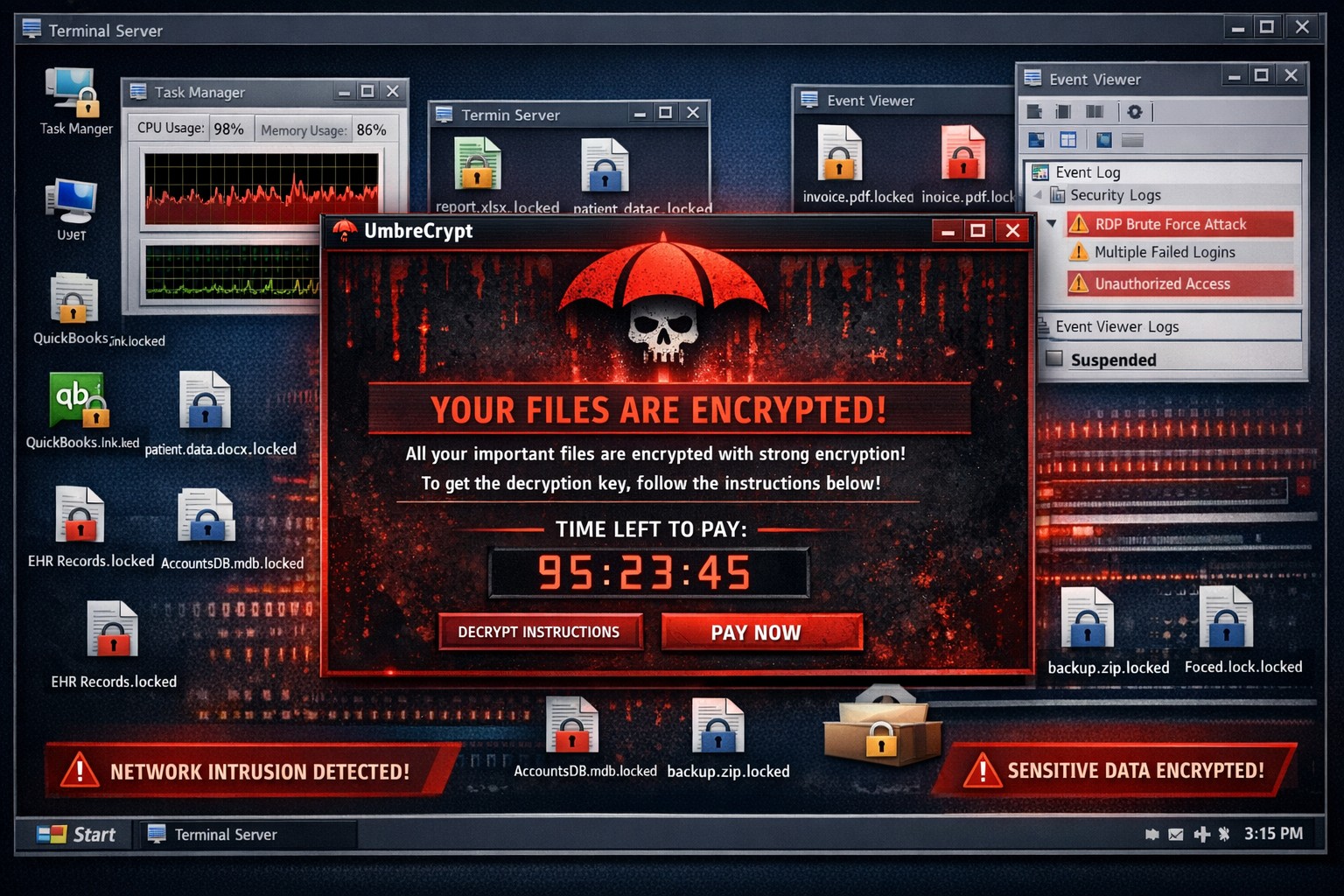
This one scares me to read about. A new variant of ransomware called UmbreCrypt RansomWare is out there that is getting into business networks via hacking of terminal servers. This is even more reason to use the best practice of connecting to a Virtual Private Network (VPN) before connecting to your company terminal server. Please take the time to read this article from BleepingComputer.com to find out the frightening details. Feel free to call or email us to discuss how to proactively protect your business computer network with managed antivirus and offsite backups. Schedule a full network security audit to determine just how vulnerable your systems are and to determine what can be done to mitigate the risks.
And God will generously provide all you need. Then you will always have everything you need and plenty left over to share with others. As the Scriptures say, “They share freely and give generously to the poor. Their good deeds will be remembered forever.” For God is the one who provides seed for the farmer and then bread to eat. In the same way, he will provide and increase your resources and then produce a great harvest of generosity in you. - 2 Corinthians 9:8-10
We use cookies to ensure that we give you the best experience on our website. If you continue to use this site we will assume that you are happy with it.