Use DNS Filtering to Stay Safe and Open for Business
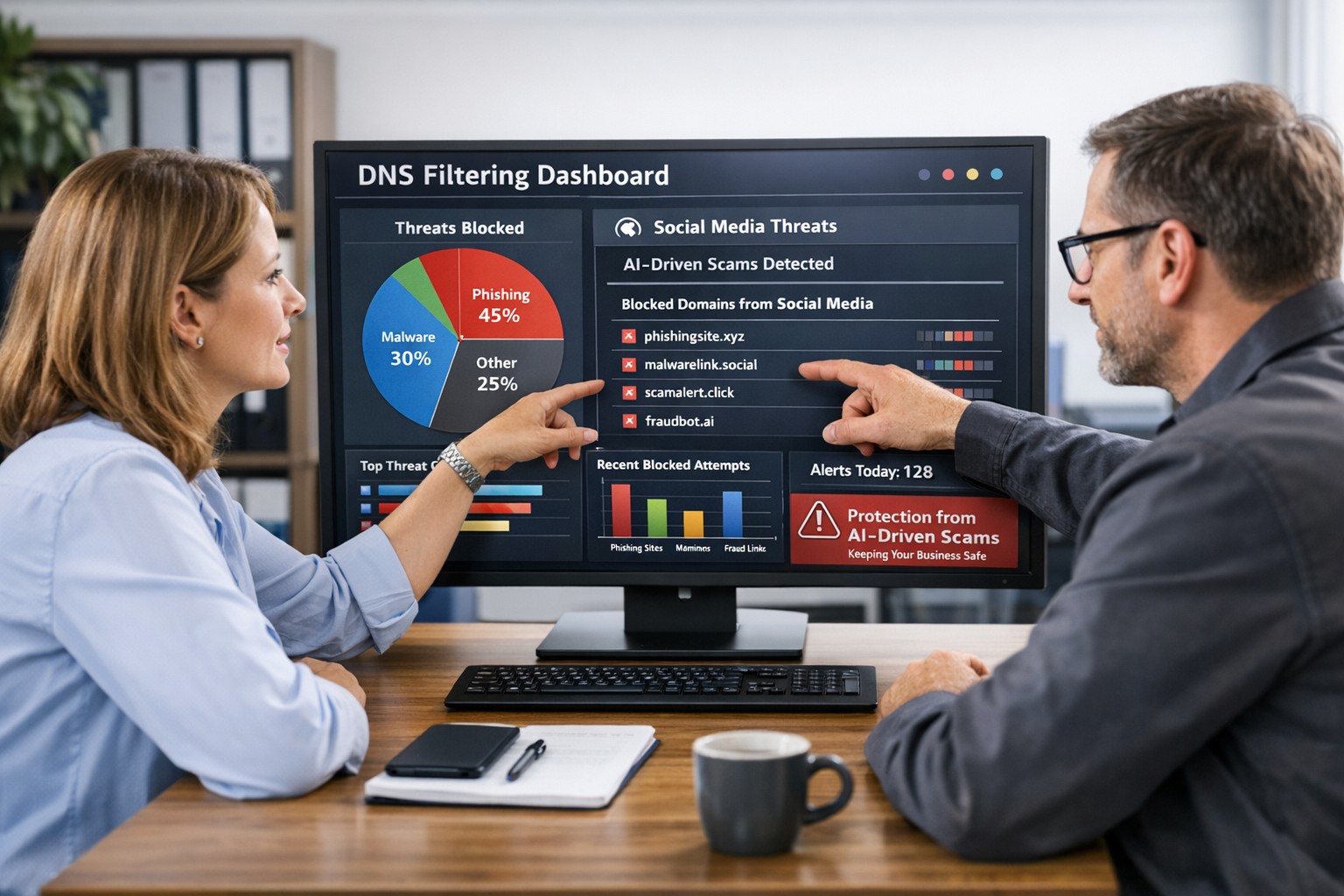
DNS filtering helps small business owners block AI powered social media scams before employees can reach malicious websites
AI tools now let scammers quickly generate deepfake videos, realistic ads, and convincing phishing messages that target small and mid‑sized businesses on social media. These attacks trick employees into clicking malicious links that steal logins, install ransomware, or divert payments, and incident rates and losses are climbing. DNS filtering offers your business a practical, affordable way to block dangerous sites at the network level before a bad click turns into downtime.
Why AI-Driven Social Media Threats Matter for SMBs
AI deepfakes and fake ads can impersonate your brand or suppliers and lead to look‑alike scam sites.
AI-enhanced phishing leverages details from your website and social media to sound like real customers, partners, or executives.
Web‑based phishing and spoofing attempts are rising sharply year over year, driven by generative AI.
What DNS Filtering Does for Your Business
DNS filtering checks where your employees’ devices are trying to connect and blocks known or suspected malicious domains. For SMBs, this:
Prevents access to phishing pages and fake login screens linked from social media or email.
Reduces malware and ransomware risk by blocking communication with malicious servers.
Gives you visibility into risky browsing and helps enforce acceptable‑use policies.
Action Steps for Business Owners and IT
Document where and how your team uses social media for sales, support, and marketing.
Roll out DNS filtering to office networks, remote workers, and any company‑managed laptops or phones.
Integrate DNS filtering logs with your security monitoring to quickly investigate suspicious activity.
Establish a clear process for verifying unusual requests (wire transfers, password resets, gift card purchases) received via social media or email.
Sample Customer Questions and Answers
“Is it safe to click promotions I see about your business on social media?” We recommend visiting our official website or verified profiles directly, because scammers can create fake ads that lead to malicious sites.
“How do you protect my data from online scams?” We use layered security including DNS filtering to block malicious websites, alongside secure payment providers and strong internal controls.
How Farmhouse Networking Helps SMBs
Farmhouse Networking works with you to understand your business, social media use, and risk tolerance, then designs and manages a DNS filtering solution that fits your size and budget. We deploy, configure, and monitor the service, fine‑tune policies over time, and provide clear reports so you always know how your network is being protected. This is included at no additional cost to all our monthly managed IT services clients.
Call to Action: Email support@farmhousenetworking.com for more information about how Farmhouse Networking can help improve your business and defend against AI‑driven social media threats.
Defend your business WiFi from becoming a hacker target with robust wireless security measures against common threats
Reliable and secure internet access is critical, especially for satellite offices relying on connectivity to central locations. Recently, one of our healthcare clients was nearly shut down by their ISP after the Recording Industry Association of America (RIAA) reported illegal music downloads traced to their IP address. The source? An open guest wireless network left unprotected.
How the Incident Unfolded
The ISP alerted the client via email, having received a complaint from the RIAA alleging that copyrighted music was illegally copied and distributed through BitTorrent on their network. Farmhouse Networking’s investigation pinpointed the activity: at 2 a.m., someone exploited the guest WiFi, which lacked any password protection, to download files illegally.
Had the ISP shut down the internet, this satellite healthcare office would have faced canceled appointments and redirected patients, impacting not only their reputation but costing thousands in lost revenue.
Key Wireless Network Security Lessons for Healthcare Providers
This incident highlights crucial vulnerabilities common in healthcare and other sectors:
Never leave guest WiFi networks open. Any unsecured network is an open invitation to unauthorized use and legal risks.
Use strong encryption and passwords on all wireless networks, including guest access, to block unauthorized connections.
Implement DNS filtering to prevent illicit peer-to-peer activity and block access to unauthorized sites.
Separate guest traffic from internal business-critical networks to safeguard sensitive data and operations.
Regularly audit network access points and update security settings, including changing default passwords on routers and regularly changing the wireless passwords.
Steps Farmhouse Networking Took to Protect the Client’s Wireless Network
Working closely with the healthcare office, Farmhouse Networking:
Secured their wireless network with strong WPA3 encryption and complex passwords.
Added DNS filtering to the guest wireless network to prevent peer-to-peer and similar applications.
Advised on ongoing monitoring and best security practices to safeguard against future misuse.
Emphasized the importance of network segmentation to protect sensitive healthcare data.
Why Wireless Network Security Matters in Healthcare
Beyond avoiding ISP shutdowns and illegal activity accusations, securing wireless networks in healthcare is essential for compliance with regulations like HIPAA, protecting Electronic Protected Health Information (ePHI), and maintaining patient trust.
Protect Your Business WiFi Today
Don’t risk your healthcare practice’s internet access, reputation, or compliance by allowing unsecured wireless access. Contact Farmhouse Networking to perform a comprehensive wireless network security assessment tailored to your industry’s unique needs. Secure your internet, protect your patients, and keep your practice running smoothly.
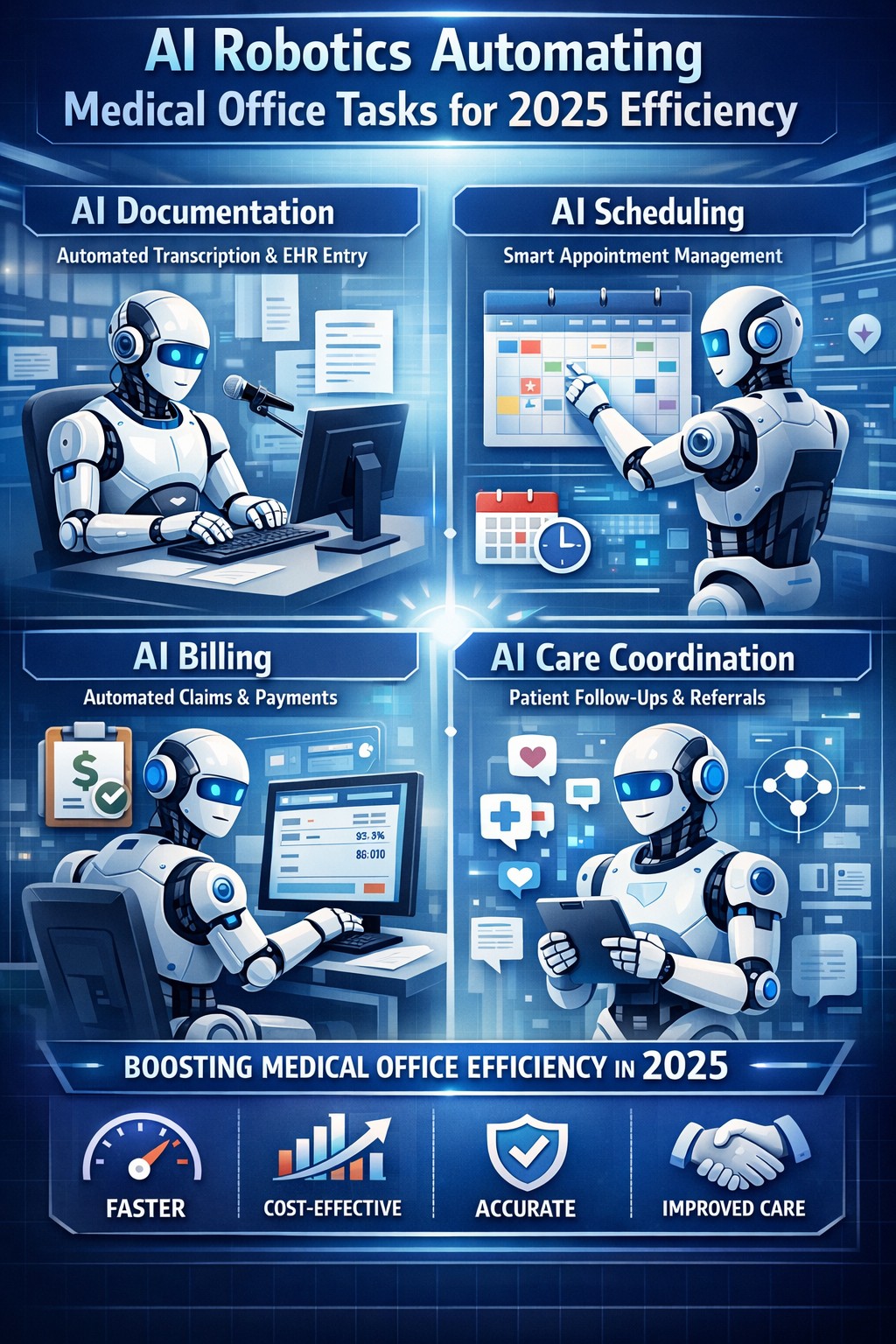
Future medical office automation using AI robotics for streamlined clinical workflows and patient care
The healthcare industry is undergoing a profound transformation, and nowhere is this more evident than in the adoption of robotics and automation within medical office workflows. For doctors and office managers, understanding these changes is crucial-not just for staying ahead of the curve, but for delivering better patient care and optimizing staff efficiency.
How Robotics and Automation Are Changing Medical Offices
Robotics and automation are no longer confined to hospital operating rooms or large healthcare systems. Today, these technologies are making a direct impact on the daily operations of medical offices, from the front desk to the back office.
Administrative Automation: Robotic Process Automation (RPA) is streamlining repetitive administrative tasks such as scheduling, patient intake, billing, and insurance verification. By automating these processes, offices reduce human error, speed up workflows, and free staff to focus on patient care.
Inventory and Supply Chain Management: Automated systems now track inventory levels, reorder supplies, and monitor usage in real time, ensuring critical items are always available and reducing the risk of shortages.
Laboratory and Diagnostic Automation: Automation accelerates sample analysis and integrates lab results with patient records, enabling faster clinical decisions and improved compliance.
Patient Engagement: Self-scheduling platforms, automated reminders, and chatbots are enhancing patient communication, reducing no-shows, and improving satisfaction.
Robotics Beyond the Operating Room
While surgical robots remain a hallmark of advanced healthcare, service robots are now taking on crucial roles in medical offices:
Logistics Robots: Devices like autonomous mobile robots transport supplies, medications, and lab specimens, optimizing internal logistics and freeing up staff time.
Cleaning and Disinfection: Robots equipped with ultraviolet light are being deployed to sanitize exam rooms and waiting areas, reducing infection risks for both patients and staff.
Therapeutic and Social Robots: In some practices, robots assist with patient mobility, rehabilitation, and even provide companionship for elderly patients, supporting both physical and emotional well-being.
Why Embrace Automation Now?
The benefits of robotics and automation for medical offices are clear:
Increased operational efficiency and reduced costs
Enhanced patient safety and reduced risk of infection
Improved staff satisfaction by minimizing burnout and repetitive tasks
Greater accuracy in data management and reporting
Preparing Your Medical Office for the Future
Adopting robotics and automation is not about replacing healthcare professionals-it’s about empowering your team to deliver higher-quality care while minimizing administrative burdens. Leveraging these technologies is becoming essential for practices that want to thrive.
Ready to Future-Proof Your Medical Office?
Farmhouse Networking specializes in helping medical offices implement the latest in automation. Contact us today to discover how we can streamline your workflows, reduce costs, and enhance patient care-so your team can focus on what matters most.
How Small Manufacturers Can Benefit from Smart Technologies
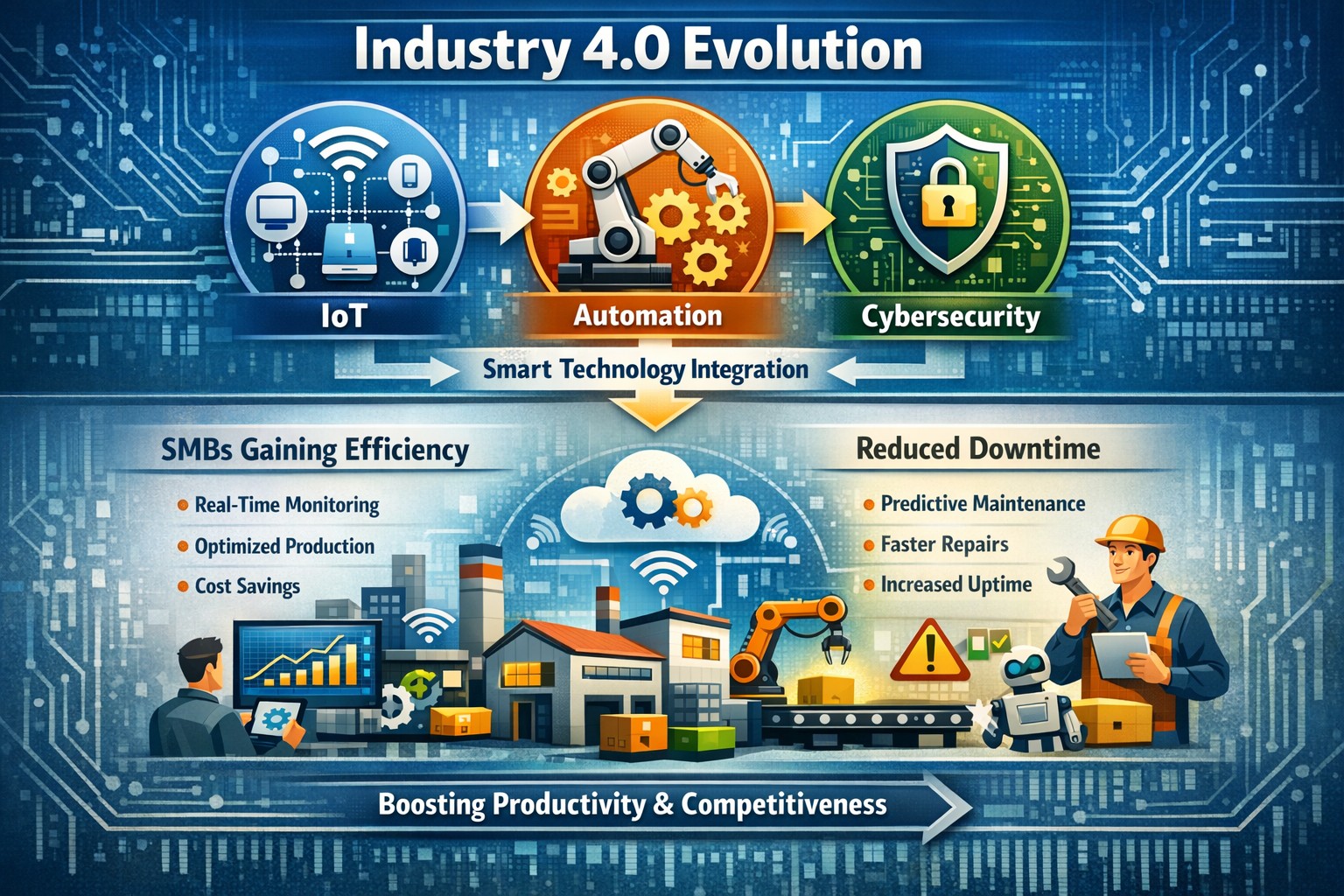
Infographic: Key Industry 4.0 pillars like IoT, AI driving SMB productivity and cost reductions.
Industry 4.0 is at the heart of the rapid transformation of the manufacturing industry. While the term may conjure images of massive, high-tech factories, smart manufacturing technologies are not just for industry giants. Small manufacturers are uniquely positioned to harness the power of Industry 4.0, unlocking new efficiencies, agility, and growth opportunities that were once out of reach.
What Is Industry 4.0?
Industry 4.0 refers to the integration of digital technologies-such as the Internet of Things (IoT), Artificial Intelligence (AI), machine learning, automation, and data analytics-into manufacturing processes. These technologies enable real-time data collection, smarter decision-making, and greater connectivity across the factory floor.
Key Benefits for Small Manufacturers
1. Improved Efficiency and Productivity Smart manufacturing automates repetitive tasks, streamlines workflows, and minimizes manual errors. With real-time monitoring and predictive maintenance, small manufacturers can reduce downtime and keep production running smoothly, leading to higher output and better resource utilization.
2. Cost Reduction and Resource Optimization By leveraging IoT sensors and AI-driven analytics, manufacturers can identify inefficiencies, reduce waste, and optimize energy usage. Predictive maintenance further cuts costs by preventing unexpected equipment failures and extending machinery lifespan.
3. Enhanced Agility and Flexibility Industry 4.0 technologies empower small manufacturers to quickly adapt to changing market demands. Digital tools like 3D printing and flexible automation make it easier to customize products and respond rapidly to customer needs, opening doors to new markets and revenue streams.
4. Superior Quality Control Advanced quality control systems and machine learning models help detect defects early in the production cycle. This minimizes waste, reduces rework, and ensures consistent product quality-strengthening your brand and customer satisfaction.
5. Data-Driven Decision Making With access to real-time data from connected devices, small manufacturers can make informed decisions faster. This visibility enables proactive adjustments, better supply chain management, and strategic planning for long-term growth.
6. Access to Innovation and Collaboration Industry 4.0 levels the playing field, allowing small businesses to adopt cutting-edge technologies and collaborate with partners, research institutions, and technology providers. This fosters innovation and keeps your business competitive in a rapidly changing marketplace.
Smart Technologies Driving the Change
IoT and Sensors: Enable real-time monitoring of equipment and processes.
AI and Machine Learning: Optimize production schedules, predict maintenance needs, and enhance quality control.
Automation and Robotics: Streamline repetitive tasks, reduce labor costs, and improve safety.
3D Printing (Additive Manufacturing): Allows for rapid prototyping and custom, small-batch production.
Augmented Reality (AR) and Digital Twins: Support worker training, remote assistance, and virtual testing of products or processes.
Overcoming Barriers: It’s More Accessible Than You Think
Many small manufacturers worry that Industry 4.0 is too complex or costly. However, the reality is that these technologies are increasingly affordable and scalable. Small steps-like adding IoT sensors or adopting cloud-based analytics-can deliver immediate benefits without the need for massive upfront investments.
“Don’t let the complexities of Industry 4.0 technologies hold you back. Small manufacturers are discovering the transformative power of smart technologies to stay competitive and revolutionize their processes.”
Ready to unlock the full potential of your manufacturing business? Contact Farmhouse Networking today to discover how we can help you embrace Industry 4.0 and achieve smarter, more efficient operations. Let’s build the future of manufacturing-together!
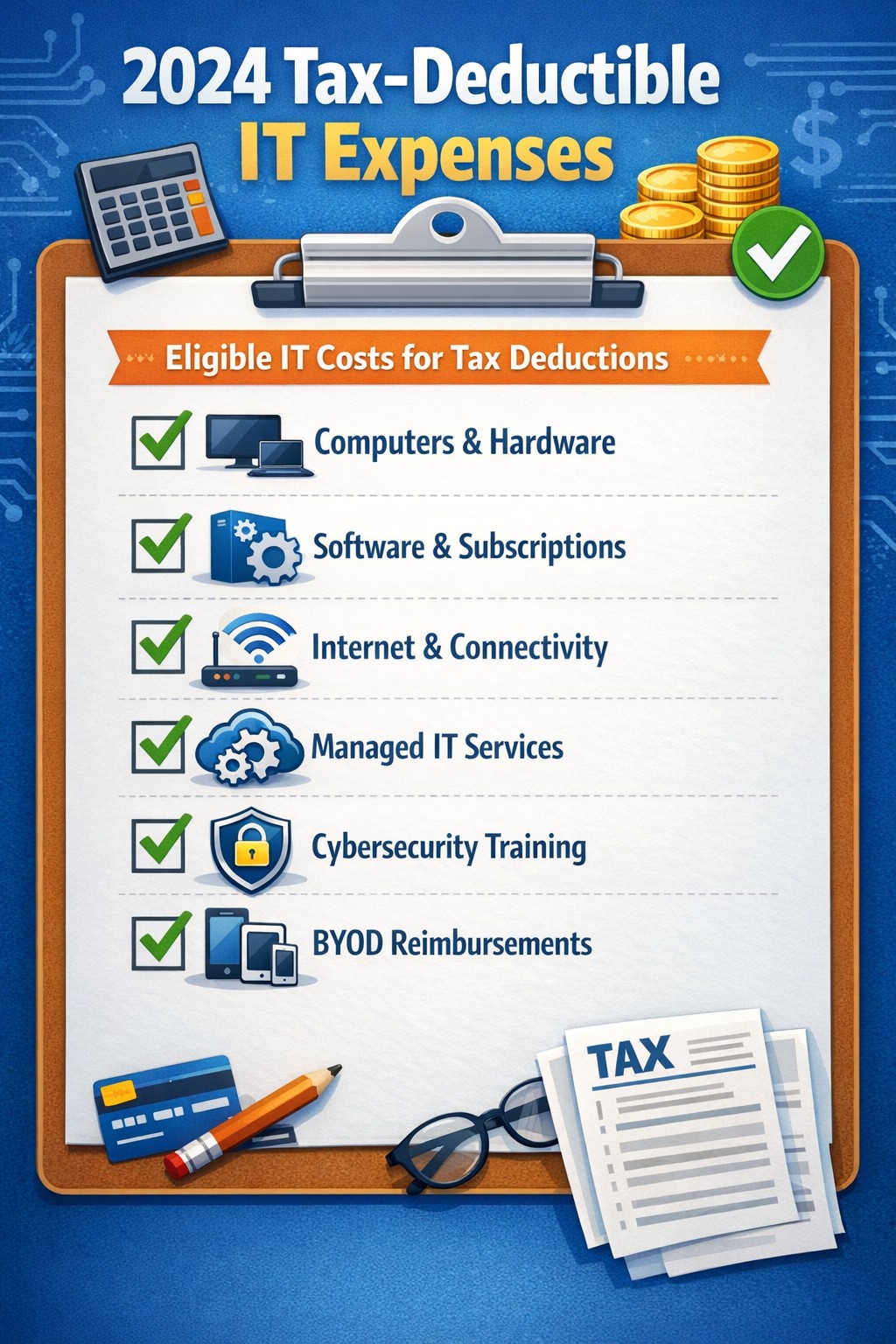
Claim Section 179, cloud subscriptions, cybersecurity as business tax deductions.
As we approach the end of the year, it’s crucial for businesses to understand the tax deductions available for their IT expenses. Maximizing these deductions can significantly reduce your tax burden and free up capital for further investment in your company’s technology infrastructure. Let’s explore the top tax-deductible IT expenses for 2024 that every business should be aware of.
Hardware and Equipment
Computers and Devices
Investing in new computers, tablets, or smartphones for your business can provide substantial tax benefits. The entire cost of these devices can be deducted from your taxable income. However, if the equipment is used partially for personal purposes, you may only be able to deduct a portion of the cost.
Office Equipment
Printers, scanners, and other office equipment are 100% tax-deductible in the year of purchase. This includes any IT-related furniture, such as ergonomic chairs or standing desks for your tech team.
Software and Services
Business Software
Software used for business purposes is eligible for tax deductions. This includes:
The deductible amount will depend on whether the software is purchased outright or subscribed to on a monthly basis.
Cloud Services
As more businesses move their operations to the cloud, it’s important to note that cloud service subscriptions are tax-deductible. This includes services like:
– Data storage – Backup solutions – Cloud-based productivity suites
Telecommunications
Internet Expenses
Internet services are crucial for most businesses today. You can deduct the full cost of your business internet connection[. If you work from home, you may be able to deduct a portion of your home internet expenses based on the percentage used for business purposes.
Phone Systems
All telecommunications fees within a commercial space can be deducted[1]. This includes:
– Business phone lines – VoIP systems – Cell phone contracts used for business
IT Services and Support
Managed IT Services
Fees paid for managed IT services, including network management, cybersecurity monitoring, and help desk support, are fully deductible as a business expense.
IT Consulting and Training
Any costs associated with IT consulting or training for your staff to use new technologies are tax-deductible. This can include workshops, online courses, or one-on-one training sessions.
Cybersecurity Measures
With the increasing importance of data protection, investments in cybersecurity are not only wise but also tax-deductible. This includes:
– Firewalls and antivirus software – Security audits – Employee cybersecurity training programs
Website Expenses
Development and Maintenance
Costs related to developing, hosting, and maintaining your business website are tax-deductible. This includes domain registration fees, hosting costs, and payments to web developers or designers.
E-commerce Solutions
If your business sells products online, the expenses for e-commerce platforms and payment processing systems are also deductible.
Home Office Technology
For those running businesses from home or with remote workers, the home office deduction can apply to technology expenses. You can deduct a portion of your home internet, personal computer use, and other tech equipment based on the percentage of your home used exclusively for business.
Ready to optimize your IT infrastructure while maximizing your tax benefits? Contact Farmhouse Networking today. Our expert team can help you implement cutting-edge IT solutions that not only boost your productivity but also provide substantial tax advantages. Don’t leave money on the table – let us help you navigate the complex world of IT expenses and tax deductions. Reach out now to schedule a consultation and start saving!
Enhanced DNS filtering protects networks from phishing, malware, and non-compliant content.
This is a quick note to all current and future customers, we have made a business decision to move from our old DNS filter / web filter software (called DNSFilter) to a new provider called DefensX.
Why Does This Even Matter?
We recently performed network inventory for all our Monthly Managed IT Services clients and found that many of them had an issue where the filtering software was in an error state and needed to be re-installed. This started our search for a more reliable partner. We found that DefensX provided all the needed functionality and gave our clients the added benefit of reports to see who is looking at what on the internet – something we think that business owners will find extremely valuable.
What Happens Now?
We are automatically removing the old software and deploying the new software to those who have already signed up for service. If you are Monthly Managed IT Services client and do not currently use our DNS filtering service, then reach out to get started at No Additional Cost!
This new service has many new categories to choose from as well, so if there are any sites being blocked or not blocked that you see in your new reports, then just let us know and we can quickly make those changes.
Don’t wait for a cyber attack to compromise your business. Take proactive steps to safeguard your network today! Contact Farmhouse Networking now to implement our advanced DNS filtering solution. Our experts will tailor a protection plan that fits your unique business needs.
Araknis delivers enterprise-grade performance and remote monitoring for business networks.
A reliable and robust network infrastructure is crucial for success. Araknis, a leading provider of networking solutions, offers a range of multi-gig VPN routers that are specifically designed to meet the diverse needs of modern businesses. Let’s explore why Araknis stands out as the top choice for business networks.
Unparalleled Performance
Araknis routers and switches are built to handle the demands of high-speed internet connections, supporting up to multi-gigabit 2.5Gbps throughput from your internet provider and up to 10Gbps throughout the network. This impressive capability ensures that your business network can handle large data transfers, video conferencing, and other bandwidth-intensive applications with ease.
Versatility and Flexibility
One of the key strengths of Araknis is its versatility. Whether you need a wireless solution, a wired setup, or a combination of both, Araknis has you covered. Their product line includes:
Wireless access points with built-in Wi-Fi 6 technology
Wired routers and switches for more traditional ethernet or modern fiber setups
PoE+ enabled ports to power all the phones, cameras, and other network devices
1U rack-mountable options for server rooms
This variety ensures that regardless of your business’s physical environment or networking requirements, there’s an Araknis network that fits perfectly.
Advanced Security Features
Araknis doesn’t compromise on protection. Their routers come with:
OpenVPN support: allowing for secure remote worker connections.
IPsec VPN support: allowing for secure office-to-office or office-to-cloud connection
Embedded firewall: Stateful Packet Inspection (SPI), Denial of Service (DoS) prevention, and WAN Request Blocking
VLAN routing: segment your network for added security
WiFi guest network: keep guest online and separated from business data
Cloud Management
Perhaps one of the most compelling reasons to choose Araknis is cloud management. This powerful management platform offers:
Faster setup and configuration
Robust remote management capabilities including printers and other network devices
Enhanced visibility and access to all network devices
Advanced troubleshooting tools
Real-time system health and diagnostic data
These features significantly reduce the need for on-site visits, saving time and resources while ensuring your network runs smoothly.
Future-Proof Investment
By choosing Araknis, businesses are making a future-proof investment. The routers, switches, and access points are designed to support the increasing internet speeds available today and are ready for the demands of tomorrow. This forward-thinking approach means your network infrastructure can grow and adapt as your business evolves.
Araknis routers offer a compelling combination of performance, versatility, security, and management capabilities that make them an excellent choice for business networks of all sizes. From small offices to medium enterprises, Araknis provides the reliable foundation needed to keep your business connected and productive.
Ready to elevate your business network with Araknis? Don’t wait to experience the difference. Contact Farmhouse Networking today to discuss how we can configure an Araknis-powered network tailored to your specific business needs. Let us help you build a network that drives your business forward.
CrowdStrike Falcon update triggers massive IT outage across cloud services
The recent CrowdStrike IT outage on July 19, 2024, caused by a defective update for Windows, serves as a stark reminder of the importance of managing IT infrastructure and proactive measures to prevent system downtime. While no system is entirely immune to outages, there are several strategies businesses can implement to minimize the risk and impact of such incidents.
Key Strategies to Prevent IT Outages
Improve Continuous Integration / Continuous Deployment (CI/CD) Practices: One of the most effective ways to prevent outages caused by software updates is to enhance CI/CD practices. This approach involves:
Automating the testing and deployment process
Implementing rigorous quality assurance checks
Using staging environments to test updates before full deployment
Gradually rolling out updates to detect issues early
By improving CI/CD practices, businesses can catch potential issues before they affect the entire network, reducing the likelihood of widespread outages.
Implement Comprehensive Load / Failure Testing: Regular load testing is crucial to ensure that systems can handle typical use cases and determine their potential in high use scenarios. A game plan should also be put in place for when systems fail to map out the road to recovery. This involves:
Simulating various levels of user activity
Identifying performance bottlenecks
Optimizing system architecture and configuration
Preparing for crisis scenarios, such as partial resource failures
Practice response to system failures before they become reality
Load / failure testing helps businesses understand their system’s limitations and address potential issues before they lead to outages.
Ensure Proper Scalability: As businesses grow, their IT infrastructure must be able to scale accordingly. This includes:
Designing systems with future growth in mind
Utilizing cloud technologies for flexible resource allocation
Regularly reviewing and updating system architecture
Implementing efficient systems that can handle increased business
Proper scalability ensures that systems can continue to function effectively as demand increases, reducing the risk of outages due to overload.
Enable Automatic Updates with Caution: While automatic updates can help keep systems secure and up-to-date, they should be implemented carefully. Best practices include:
Testing updates in a controlled environment before widespread deployment
Staggering updates across different system components
Having a rollback plan in case of issues
Monitoring systems closely after updates are applied
Automatic updates can help prevent security vulnerabilities, but they must be managed carefully to avoid introducing new issues.
Implement Comprehensive Monitoring: A robust monitoring system is essential for detecting and addressing potential issues before they escalate into outages. This includes:
Using a centralized monitoring platform for all IT infrastructure
Outsourcing it management is resources are not available
Setting up alerts for unusual system behavior or performance metrics
Implementing predictive analytics to identify potential issues early
Regularly reviewing and updating monitoring parameters
Comprehensive monitoring allows businesses to take a proactive approach to system management, reducing the risk of unexpected outages.
Conduct Regular Employee Training: Human error is a common cause of IT outages. Regular employee training can help mitigate this risk. Training should cover:
Best practices for system usage
Recognizing and reporting potential security threats
Proper procedures for applying updates and patches
Emergency response protocols in case of system issues
Well-trained employees are less likely to make mistakes that could lead to outages and are better equipped to respond effectively when issues do occur.
Don’t let IT outages disrupt your business. Take action now to protect your company’s technology infrastructure. Call Farmhouse Networking today at (541) 761-9549 to schedule a comprehensive IT assessment and learn how our expert team can implement strategies to prevent costly downtime. Secure your business’s future with proactive IT management.
Enhance business cybersecurity defenses using advanced website filtering from Farmhouse Networking.
Businesses are faced with an ever-growing number of cybersecurity threats. One effective method to protect your organization’s sensitive data and network is implementing website filtering. Website filtering solutions offer businesses an essential tool to manage and safeguard their networks, ensuring employees are protected from accessing malicious or inappropriate websites. We will explore the importance of website filtering for business cybersecurity and provide practical insights for implementation.
Understanding Website Filtering:
Website filtering is an advanced security measure that enables organizations to control the websites that can be accessed by their employees. This essential cybersecurity practice helps mitigate risks associated with malware, phishing attacks, and overall data breaches. Through the implementation of website filtering, businesses can proactively manage internet usage, reduce network congestion, and improve productivity.
Benefits of Website Filtering:
Enhanced Network Security: By filtering out potentially harmful websites, businesses can significantly reduce the risk of malware infiltration, phishing attempts, and other cyber threats. Website filtering acts as a vital line of defense, preventing employees from inadvertently accessing websites hosting malicious content and safeguarding sensitive corporate data.
Regulatory Compliance: As the healthcare industry is subject to strict compliance regulations, implementing website filtering can help organizations maintain adherence to industry-specific regulations such as HIPAA. By blocking access to unauthorized websites or content, businesses ensure they are aligning with compliance requirements, reducing the potential for fines or legal repercussions.
Increased Employee Productivity: Unrestricted internet access often leads to time-wasting activities, reducing overall productivity within the organization. With website filtering, businesses can minimize distractions by blocking access to social media platforms, gaming websites, or other non-work-related sites, fostering a more focused work environment.
Bandwidth Optimization: Streaming services and large media files can significantly impact network bandwidth, leading to slower connections and decreased productivity. Website filtering helps alleviate this strain by allowing organizations to control access to bandwidth-intensive websites or file-sharing platforms, optimizing network performance.
Choosing the Right Website Filtering Solution:
When selecting a website filtering solution, organizations should consider the following:
Granular Control: Look for a solution that offers granular control, allowing you to tailor website filtering policies to specific departments or individual users. This flexibility ensures that employees only have access to relevant websites and content necessary for their job roles.
Real-Time Updates: The cybersecurity landscape evolves rapidly, with new threats emerging constantly. Ensure your chosen website filtering solution offers AI powered real-time updates and threat intelligence to protect against the latest risks effectively.
User-Friendly Interface: Implementing a user-friendly website filtering solution simplifies management. Look for a solution with an intuitive interface that enables easy configuration and monitoring of website filtering policies.
Potential Challenges and Mitigation Strategies:
While website filtering can provide numerous benefits, there are potential challenges to consider:
False Positives: Overzealous website filtering policies can sometimes lead to legitimate websites being inaccurately blocked, causing frustration for employees. Regularly review and fine-tune filtering policies to minimize the risk of false positives, striking a balance between security and productivity.
BYOD (Bring Your Own Device) Environments: There is an increasing reliance on personal devices to access corporate networks. Ensure that your website filtering solution extends to cover such devices and effectively enforces security policies, mitigating the risk of potential threats from unsecured devices.
Ongoing Maintenance and Monitoring: Website filtering requires ongoing maintenance and monitoring to ensure optimal performance and adaptability to emerging threats. Assign dedicated IT staff or consider a managed service provider (MSP) like Farmhouse Networking to oversee the implementation, management, and updates of your website filtering solution.
Website filtering is a critical component of any business’s cybersecurity strategy, providing robust protection against web-based threats and enhancing network security. Farmhouse Networking provides website filtering service to all our monthly managed clients at no additional cost. Sign-up today to become cyber secure.
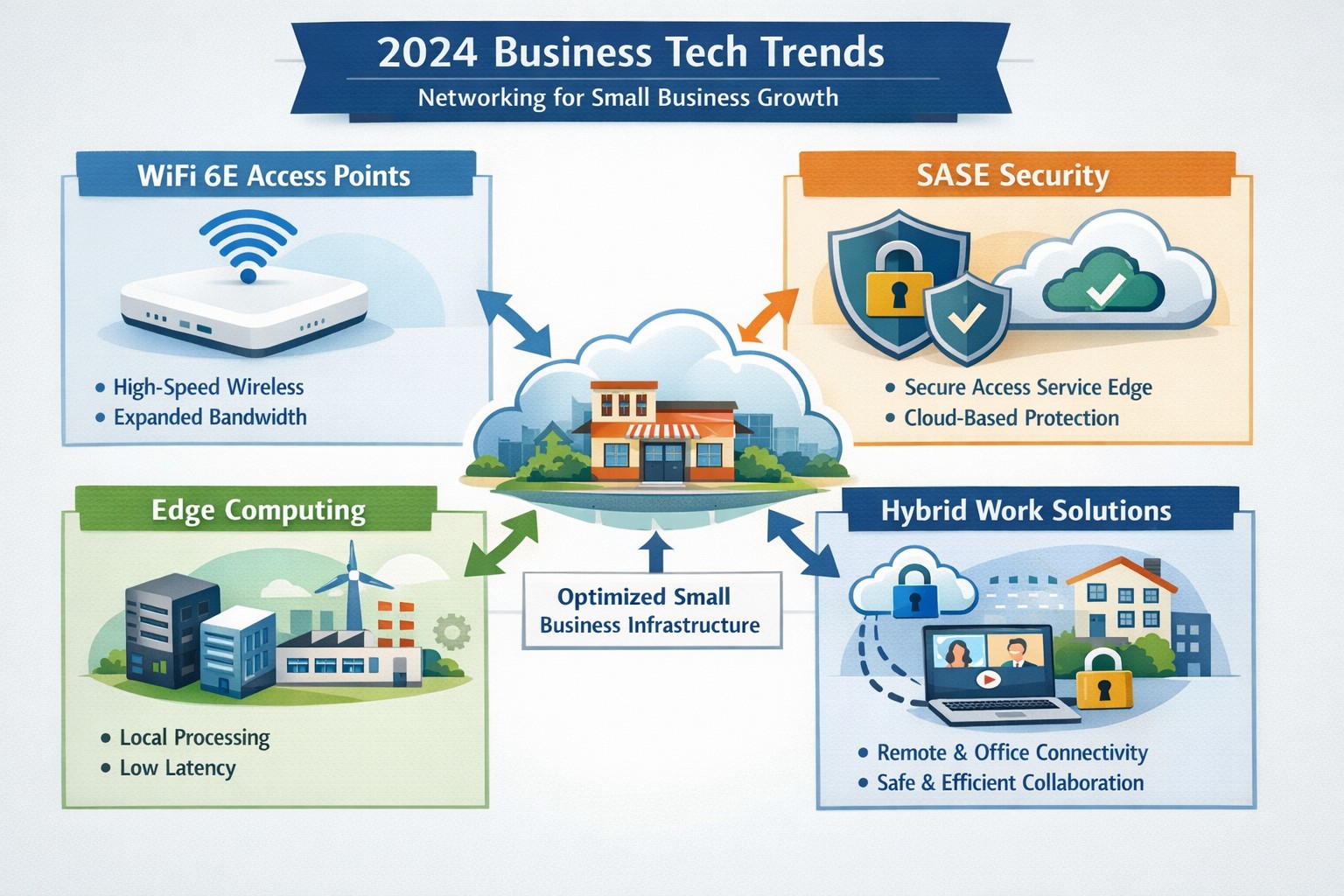
2024 networking trends like WiFi 6E and zero trust architecture prepare small businesses for hybrid work and cybersecurity demands.
As we enter 2024, the U.S. Chamber of Commerce reports that 64% of business owners believe their businesses are in good health, showing confidence in navigating the future. Technology has emerged as a key driver of success, enabling businesses to thrive in uncertain times. Farmhouse Networking has identified four essential technology trends that will empower businesses in 2024, propelling them towards growth and success.
1. Harnessing the Power of Artificial Intelligence
Artificial intelligence (AI) has moved beyond the realm of technology discussions and is now at the forefront of business success. Businesses utilizing AI credit it for increased success, as it offers game changing assistance in various areas of operations. AI tools can automate tasks, saving time and resources for businesses.
AI for Operational Efficiency
Businesses can leverage AI to automate expense management, correlate data from multiple sources to create meaningful reports, create sales presentations that address customer needs, and tackle tasks that were previously time-consuming. By harnessing AI, manufactures can optimize inventory, align staffing with peak hours, and identify opportunities for targeted promotions. Although implementing AI may require an initial investment, the positive impact it can have on businesses in 2024 is promising.
AI for Enhanced Customer Experiences
Customer experience plays a pivotal role in business success, with 34% of business leaders recognizing the pivotal role of technology in delivering exceptional experiences. Upgrading systems to ditch outdated tech and manual methods is a priority for many businesses in 2024. Chatbots, for instance, are invaluable for front-line customer service agents, providing round-the-clock support. Automated assistants and Unified Communications tools enhance customer interactions and employee productivity. These digital processes not only enhance retention and satisfaction but also create opportunities for cross-selling and upselling efforts.
2. Delivering Exceptional Digital Customer Experiences
Businesses understand the importance of delivering exceptional digital customer experiences in 2024. Upgrading systems and embracing efficient digital processes will be key to achieving this goal.
Upgrading Systems for Efficiency
Outdated technology and manual methods hinder efficiency. Businesses are expected to upgrade their systems by adopting AI, automating repetitive tasks, and migrating to the cloud. These solutions make information easily accessible, guide customers interactions, and improve employee productivity.
Embracing Cloud-based Solutions
A robust technology infrastructure is crucial for businesses to keep up with competition and exceed customer expectations. Automation software can save time and cut down on expenses by managing data and completing routine tasks. Mobile technology ensures network connectivity anywhere, anytime, allowing for collaboration on the go. Cloud based systems enables efficient management of IT costs plus offer flexibility and scalability, especially for businesses, as the workforce continues to move away from traditional office setups.
3. The Backbone of Business Operations: Fast and Reliable Connectivity
Fast and reliable connectivity is the backbone of efficient operations, seamless communication, and scalable expansion. Businesses across different sectors can benefit from investing in connectivity solutions.
Optimizing Inventory and Collaboration
Manufactures can leverage fast and reliable a to optimize inventory management. By having real-time visibility into inventory levels, manufactures can prevent stockouts and ensure they have the right products available when customers need them. Accountants can collaborate effectively without being limited by physical office spaces. Cloud connectivity allows them to access customer files, share updates, and communicate with team members regardless of their location.
Enhancing Healthcare Services
Connectivity plays a vital role in enhancing healthcare services. From telemedicine to remote patient monitoring, healthcare providers can offer more accessible and efficient care. Fast and reliable connectivity enables seamless communication between healthcare professionals and patients, facilitates the sharing of medical records, and supports the use of emerging technologies like artificial intelligence and Internet of Things (IoT) devices.
Safeguarding Customer and Company Devices
Investments in network connectivity not only benefit customers but also help safeguard customer and company devices. By adopting a complete network connectivity solution that includes reliable internet, network security measures, and disaster recovery solutions, businesses can protect sensitive data and ensure the smooth operation of their technology infrastructure.
4. Embracing the Future: Expanding Technology Spending
In 2024, CEOs are planning to expand their technology spending to stay competitive and meet evolving customer expectations. However, to fully leverage the benefits of technological investments, businesses need to partner with reputable companies that can provide robust network infrastructure.
Strengthening Technological Investments with Robust Networks
Businesses should partner with companies like Farmhouse Networking to reinforce their critical technological investments. Robust networks ensure reliable network connectivity, data security, and seamless integration of technology solutions. By partnering with trusted providers, businesses can enhance their technology infrastructure and drive growth.
Weathering Uncertainties with Tech Transformation
By staying ahead of technology trends, business owners can not only weather uncertainties but also emerge stronger and more resilient. Embracing the power of artificial intelligence, delivering exceptional digital customer experiences, building a strong technology infrastructure, and investing in fast and reliable network connectivity will position businesses for success in 2024 and beyond.
Embracing these tech trends and partnering with trusted providers will enable businesses to thrive in an ever-evolving business landscape.
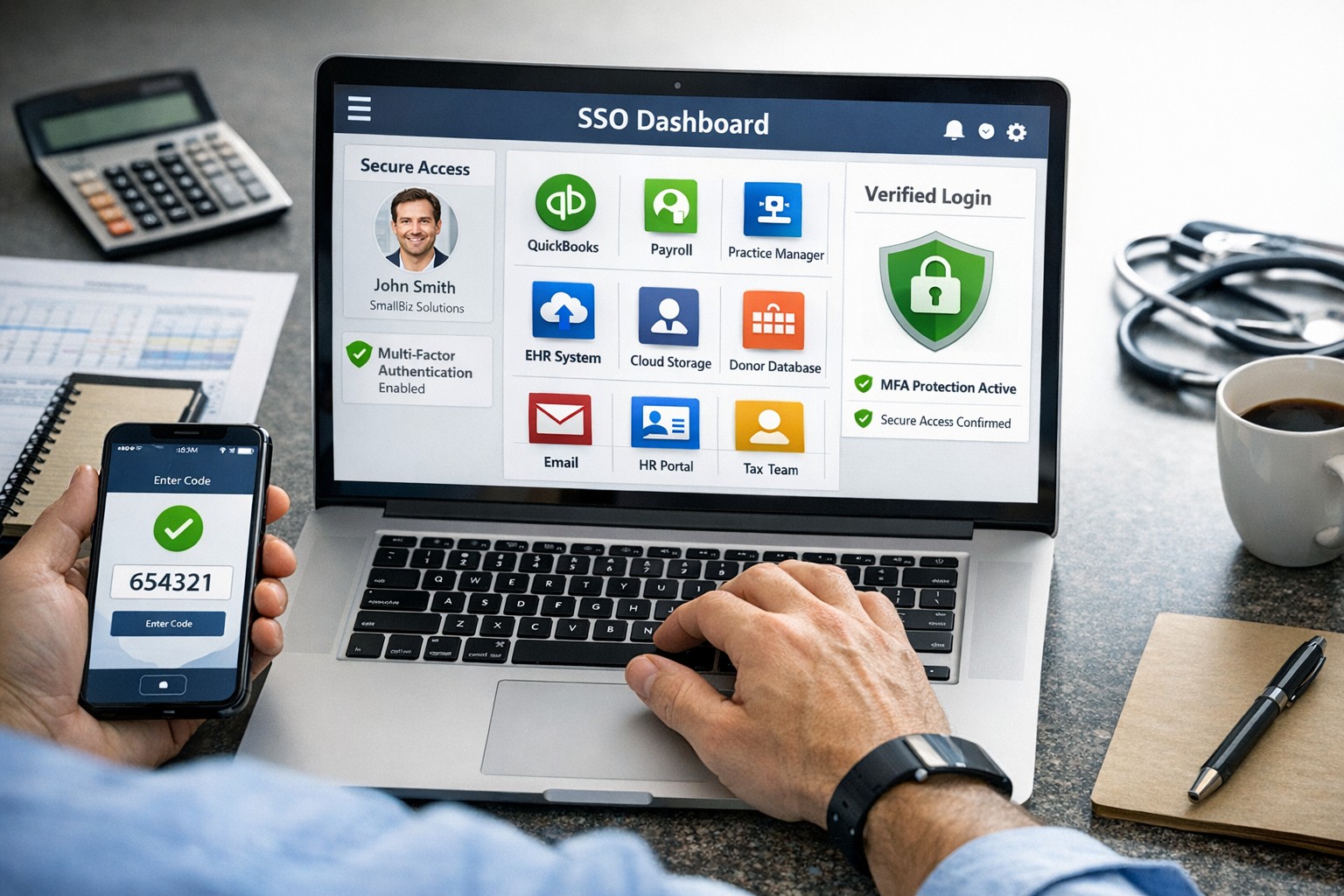
SSO for BYOD provides secure, convenient single sign-on access across apps on personal devices for small business teams.
Individuals and organizations rely heavily on various online platforms and services, the need for a secure and convenient way to access these resources is paramount. This is where SSO Single Sign-On comes into play. SSO Single Sign-On is a powerful authentication method that allows users to securely sign in to multiple applications and platforms using just one set of credentials. In this article, we will explore the benefits of SSO Single Sign-On, its implementation, and how it enhances security while streamlining the user experience.
Understanding SSO Single Sign-On
What is SSO Single Sign-On? SSO Single Sign-On is an authentication process that enables users to access multiple applications and platforms using a single set of login credentials. With SSO Single Sign-On, users only need to remember one username and password, eliminating the hassle of managing multiple credentials for different services. This not only saves time but also enhances convenience for users.
How does SSO Single Sign-On work? SSO Single Sign-On works by establishing a trust relationship between an identity provider (IdP) and the various service providers (SPs). When a user attempts to access a service, the IdP verifies the user’s identity and provides a token to the SP, which grants the user access without requiring additional authentication. This seamless process simplifies the login experience and eliminates the need for users to repeatedly enter their credentials.
Benefits of SSO Single Sign-On
Enhanced Security: One of the key advantages of SSO Single Sign-On is its ability to enhance security. By consolidating login credentials into a single set, users are less likely to resort to weak passwords or reuse passwords across multiple platforms. This reduces the risk of password-related security breaches. Additionally, SSO Single Sign-On allows for stronger authentication methods, such as two-factor authentication, further bolstering security without requiring multiple accounts.
Streamlined User Experience: With SSO Single Sign-On, users no longer have to remember and enter multiple sets of login credentials. This significantly reduces the login friction and streamlines the user experience. Users can seamlessly navigate between different applications and platforms without the need for repetitive logins. This convenience not only saves time but also improves productivity.
Centralized Access Management: SSO Single Sign-On provides organizations with centralized access management capabilities. Administrators can easily control user access to various applications and platforms from a centralized dashboard. This simplifies user provisioning and deprovisioning, ensuring that employees have timely access to the resources they need while maintaining security and compliance.
Cost and Time Savings: Implementing SSO Single Sign-On can lead to cost and time savings for organizations. By reducing the number of password-related support requests, IT teams can focus on more strategic initiatives. Additionally, the streamlined login experience reduces the time spent by employees on authentication, leading to increased productivity and efficiency.
Implementing SSO Single Sign-On
To implement SSO Single Sign-On, organizations need to follow a few key steps:
Evaluate SSO Solutions: Begin by evaluating various SSO solutions available in the market. Consider factors such as compatibility with existing systems, scalability, security features, and ease of integration.
Choose an Identity Provider: Select an identity provider that aligns with your organization’s requirements. The identity provider will be responsible for authenticating users and issuing tokens for accessing service providers. Office 365 and Google Workspace are usually the best, most prolific IdP sources to use.
Configure Service Providers: Configure the service providers that you want to integrate with SSO Single Sign-On. This involves establishing trust relationships between the identity provider and the service providers.
User Provisioning and Deprovisioning: Implement a user provisioning and deprovisioning process to ensure that users have the necessary access to the applications and platforms they require. This process should be integrated with the SSO Single Sign-On solution to maintain centralized access management.
Test and Monitor: Thoroughly test the SSO Single Sign-On implementation to ensure its functionality and security. Regularly monitor the system to identify and address any potential issues or vulnerabilities.
Best Practices for SSO Single Sign-On Implementation
When implementing SSO Single Sign-On, it is essential to follow best practices to maximize security and usability:
Strong Authentication: Implement strong authentication methods such as two-factor authentication or biometric authentication to enhance security.
Regular Auditing: Conduct regular audits of user access rights and permissions to ensure compliance and detect any unauthorized access.
User Education: Educate users about the benefits of SSO Single Sign-On and best practices for password management to promote secure behavior.
Continuous Monitoring: Implement a robust monitoring system to detect and respond to any suspicious activities or potential security threats.
Regular Updates: Keep the SSO Single Sign-On solution and all integrated applications up to date with the latest security patches and updates.
Remember, security should never be compromised, and SSO Single Sign-On provides a robust solution to protect user identities and streamline access to applications and platforms. Embrace the power of SSO Single Sign-On and enjoy the benefits of enhanced security and convenience.
Implement zero trust to safeguard mobile workforce from cyber threats anywhere
Remote work and mobile devices have become the norm, so ensuring the security of your workforce and sensitive data is paramount. Traditional security measures based on perimeter defense are no longer sufficient to protect against the sophisticated cyber threats that target mobile devices and exploit vulnerabilities in the network. This is where the concept of zero trust comes into play. Zero trust is a security framework that challenges the notion of “trust but verify” and instead adopts a “never trust, always verify” approach. By implementing a zero trust model, organizations can establish a security infrastructure that provides continuous authentication, authorization, and monitoring to safeguard their mobile workforce and sensitive data.
Understanding the Concept of Zero Trust
The concept of zero trust is rooted in the recognition that a one-time authentication and authorization process is not enough to ensure security in today’s dynamic threat landscape. Changes in user behavior, location, and other factors should radically impact access decisions. Zero trust takes a proactive approach to security by enforcing minimal access to resources, requiring continuous security monitoring, risk-based access control, and real-time authentication and authorization based on up-to-date information. Unlike traditional security models that rely on perimeter defense and trust users and devices within the network, zero trust challenges the idea of inherent trust and verifies the authenticity and integrity of every user and device, regardless of their location or network connection.
The Evolution of Zero Trust
The concept of zero trust has evolved over time in response to the increasing risks and challenges posed by mobile devices and remote work. The rapid adoption of mobile devices and the proliferation of internet-connected devices have expanded the attack surface, making traditional perimeter-based security measures inadequate.
Key Security Technologies for Mobile Devices
To enhance the security of mobile devices and implement zero trust, organizations should leverage key security technologies designed specifically for the mobile environment. These technologies include:
Enterprise Mobility Management (EMM): EMM ensures that mobile devices have the necessary policies and configurations in place, including mobile device management for security settings and configurations, as well as remote user access policy implementation. EMM provides a foundation for enforcing security controls and managing mobile devices within the organization.
Mobile Application Vetting (MAV): MAV ensures that applications comply with enterprise policies and do not contain known exploitable vulnerabilities. By vetting applications, organizations can reduce the risk of malicious applications compromising the security of mobile devices and accessing sensitive data.
Mobile Application Management (MAM): MAM focuses on ensuring compliance in deployed applications. It enables organizations to enforce security policies and manage the lifecycle of mobile applications, including app distribution, updates, and revocation. MAM helps organizations maintain control over the applications used by their mobile workforce.
Mobile Threat Defense (MTD): MTD solutions detect and mitigate threats from suspicious user behavior, network activity, and malicious attacks. These solutions leverage advanced analytics and threat intelligence to identify and respond to potential security threats in real time, providing an additional layer of protection for mobile devices.
Secure Containers: Secure containers provide isolation techniques to prevent organizational and personal data from commingling. By creating separate containers for different types of data, organizations can ensure that sensitive information remains secure, even if the device itself is compromised.
The Role of Intelligent Authentication
Intelligent authentication, powered by advanced rule sets and artificial intelligence, can significantly enhance the security of mobile devices in a zero trust environment. By combining biometrics with user behavior analysis, intelligent authentication systems can provide adaptive authentication that adapts to each user interaction, ensuring precise security measures. Integration between EMM, mobile threat defense, and existing logging, monitoring, diagnostic, and mitigation systems further enhances security capabilities.
Developing a Mobile Zero Trust Strategy
Implementing zero trust in the mobile environment requires a tailored approach that aligns with an organization’s specific goals, risks, and infrastructure. Businesses should develop their strategies based on a comprehensive assessment of the risks they face, with granular policies to mitigate those risks. The granularity of continuous authentication should be carefully determined to strike the right balance between security and usability. It’s important to note that technology is only one part of the solution; organizations must also review their mobile use policies and ensure that processes and human factors align with zero trust principles
With an intelligent authentication approach and a tailored mobile zero trust strategy, organizations can safeguard their mobile workforce and data from advanced cyber threats. Farmhouse Networking can make this a reality for your organization.
Cloud + BYOD = massive IT savings and unlimited scalability
Businesses, regardless of their size, need to stay agile, cost-efficient, and scalable to remain competitive. Cloud computing and online storage have revolutionized the way companies operate and handle data. By migrating your business operations to the cloud, you can leverage its numerous benefits to reduce costs, enhance scalability, and ultimately drive greater success. In this article, we’ll explore valuable strategies for harnessing the power of cloud computing and online storage to optimize your business operations.
Cost Reduction:
Cloud computing offers a cost-effective solution for businesses of all sizes. Here’s how you can leverage cloud technology to reduce costs:
Infrastructure cost reduction: By switching to cloud-based infrastructure, you eliminate the need for physical servers, hardware, and costly private data centers. This not only reduces upfront capital expenditure but also eliminates ongoing hardware maintenance / replacement costs.
Pay-as-you-go pricing model: Cloud service providers offer flexible pricing options, allowing you to pay for only the resources you consume. This eliminates the need for adding excess just-in-case capacity, resulting in significant cost savings. You can even turn off some services so you are not paying while you sleep.
Energy efficiency: Cloud computing minimizes energy consumption related to IT hardware. Cloud providers are equipped with highly efficient systems that optimize resource utilization, resulting in reduced energy costs for your business and smaller carbon footprint on the planet.
Scalability and Flexibility:
Cloud computing enables businesses to scale their operations seamlessly. Here’s how you can harness this scalability to grow fast and stay ahead:
Elasticity: Cloud-based systems can automatically scale resource capacity up or down in response to fluctuating demands. This scalability ensures that you can handle traffic spikes, seasonal variations, or sudden growth without any disruption.
Multi-region availability: Cloud platforms offer the ability to deploy your resources across multiple geographic regions. This redundancy guarantees uninterrupted service availability, even if a specific region experiences an outage or disruption.
On-demand resource provisioning: Cloud infrastructure allows you to quickly provision additional resources as your business expands. This eliminates the need for long wait times to procure and set up physical hardware.
Enhanced Collaboration and Accessibility:
Cloud-based storage and collaboration tools can revolutionize the way your team works. Here’s how to leverage the cloud for improved collaboration:
Centralized data management: Cloud storage solutions enables sharing of documents, pictures, videos, and other files. This eliminates the need for version control issues and multiple physically stored copies, leading to increased overall productivity.
Remote and mobile access: Cloud computing allows employees to access critical data and applications remotely, promoting flexible work arrangements and enhancing productivity. This accessibility ensures that your team remains connected and productive, regardless of physical location – think work from home without the need for VPN.
Real-time collaboration: Cloud-based tools facilitate real-time collaboration, allowing team members to work simultaneously on projects. This boosts efficiency, accelerates decision-making processes, and reduces time-to-market for products and services.
Don’t wait – adopt cloud technology in your business operations and stay ahead of the competition. Contact us today to learn more!
A Step-by-Step Guide for When the Internet Goes Out
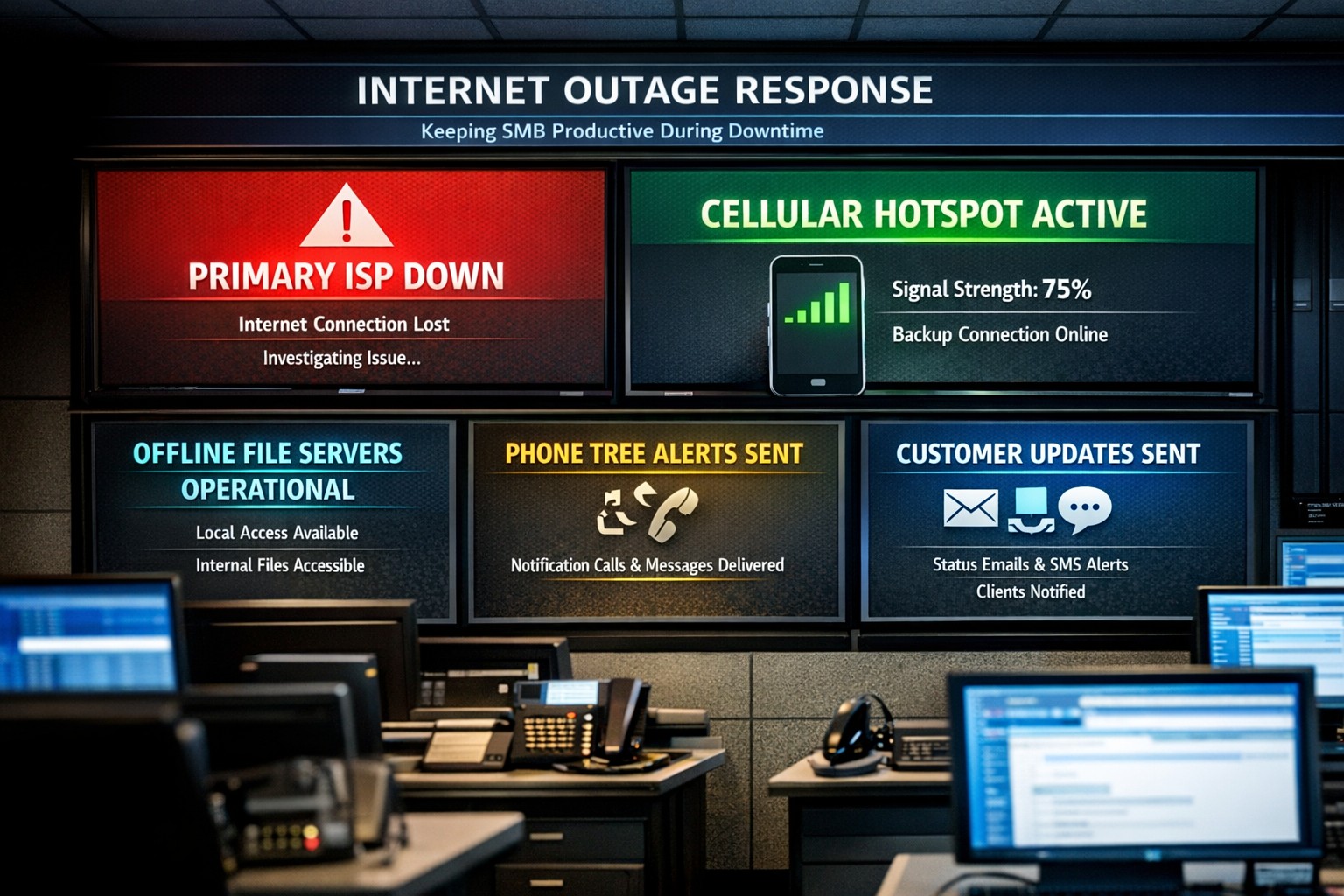
Offline operations dashboard with hotspot failover and local resource access.
Businesses heavily rely on internet access to stay connected and productive. However, what happens when the internet goes out? Whether it’s a temporary outage or a prolonged disruption, losing internet access can have a significant impact on businesses.
We will explore strategies and solutions for navigating the digital apocalypse and ensuring business continuity when the internet goes out. From setting up backup remote access options to implementing offline communication channels, this guide is a must-read for business owners looking to mitigate the impact of internet disruptions and keep their operations running smoothly.
Understanding the Impact
Before we delve into the strategies and solutions for navigating the digital apocalypse, it’s important to understand the potential impact of internet outages on your business. The consequences can be far-reaching and vary depending on the nature of your operations.
Productivity: Productivity can take a major hit when your employees are unable to access crucial online tools and resources. This can result in missed deadlines, delays in client deliverables, and a general slowdown in operations. It’s essential to assess which tasks are entirely dependent on internet connectivity and identify alternative methods to carry them out in the event of an outage.
Customer Satisfaction: If your business relies heavily on online customer interactions, such as e-commerce or customer support, a loss of internet connectivity can lead to frustrated customers, failed transactions, and a tarnished reputation. Having a plan in place to manage customer expectations during an outage is crucial.
Financial Impact: Depending on the duration and severity of the disruption, revenue loss can be substantial. To mitigate this risk, businesses should explore options for data backup, cloud services, and redundancy measures that ensure a seamless transition during an outage.
Preparing for Internet Outages
Backup Plan: One of the most effective ways to ensure business continuity during an internet outage is to have a comprehensive backup plan in place. This involves identifying critical systems and data that need to be accessible offline and regularly backing them up. By doing this, you can minimize the disruption caused by an extended outage and quickly get your business back up and running locally.
Redundancy: This might involve investing in multiple internet service providers (ISPs) or using alternative modes of connectivity, such as mobile hotspot devices or satellite internet. By diversifying your options, you can minimize the risk of a complete loss of internet connectivity. There are even routers that have multiple internet connections with automatic failover or cellular data backups.
Stay Connected
When the internet goes out, it is crucial to have a backup option that allows you to stay connected and continue basic business activities. Mobile hotspots and cellular data can be lifesavers in these situations. Investing in a reliable mobile hotspot device, which uses cellular data to create a Wi-Fi network, can ensure that you have access to the internet even if your primary connection fails. These devices are portable and easy to set up, making them convenient solutions for businesses of all sizes.
Before an outage occurs, it is essential to have a backup cellular plan in place. Assess your cellular service provider options and choose a plan that offers sufficient data, preferably with unlimited options. This will allow your team to continue accessing critical applications, emails, and other online resources without interruption. Furthermore, it is crucial to educate your employees on how to connect and utilize these backup solutions effectively. Inform them about the availability of mobile hotspots and ensure they understand how to use cellular data efficiently without exceeding the limits of the backup data plan.
By incorporating mobile hotspots and cellular data into your backup plans, you can maintain business productivity and minimize the disruption caused by internet outages.
Stabilize Communication
In times of internet outages, it becomes crucial to stabilize communication within your business. Without reliable internet access, VoIP phones and other forms of digital communication with clients and colleagues can become challenging. However, there are alternative solutions that can keep your business running smoothly.
VoIP Routing: Before an outage occurs, take the time to talk to your VoIP phone provider to explore options of how calls will be routed when the internet is out. There are often options that allow calls to be sent to an alternative number or cellphone app during an internet outage.
Mobile Devices: While the office internet may be out it does not necessarily mean that the cellular networks will be down at the same time. Before an internet outage occurs, make sure your team has important digital communication apps installed and that they are familiar with these tools. Provide training sessions or tutorials to ensure everyone is comfortable using them. Additionally, it is essential to have a backup option in case of technical difficulties with the primary tool.
Remote Work Policies
In the midst of a digital apocalypse, it is crucial for businesses to have well-established remote work policies and procedures in place. These policies ensure that employees can continue their work even without internet access, minimizing the impact on productivity. Remote work policies outline expectations for employees when working from home or other offline environments. They should include guidelines for communication, task management, and project deadlines. By establishing clear procedures, businesses can maintain a sense of normalcy and ensure that everyone knows how to navigate through the internet outage.
Additionally, remote work policies should address data security concerns. Employees should be educated on how to handle sensitive information and the appropriate measures to take when working outside the office. Regular training sessions can help reinforce these policies and keep employees up to date with best practices. By implementing remote work policies and procedures, businesses can effectively adapt to the challenges of a digital apocalypse.
Business Continuity Plan
When the internet goes out, having a comprehensive business continuity plan becomes paramount for businesses to minimize disruptions and maintain operations. A business continuity plan outlines the actions and strategies that need to be executed when faced with a digital apocalypse. This plan should include backup communication systems, such as phone lines or walkie-talkies, that can be utilized when the internet is unavailable. Additionally, offline storage and backup systems should be in place to ensure that critical data is available during an internet outage.
Creating a task force dedicated to business continuity can be invaluable during these times. This team can be responsible for implementing and executing the business continuity plan, regularly testing its effectiveness, and making necessary adjustments.
Optimizing remote work infrastructure is essential for seamlessly operating during an internet outage. Contact us today to get prepared before the digital apocalypse occurs.
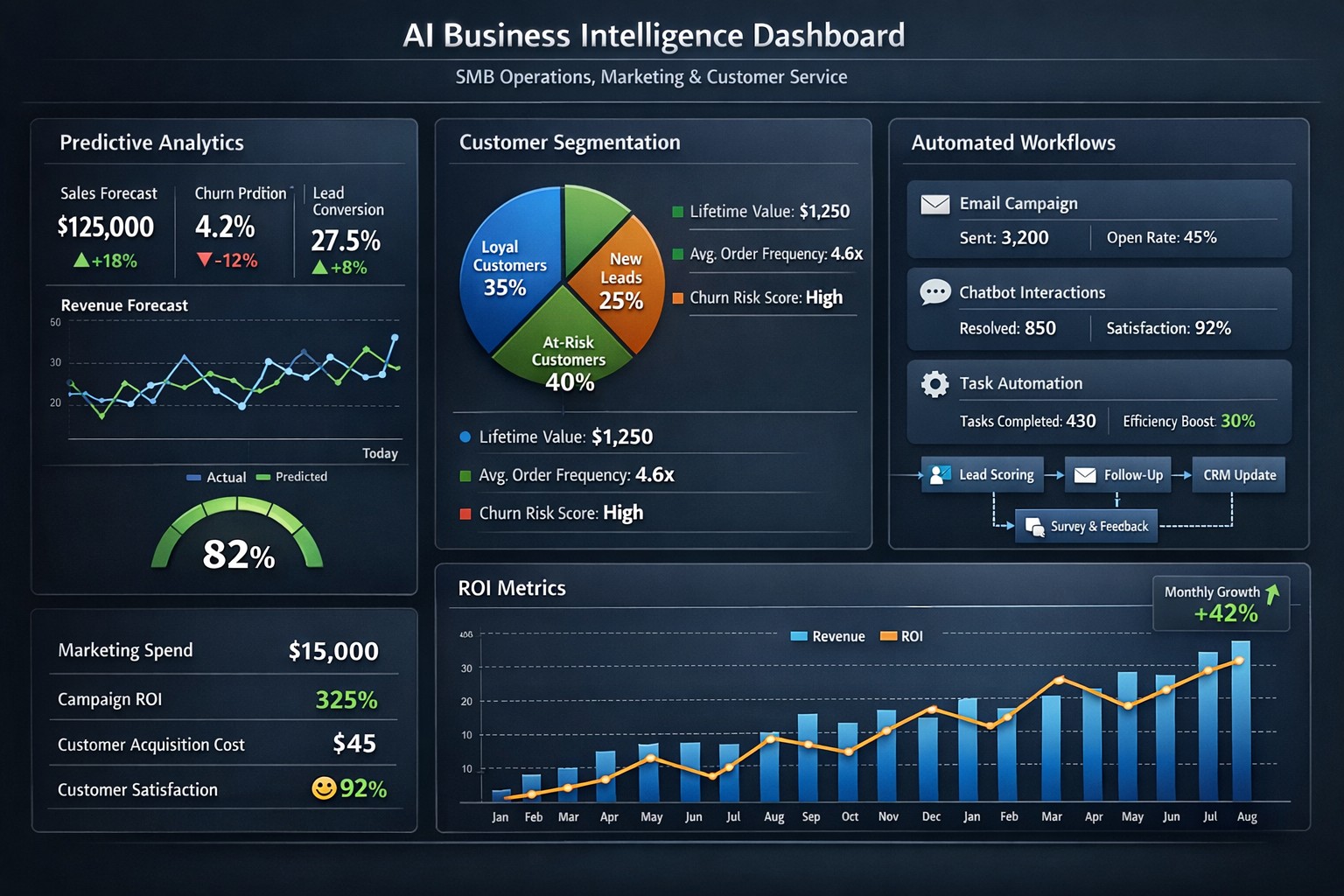
Enterprise AI platform integrating predictive maintenance customer insights process automation.
As your trusted Managed IT Service Provider (MSP), we are always looking for ways to help your business thrive. Today, we want to shed some light on the remarkable potential of Artificial Intelligence (AI) and how it can benefit your day-to-day operations.
Artificial Intelligence
AI isn’t just a buzzword; it’s a game-changer for businesses of all sizes, including businesses like yours. We wanted to highlight some of the ways AI can empower your business:
Improved Efficiency: AI can automate repetitive tasks, saving your employees time and allowing them to focus on more strategic and creative endeavors.
Data Analysis: AI can analyze large sets of data quickly and accurately, helping you make informed decisions and uncover valuable insights.
Personalized Customer Experiences: AI can help you tailor your products and services to individual customer needs, enhancing satisfaction and loyalty.
Enhanced Security: AI can bolster your cybersecurity efforts, identifying threats and vulnerabilities more effectively.
Cost Savings: With AI-driven solutions, you can reduce operational costs while increasing productivity.
We believe that implementing AI safely in your business can give you a competitive edge, improve your bottom line, and create new opportunities for growth. If you’re interested in exploring AI solutions for your business, please don’t hesitate to reach out. We’re here to help you navigate this exciting technology landscape.
Let’s embrace AI together and unlock new possibilities for your business’s success. Feel free to contact us for a personalized consultation and guidance on AI integration into your processes.
Organized browser tabs grouped by project with pinned essentials.
No matter whether its Microsoft Edge or Google Chrome, users can maximize their productivity through powerful tab management capabilities. In this blog post, we will explore how you can leverage Microsoft Edge and Google Chrome tabs to boost your efficiency and stay organized.
Tab Groups for Enhanced Organization
One of the standout features of Microsoft Edge and Google Chrome is the ability to create tab groups. This feature allows you to group related tabs together, enabling you to focus on specific tasks and declutter your workspace. To create a tab group, simply right-click on any open tab, select “Add to new group,” and choose a color to represent the group. You can customize each group according to your preferences, such as work-related tabs, personal tabs, or tabs for a specific project. With tab groups, finding and switching between tabs becomes effortless, saving you valuable time and mental effort.
Vertical Tabs for Optimal Space Management
Another valuable feature of Microsoft Edge is the vertical tabs option. Traditionally, tabs are aligned horizontally, occupying a significant portion of your browser’s horizontal space. However, with vertical tabs, you can move your tab bar to the left side of the browser window. This vertical arrangement allows you to view more tab titles at a glance and optimizes your screen real estate. To access vertical tabs, simply click on the vertical arrow icon on the left side of your tab bar, or use the shortcut Ctrl+Shift+X. Vertical tabs are particularly useful for those who frequently work with numerous tabs simultaneously.
Quick Controls for Efficient Tab Navigation
Microsoft Edge and Google Chrome offers several quick controls to enhance your tab navigation experience. For instance, you can use the “Ctrl+Tab” shortcut to cycle through your opened tabs, or “Ctrl+Shift+Tab” to navigate in reverse order. Additionally, right-clicking on the Forward and Back buttons in the browser toolbar provides a drop-down menu featuring a list of recently visited pages, enabling you to quickly revisit previously accessed content. These simple shortcuts and navigation tools can significantly streamline your browsing experience and save you from unnecessary clicks and searching.
Collections to Consolidate Your Research
If you frequently conduct online research or gather information from various sources, Microsoft Edge and Google Chrome’s Collections feature is a game-changer. Collections allow you to consolidate related content, including text, images, links, and notes, into a single organized space. You can create different collections for different projects, making it easy to revisit and share your findings. Whether you are planning a trip, working on a report, or researching a hobby, Collections simplify the process of organizing and accessing your research.
In today’s fast-paced digital world, it is crucial to leverage the tools at your disposal to maximize productivity. With powerful tab management features, including tab groups, vertical tabs, quick controls, and collections, you can streamline your browsing experience, stay organized, and accomplish your tasks more efficiently. Take advantage of these productivity-boosting features, and unlock the full potential of your web browsing experience!
If your company is looking for more ways to improve efficiency in the office, then contact us for assistance.
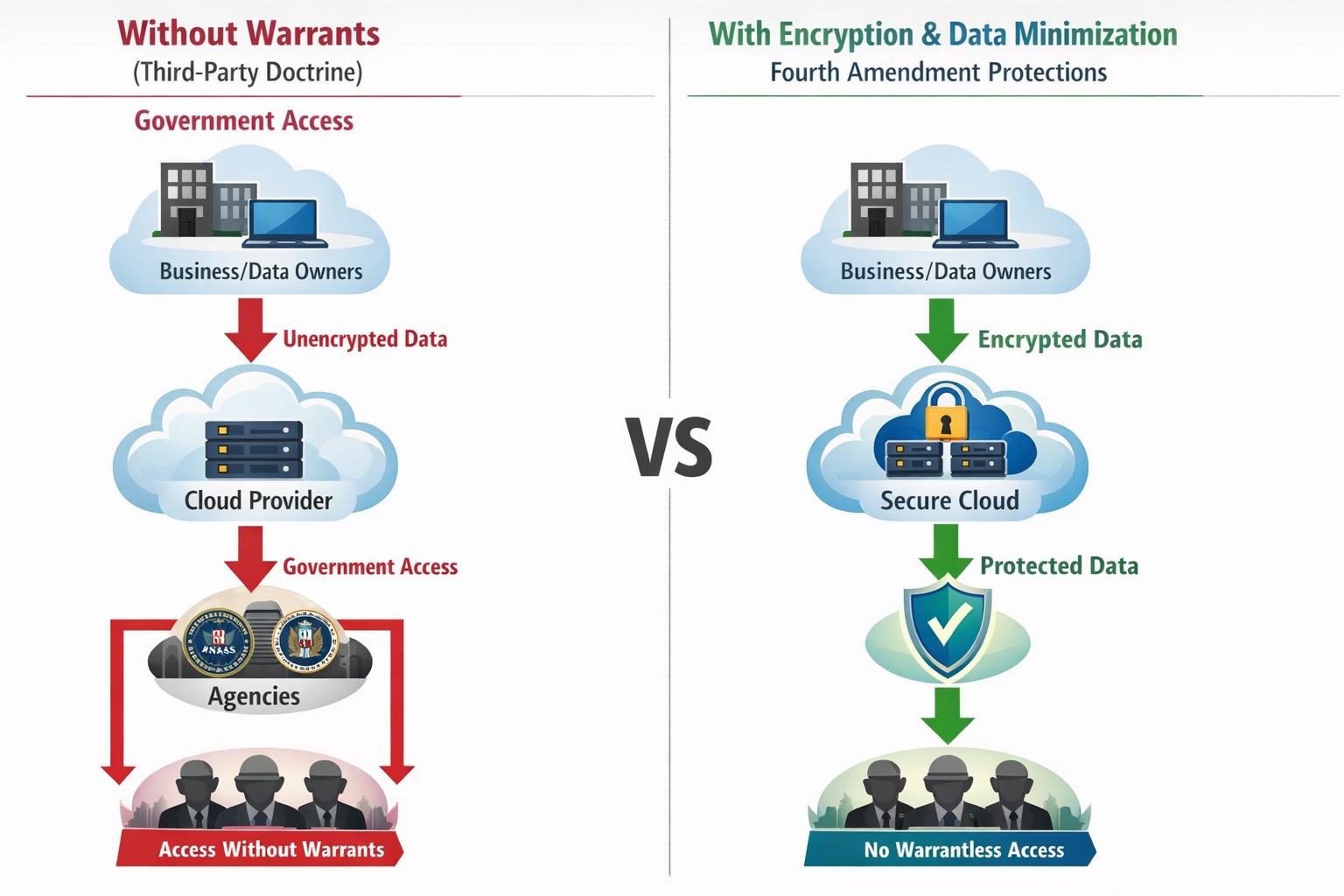
Third-party doctrine: No privacy expectation in cloud data shared with providers.
Businesses are increasingly relying on online platforms to store and process sensitive customer and business data. However, this convenience comes with the potential risk of compromising digital privacy. As a business owner, it is essential to be aware of the Third-Party Doctrine and its implications for safeguarding your company’s data.
What is the Third-Party Doctrine?
The Third-Party Doctrine is a legal principle that originated from court decisions in the United States. It states that there is no reasonable expectation of privacy for information voluntarily shared with third parties. In other words, when you share data with a third party, such as cloud software providers or social media platforms, you may lose control over the privacy of that data.
Implications for Businesses:
Businesses generate and store vast amounts of data that often get entrusted to third-party service providers. This data can include customer information, financial records, employee data, and proprietary business strategies. Understanding how the Third-Party Doctrine impacts your digital privacy is crucial for protecting sensitive company data.
Challenges Ahead:
While cloud software and third-party services offer significant benefits, they also pose potential threats to data privacy. The Third-Party Doctrine allows those service providers to re-sell information gathered to other companies who want to market to you or gain competitive advantage through research. Government authorities also have to access your data without a warrant through legal processes such as subpoenas, search warrants, or court orders. This raises concerns over the security and confidentiality of information stored in the cloud or with other service providers.
Protecting Business Data Privacy:
Given the potential risks, it is vital for business owners to prioritize digital privacy and take appropriate measures to protect sensitive data. Here are a few essential steps to consider:
Conduct a Privacy Audit: Assess the types of data your business collects and shares with third parties. Identify areas where privacy may be compromised and develop strategies to mitigate risks.
Choose Reliable Third-Party Service Providers: Before partnering with service providers, carefully review their privacy policies and practices. Look for industry-standard security measures, encryption protocols, and data protection commitments. Make sure that even they cannot look at your sensitive company data.
Implement Strong Security Measures: Safeguard your business data by leveraging encryption techniques, multi-factor authentication, and regular security updates. Regularly train employees on best practices for data protection, such as creating strong passwords and being aware of phishing attempts.
Limit Data Collection: Only collect data necessary for your business operations and refrain from collecting sensitive information that is unrelated to your business needs. Minimizing data collection can help reduce the amount of information at risk.
Understanding the Third-Party Doctrine and its implications for digital privacy is vital for protecting your business data in an evolving digital landscape. By implementing measures to safeguard data, carefully selecting third-party service providers, and educating employees on privacy best practices, business owners can mitigate the risks associated with the loss of privacy rights. Prioritizing digital privacy not only protects the interests of your business but also fosters trust among customers and stakeholders.
If your company is worried about your data privacy and security, then contact us for assistance.
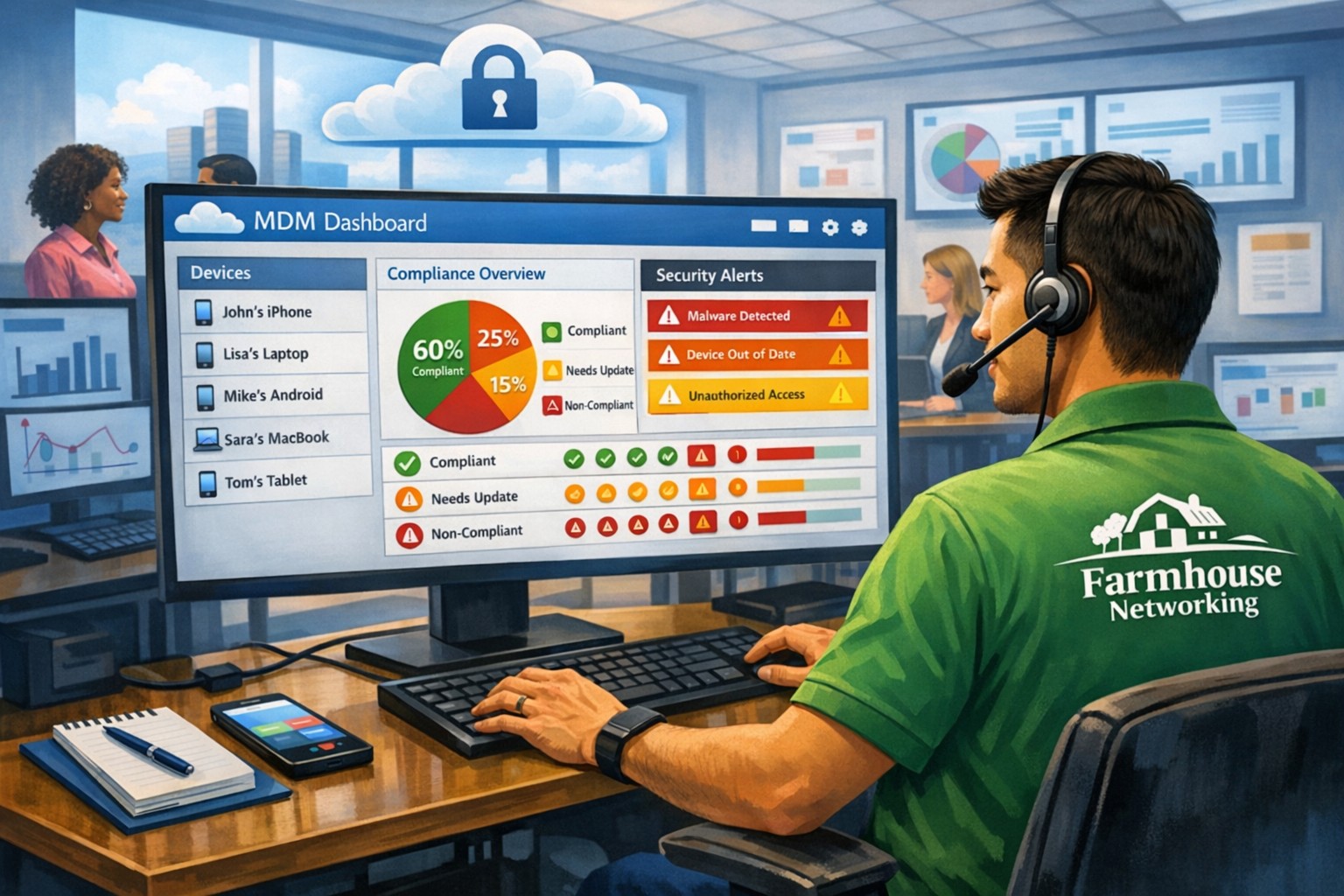
MSP console managing SMB BYOD smartphones and laptops with centralized MDM and security policies.
Small and medium-sized businesses (SMBs) face numerous challenges when it comes to managing their IT. Limited resources (both human and money), lack of expertise, and the need to focus on core business operations often make it difficult for SMBs to understand and manage technology needs. This is where Managed Service Providers (MSPs) come in. In this blog article, we will explore the reasons why SMBs should consider partnering with MSPs to enhance their IT capabilities and drive business growth.
Cost-Effective IT Solutions:
One of the primary reasons why SMBs need MSPs is the cost-effectiveness they offer. By outsourcing their IT needs to MSPs, SMBs can avoid the high costs associated with hiring and training an in-house IT team. MSPs provide a range of services, including network monitoring, data backup and recovery, cybersecurity, and software updates, all at a predictable monthly cost. This allows SMBs to allocate their resources more efficiently and focus on their core business.
Access to Expertise and Advanced Technology:
MSPs are experts in providing IT services and have a team of highly skilled professionals with expertise in variety of technology. By partnering with MSPs, SMBs gain access to the depth of knowledge and experience from IT experts who can handle complex tasks and provide strategic guidance. Additionally, MSPs stay up-to-date with the latest technology trends and can recommend and implement solutions that can help SMBs stay competitive in the market and safe from hackers.
Proactive IT Support and Maintenance:
MSPs offer proactive IT support and maintenance, which is crucial for SMBs. They monitor networks, identify potential issues, and take preventive measures to avoid downtime and disruptions. MSPs also provide regular software updates, security patches, and system maintenance, ensuring that SMBs’ IT remains secure and up-to-date. This proactive approach helps SMBs minimize the risk of costly IT failures and ensures smooth business operations.
Enhanced Data Security:
Data breaches and cyberattacks pose a significant threat to SMBs. MSPs play a vital role in safeguarding SMBs’ sensitive data and protecting them from potential security breaches. They implement robust cybersecurity measures, such as firewalls, antivirus software, and encryption, to ensure data confidentiality and integrity. MSPs can also conduct regular security audits and vulnerability assessments to identify and address any potential weaknesses in the IT infrastructure.
Scalability and Flexibility:
As SMBs grow, their IT needs evolve. MSPs offer scalable solutions that can adapt to changing business requirements. Whether it’s adding new users, expanding storage capacity, or integrating new software, MSPs can quickly and efficiently accommodate these changes. This scalability and flexibility allow SMBs to focus on their growth without worrying about the limitations of their IT infrastructure.
If your company could use the cost-effective solutions, access to expertise, proactive support, enhanced data security, and scalability that come from using a MSP, then contact us for assistance.
Farmhouse Networking was recently approached by the Portland Tribune for comment on the hack of the DMV. We were quoted in their article published yesterday. Here is our full advice:
What to do post DMV hack?
The breach that effected the Oregon DMV was part of a larger hack of the software known as MOVEit. The exploit of the vulnerability in this software was used to gain access to over 3.5 million Oregonians information including:
Name
Home and mailing address
License or ID number
Last four digits of Social Security number
This information can be used by hackers and other darkweb criminals to assume the identity of those whose information has been compromised and perform identitiy theft activities like applying for credit cards or tax fraud. Anyone with an active Oregon ID card or driver’s license should begin monitoring their credit report and look for any suspicious activity. If suspicious activity is found they should immediately call the following to freeze their credit and take actions to reverse the damages done:
Equifax: equifax.com/personal/credit-report-services or 1-800-685-1111 Experian: experian.com/help or 1-888-397-3742 TransUnion: transunion.com/credit-help or 1-888-909-8872
If your company is concerned about the possibility of a similar breach, then contact us for assistance.
Every modern business has one thing in common – the internet.
Businesses are using computers, smart phones, tablets, etc. to connect to the internet for research, shopping, advertising, or any number of things. With a connection to the internet comes the need for routers, switches, wireless, and other network hardware to distribute internet connectivity across the company. There are malicious people on the internet that are setting traps and trying to break into companies which necessitate the use of tools like antivirus, internet filtering, spam filtering, and other protective measures. There are also people who work from their homes and need to have a way of tunneling safely into the network to use the resources there.
All of this has to be managed by someone in the company or you can contract with a managed IT service provider.
If your company needs help managing all the things connected to your internet, then contact us for assistance.
And God will generously provide all you need. Then you will always have everything you need and plenty left over to share with others. As the Scriptures say, “They share freely and give generously to the poor. Their good deeds will be remembered forever.” For God is the one who provides seed for the farmer and then bread to eat. In the same way, he will provide and increase your resources and then produce a great harvest of generosity in you. - 2 Corinthians 9:8-10
We use cookies to ensure that we give you the best experience on our website. If you continue to use this site we will assume that you are happy with it.