Cloud Computing:
Highly mobile, cost effective solutions to simplify productivity.

For an increasing number of Small to Medium Businesses (SMBs) there is the need to make the move into the cloud because of the undeniable benefits that it brings. It is especially valuable for businesses who have small IT departments that are overworked trying to keep other key systems running. For SMBs like this the continuous uptime and subscription based pricing make for a predictable and manageable budgetary expenditure.
Who cares about the cloud?
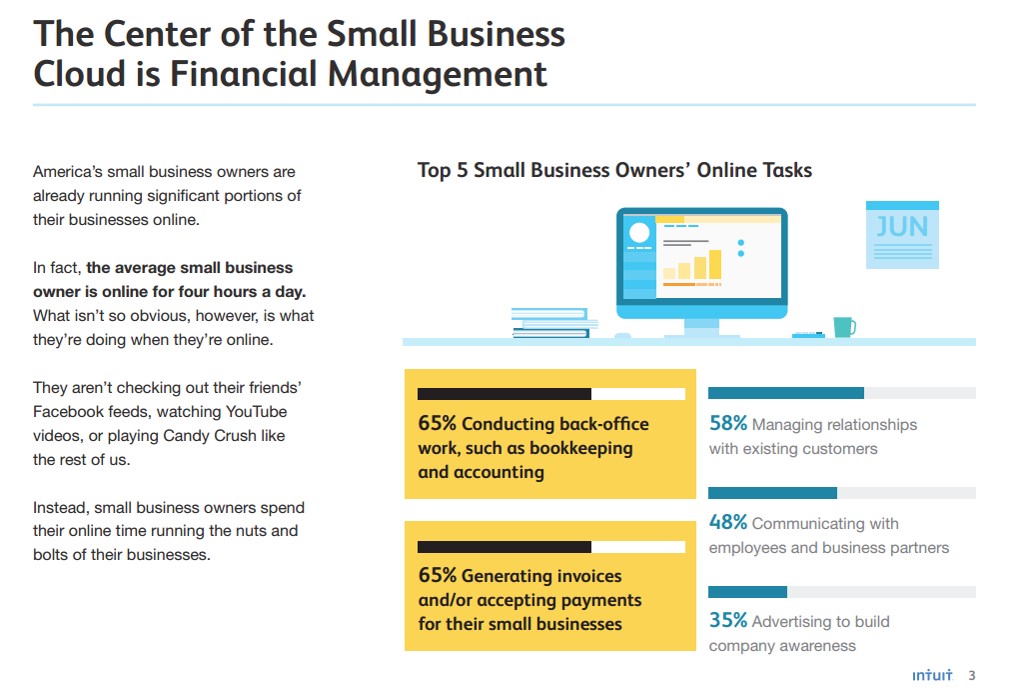
Base on studies done by the leading SMB accounting software company, Intuit, about 37% of United States SMBs are already using the cloud to help run their business with that number expected to climb to 78% by 2020. These businesses are mostly using their clouds for back office work and receiving payments. Plus an amazing 43% of SMB owners are using smartphones as their primary device for conducting business.
What is in the cloud?
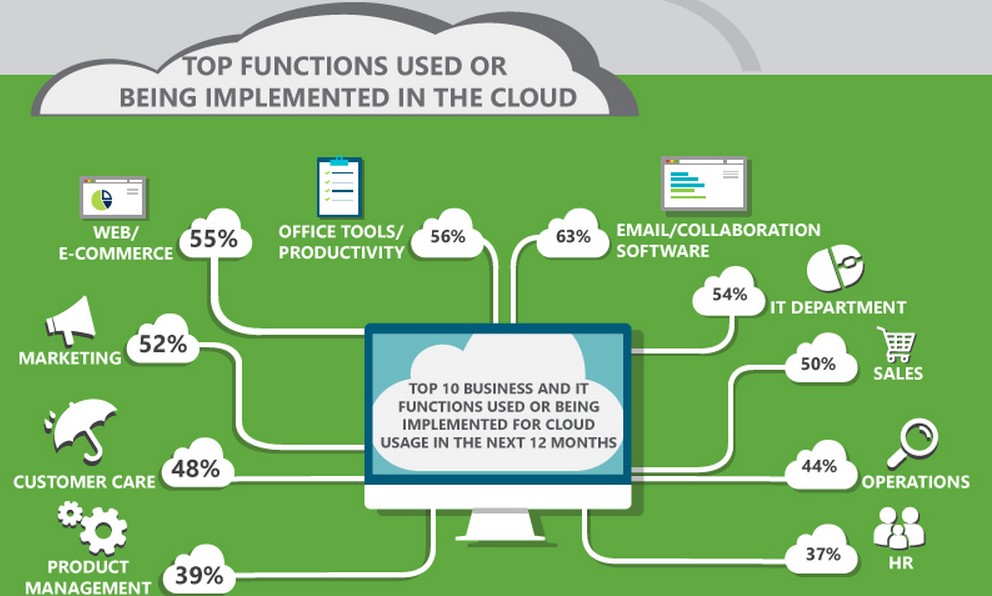
Nearly every part of the SMB computing space is moving into the cloud including many Line-of-Business (LOB) applications. E-mail/collaboration software (63%) like Microsoft Office 365 or G-Suite, Website/e-commerce hosting (55%) like GoDaddy Web Store, IT Department infrastructure (54%) like server hosting or virtual desktops on Microsoft Azure & Amazon AWS, back office tools & productivity tools (56%) like Quickbooks Online are the four most common cloud apps SMBs are planning to adopt next 12 months. This is not surprising as SMBs see the need for lowering and fixing the cost of business, gaining remote accessibility, securing data storage, and creating affordability versus the costs of on-site hardware, scalability, and compliance.
There is so much more…
There are endless possibilities in the cloud including Customer Relations Management (CRM) software, IT service/support, online backup, file sync & share storage, unified communications (comprising web conferencing, phone systems, and chat services) and managed security services. Farmhouse networking has expert level experience in migrating companies to the cloud and are users of many of these same services ourselves. Please contact us today to discuss the possibilities for your company as you reach for the clouds.
Moving to the Cloud is Easy
Give us some details and we handle the rest.
Frequently Asked Questions (FAQ)
What is cloud computing, and why does it matter for my business?
Cloud computing means your business applications, data, and infrastructure run on remote servers accessed over the internet rather than on hardware sitting in your office. For SMBs, this translates to lower hardware costs, better remote access, easier scaling, and more predictable monthly expenses.
Is the cloud right for every business?
Not always, and we will tell you honestly if it is not the right fit for your situation. Cloud solutions work exceptionally well for businesses that need remote access, predictable costs, and reduced reliance on on-site hardware. Some environments — particularly those with specialized software or strict latency requirements — may be better suited to a hybrid approach that combines cloud and on-premises infrastructure. We help you evaluate both options before recommending anything.
What cloud platforms does Farmhouse Networking work with?
We primarily work with Microsoft Azure and Google Workspace. These platforms cover the most common SMB needs including email, file storage, collaboration, virtual desktops, and server infrastructure. We help you choose the right platform for your environment and manage it on an ongoing basis.
What types of business applications can move to the cloud?
Most core business applications are cloud-ready. Common examples include email and collaboration tools like Microsoft 365 and Google Workspace, file storage and sharing, accounting software like QuickBooks Online, CRM platforms, virtual desktops, server infrastructure, and online backup. If you are running a specialized line-of-business application, we will evaluate whether a cloud or hybrid approach makes the most sense.
Can we move only part of our operations to the cloud?
Yes. A full migration is not always necessary or practical. Many businesses run a hybrid environment where some systems live in the cloud and others remain on-premises. We design the approach around your actual needs rather than pushing a one-size-fits-all solution.
What does the cloud migration process look like?
We follow a structured process to minimize surprises. It starts with an assessment call to understand your goals and current environment, followed by an infrastructure evaluation to document what you have and identify any migration considerations. From there we provide a proposal, schedule a migration window, and provide post-migration support to make sure everything is running correctly before we close out the project.
How much downtime should we expect during a migration?
Most migrations involve minimal downtime. We plan migration windows carefully – often scheduling them outside of business hours – to reduce the impact on your operations. The exact amount of downtime depends on the complexity of your environment, and we will set clear expectations during the proposal phase so there are no surprises.
How do you keep our data secure in the cloud?
Cloud security is built into our service. We configure encryption for data at rest and in transit, set up access controls to ensure only authorized users can reach your systems, and handle the security configuration of your cloud environment. You do not need a separate engagement for this – it is part of how we manage your cloud infrastructure.
Can your cloud solutions support HIPAA, PCI, or CMMC compliance requirements?
Yes. We provide cloud solutions that are configured to support compliance in regulated environments including HIPAA for healthcare, PCI for businesses handling payment card data, and CMMC for defense contractors. Compliance requirements are factored into how we design, migrate, and manage your cloud environment.
What is the difference between cloud backup and cloud computing?
Cloud backup means copies of your data are stored offsite in the cloud for recovery purposes – it is a safety net. Cloud computing means your actual applications and workflows run in the cloud. Both serve important but different functions. We offer and manage both, and many clients benefit from having each in place.
What happens to our internet goes down if we are dependent on the cloud?
This is a fair concern and one worth planning for. We recommend businesses that are heavily cloud-dependent maintain a backup internet connection or failover solution. We can assess your connectivity situation and advise on redundancy options that fit your budget and risk tolerance.
What happens to our data if we stop using Farmhouse Networking?
Your data belongs to you. Cloud platforms like Microsoft Azure and Google Workspace store your data under your own account. If you ever transition away from our services, we will help ensure a clean handoff and that you retain full access to your data and accounts.
How is cloud migration priced?
For smaller migrations, the work is folded into your monthly managed IT services cost. For larger or more complex projects, we scope and bill the migration as a standalone project. Either way, we are transparent about what is included before any work begins. Ongoing cloud management after migration is part of your monthly managed IT plan.
Do I need a separate contract for cloud services, or is it part of managed IT?
Ongoing cloud management is included as part of your managed IT services plan. There is no separate cloud contract for day-to-day management. Large one-time migrations may be scoped as a project, but once your environment is stable, support and management roll into your standard monthly service.
How do I get started?
Fill out the form on this page and give us a few details about your current environment and what you are trying to accomplish. We will schedule an assessment call, evaluate your infrastructure, and come back with a clear proposal. There is no cost or obligation to have that initial conversation.