Neglected IT infrastructure quickly turns into costly downtime and data loss, but proactive managed IT services help businesses stay online and protected.
Has your business ever experienced a technology crisis that could have been easily prevented? Learn from the cautionary tale of a non-managed client who recently faced a major setback due to neglected IT infrastructure. This compelling story underscores the importance of proactive IT management and the need for robust backup solutions.
The Story: A Cautionary Tale
Neglected IT Infrastructure: After 5 years of radio silence, a panicked non-managed client reached out to us when their aging computer, hosting their crucial order processing system, malfunctioned.
DIY Mishap: Attempting to fix the issue themselves, the client inadvertently worsened the situation by installing the wrong part, leading to a cascade of problems.
Costly Consequences: The subsequent visit to a local repair shop and improper part replacement led to the corruption of critical files, including the Windows Operating System and the database containing vital client data.
Backup Oversight: The client’s failure to maintain updated database backups exacerbated the crisis, with the only available backup being approximately 5 years old.
The Solution: Managed IT Services
Proactive Maintenance: With managed IT services, critical components like the aged computer would have been promptly replaced before catastrophic failure, averting the entire crisis.
Remote Support: Swift remote intervention by a managed IT provider would have prevented the corruption of the operating system and database, substantially reducing the overall cost of the incident.
Comprehensive Backup Strategy: Every business should prioritize regular, imaged-based backups to safeguard their crucial data, ensuring seamless restoration in the event of a disaster.
Expert Guidance: Embracing managed IT services equips businesses with expert recommendations and proactive measures to avoid potentially devastating technology pitfalls.
Take the Right Step for Your Business!
Don’t let your business fall victim to preventable IT disasters. Embrace the proactive protection and expert guidance offered by a managed IT service provider to ensure uninterrupted business operations.
Charities need to prioritize their cybersecurity measures. It’s no longer a matter of if, but when, a cyber attack will occur. This extensive guide outlines the essential steps charities can take to enhance their cybersecurity and protect their valuable data.
Understanding Cybersecurity Risks for Charities
Charities, like all organizations, are at risk of cyber attacks. These attacks can have severe consequences, including data leakage, financial loss, and damage to the charity’s reputation. Understanding these risks is the first step toward effective protection.
– The Reality of Cyber Threats:
Cyber threats are a reality for all organizations, including charities. With the rise of sophisticated cyber attacks, no organization can confidently say they will not be targeted. The aim is to make it as challenging as possible for cybercriminals to penetrate the charity’s defenses.
– The Importance of Cybersecurity in Charities:
The importance of cybersecurity in charities cannot be overstated. Charities hold sensitive data like donor information, employee details, and financial records. A cyber breach could lead to the loss or exposure of this data, damaging the trust of donors, employees, and beneficiaries.
Initial Cybersecurity Measures for Charities
Implementing initial cybersecurity measures can greatly reduce a charity’s vulnerability to attacks. These measures should focus on both end users and the charity’s IT infrastructure.
– Password Policies:
Establishing or revising a company password policy is a crucial first step. Passwords should be required on all devices employees use. They should be changed regularly, and employees should not be allowed to reuse old passwords. Furthermore, consider using multi-factor authentication (MFA) for an added layer of security.
– Cybersecurity Training
Training end users to be aware of various threats is a longer-term effort that can pay dividends. This includes being suspicious of emails requesting credential confirmation, checking website security before visiting, and ensuring sensitive information is transmitted securely.
– Limiting Access
Not all employees need access to all aspects of the charity’s operations. It’s essential to emphasize that limiting access is a critical part of protecting the charity against cyber attacks.
IT Infrastructure-Focused Measures
Charities also need to take measures focused on their IT infrastructure. These actions can further strengthen the charity’s defenses against cyber threats.
– Installing Protection
Installing additional protection, such as firewalls and antivirus software, can help shield the charity’s IT infrastructure against cyber attacks. Regularly updating and patching all software is also essential.
– Backing Up Files
Backing up files is another immediate action charities should take. This can be done offline, using external hard drives, or by backing up to the cloud. Furthermore, encrypting backups can provide an extra layer of security.
– Implementing Security Tools
Implementing security tools like browser management, DNS filtering, network monitoring, and endpoint protection can help detect and prevent cyber attacks.
External Resources for Cybersecurity Guidance
There are many external resources available to help charities improve their cybersecurity. These include government agencies, nonprofit organizations, and specific groups associated with nonprofit verticals.
– Government Agencies
Government agencies like the U.S. Department of Homeland Security Cybersecurity & Infrastructure Security Agency (CISA), the Federal Trade Commission, and the National Institute of Standards and Technology (NIST) offer resources on cybersecurity.
– Nonprofit Organizations
Nonprofit organizations like the Cyber Readiness Institute, Global Cyber Alliance, and the National Council of Nonprofits also offer resources to help charities improve their cybersecurity.
Following the NIST Cybersecurity Framework
The National Institute of Standards and Technology (NIST) has developed a five-part best practices framework to help firms focus resources for cybersecurity protection. These steps include identifying, protecting, detecting, responding, and recovering from cyber attacks. The NIST framework offers a systematic approach to managing cybersecurity risks. It includes identifying all equipment, software, and data used; protecting data with security software and regular backups; detecting unauthorized access; responding effectively to attacks; and recovering after an attack.
Implementing Advanced Cybersecurity Measures
Implementing advanced cybersecurity measures can provide an additional layer of protection for charities. These measures include identity and access management (IAM), securing networks, and moving to the cloud.
– Implementing IAM
Implementing IAM can streamline access for users internally and externally. Features like single sign-on (SSO), social sign-on, and multi-factor authentication (MFA) can make it easier for authorized users to access the charity’s websites and applications.
– Securing Networks
Securing networks business class equipment from trusted brands can boost a charity’s network security. This includes using wired and wireless networking hardware to create a functioning network and protecting against online threats.
– Moving to the Cloud
Moving to the cloud can provide charities with flexibility and resilience. Cloud-hosted systems allow for secure work from anywhere and can help charities bounce back faster after a cyber attack.
Preparing for Cyber Attack Recovery
Preparing for cyber attack recovery is crucial. When defenses fail, charities need the ability to bounce back quickly.
– Data Backup and Restoration
Data backup and restoration is a key part of cyber attack recovery. Charities should regularly back up their data to protect against data-loss disasters. If an attack occurs, they can restore their data and resume operations quickly.
– Developing a Continuity of Operations Plan
Developing a continuity of operations plan can ensure that a charity can continue to serve its community even when disaster strikes. This includes planning for how to keep business operations up and running and reporting the attack to law enforcement and other authorities.
Contact us today to explore how to best setup your cybersecurity efforts, ensuring protection and compliance in an ever-evolving cybersecurity landscape.
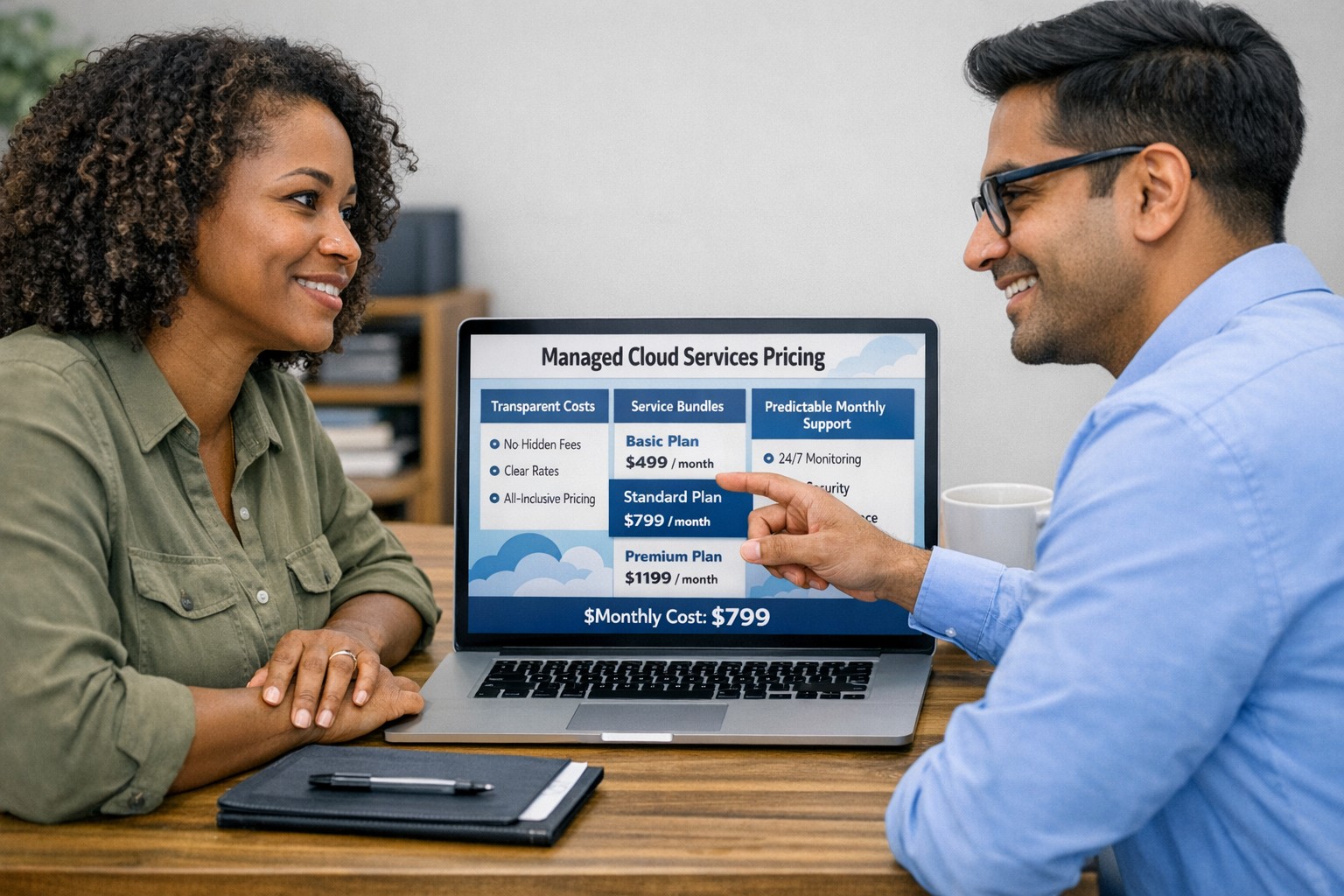
Managed cloud services pricing helps small businesses control IT costs with transparent, predictable monthly cloud support.
We have received numerous inquiries from potential customers regarding our pricing structure. Specifically, they want to know if we offer monthly contracts or if we charge an hourly rate. The answer is Yes.
Hourly Rate
For customers who require a one-time fix or need a project completed, we offer a service based on an hourly rate. Our rate for remote or on-site work that is not covered under a contract is $150 per hour. We bill in 15-minute increments and take pride in our efficiency. For clients with more than 2 service requests per month, we highly recommend signing up for a contract to save money and benefit from our expert oversight.
Monthly Contracts
There are three types of monthly contracts:
Remote Maintenance Contract
This is the package that most of our clients choose. It includes automated maintenance, cyber security protections, and unlimited remote support. Since most problems and questions can be handled remotely, this package offers real value.
Full Service Maintenance Contract
This package is for clients who want complete peace of mind. It includes all services, whether remote or at their offices. Additionally, it provides some additional benefits, such as top priority in our support queue.
Co-Managed IT Contract
This special package is designed for companies that already have a full-time IT employee or IT service companies in need of extra help. It provides them with the necessary automations and tools to make their jobs easier, allowing them to focus on what matters. This package also includes a discount on our remote and on-site services.
All contracts are based on a per-device model, taking into account the number of workstations, printers, servers, switches, etc. on the client’s network. We use this model because the other popular model, per user, is too vague and can easily hide excessive profit margins. Contracts can be month-to-month or a yearly commitment. The difference is that with a yearly commitment, you are protected from price increases for the entire year. We also offer many optional add-ons for our clients, such as Office 365, Employee Security Training, Penetration/Vulnerability Scanning, Mobile Device Management, Compliance, Secure Remote Access, and Security Operations Center.
Are you looking for reliable IT support that suits your business’s unique requirements? Look no further! Our flexible pricing options cater to businesses of all sizes. Whether you require one-time assistance or ongoing support, we have the right plan for you. Ready to take your business IT support to the next level? Contact us today to discuss your needs and find the perfect plan for your business.
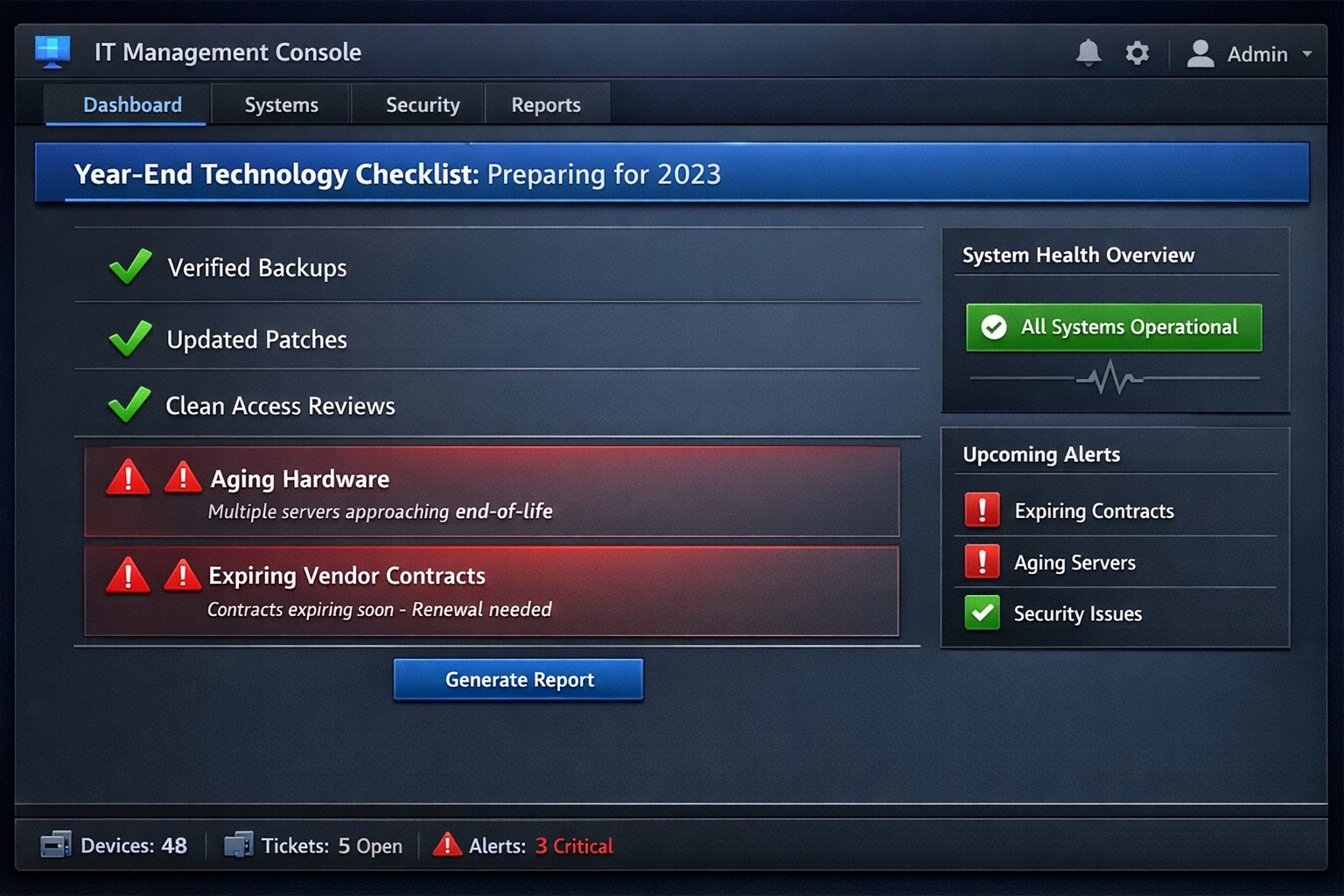
Year-end technology audit dashboard with critical tasks and compliance status.
As the year comes to a close, we at Farmhouse Networking want to ensure that your business technology is in optimal shape for a successful transition into the new year. We’ve put together a checklist to help you wrap up the year on a technologically high note. Some of these items we will work on together, and others will be the responsibility of your team.
Items we will work on together:
Asset Inventory: We have recently conducted a thorough review of your technology assets, including hardware, software, and networking equipment. We updated your inventory list to account for any additions or retirements of assets throughout the year. You should be receiving an invite to our new system called Narmada which gives you constant access to our replacement recommendations.
Password Security: Prompt your team to implement multi-factor authentication for critical systems and applications. This will help to enhance password security. This is not something that should be put off till later. Get it setup on every site possible. It can be made easier with a password manager.
Software Updates: We ensure that standard software applications, operating systems, and antivirus programs are up to date with the latest patches and updates. If you have industry specific software it would be a good time to check with them on the status of your support contract and if there are needed updates.
Data Backups: Verify that your data backup systems are functioning correctly. Test the restoration process to confirm that your business can recover essential data in the event of a disaster. If you don’t have backups in place now is the time to get this critical technology in place.
Security Assessment: Conduct a Security Risk Assessment to identify and address potential vulnerabilities. Ensure that your cybersecurity measures are up to date to protect against evolving threats. Many companies don’t realize that current compliance standards require this.
Employee Training: Provide cybersecurity training to employees to reinforce best practices and raise awareness about potential threats. This should be mandated by your team’s management.
Items you should work on with your team:
Subscription Reviews: Review and audit all software and service subscriptions to ensure they align with your business needs. Cancel any unnecessary subscriptions to optimize costs.
Budget Review: Evaluate your technology budget for the year and identify any areas where adjustments may be needed for the upcoming year.
Technology Roadmap: Develop or update your technology roadmap for the coming year, aligning it with your business goals and objectives.
Compliance Check: Ensure that your technology practices comply with industry regulations and standards applicable to your business.
Communication Plan: Communicate any upcoming changes or upgrades to your team to ensure a smooth transition without disruptions.
Policies & Procedures: Review current documentation to make sure that it includes all needed items like disaster recovery, incident response, computer use, BYOD, and AI usage.
Once you have determined some of your goals and budget, we should meet to discuss the implementation plan for any changes. We will be contacting you in February to setup our next Semi-Annual Business Review (SABR) meetings to discuss this years plan.
If you have any questions or need assistance with any of these items, please don’t hesitate to reach out to our support team. We’re here to help you navigate the year-end process and ensure a seamless start to the new year.
IT tax deductions: Section 179 bonus depreciation cybersecurity software.
It’s that time of year, business owners need to start thinking about tax deductions and ways to maximize profit protection. One area not to be overlooked is IT expenses since IT plays a crucial role in every business. The good news is that many IT expenses can be deducted from your taxes. From hardware and software purchases to cybersecurity measures and cloud services, there are several essential IT tax deductions that can help you lower your tax bill and keep more money in your profit column.
IT Tax Deductions for Business Owners
As a business owner, it is crucial to recognize the importance of taking advantage of IT tax deductions before the end of the year. These deductions can significantly impact your bottom line. By deducting IT expenses, you are not only reducing your tax liability but also creating funds to re-invest in the growth of your business and upgrading to the latest technology, which positions your business for long-term success.
IT Tax Deductions to Maximize Your Savings
Take advantage of these IT tax deductions to maximize their profit savings:
Software and Hardware Expenses: Deducting the cost of industry specific software and hardware purchases is an excellent way to save on taxes. Whether you invested in new computer systems or upgraded your existing software, remember to include these expenses in your deductions as capital expenditures. Profit savings can be compounded by taking the amount saved through IT tax deductions and spending it on further software and hardware purchases.
Cybersecurity Measures: With the increasing threat of cyberattacks, investing in cybersecurity measures is crucial. These expenses can also be deducted from your taxes. From firewalls to antivirus software, make sure to claim any cybersecurity investments you have made throughout the year.
Cloud Services: Many businesses have moved to using cloud services for their storage and daily operations. These operational expenses are also eligible for tax deductions. Whether you use cloud computing, backup services, or cloud-based software, remember to include these costs in your deductions.
By focusing on these essential IT tax deductions, you will minimize your tax liability and position your business for success in the coming year.
Consulting with a Certified Public Accountant
While it’s important to have a basic understanding of the IT tax deductions for your business, it is equally important to consult with a certified public accountant. A knowledgeable CPA can provide you with personalized financial advice and guidance based on your company’s unique situation.
Tax laws and regulations are constantly changing, and it can be challenging to keep up with all the updates. By working closely with a CPA, you can stay updated on the latest deductions and strategies to maximize your savings while staying compliant with the law. They can review your financial records, identify missed deductions, and help you make informed decisions that positively impact your bottom line.
Remember, seeking advice from a tax professional will not only help you optimize your profit savings but also give you peace of mind knowing that your tax returns are accurate and in line with the regulations.
Keeping Detailed Records
One essential practice for maximizing your IT tax deductions is keeping detailed records of your IT expenses. Maintaining accurate and organized records throughout the year can help you claim all eligible deductions at tax time.
Start by creating a system to track and categorize your IT expenses. This can include items like software and hardware purchases, IT services, website development costs, and data storage fees. Keep receipts, invoices, and any supporting documents for each expense. Having detailed records allows you to easily identify and calculate eligible deductions. It also provides evidence and documentation if you ever face an audit or need to justify your deductions to the IRS.
Consider using accounting software or cloud-based platforms to streamline the record-keeping process. These tools can help you track expenses, generate reports, and ensure accuracy in your financial records. By maintaining detailed records of your IT expenses, you not only ensure that you are taking full advantage of available deductions, but you also create a solid foundation for your overall tax strategy.
Utilizing Section 179 Deductions
Section 179 of the tax code allows businesses to deduct the full purchase price of qualifying equipment and software purchased or financed during the tax year. By utilizing Section 179, you can deduct the entire cost of eligible technology investments in the year they are purchased. This deduction can help reduce your overall tax liability, allowing you to maximize your profit savings.
To qualify for Section 179 deductions, the equipment or software must be used for business purposes more than 50% of the time. This deduction is particularly beneficial for businesses investing in technology upgrades or replacements, as it encourages the adoption of new and improved IT systems. Be sure to consult with a tax professional to determine the eligibility of your IT investments for Section 179 deductions and to ensure you are maximizing this deduction for your business.
Bonus Depreciation for IT Purchases
Business owners can also benefit from bonus depreciation for their IT purchases. Bonus depreciation allows businesses to deduct a percentage of the cost of qualifying assets in the year they are placed in service. Under the Tax Cuts and Jobs Act, businesses can take an 80% bonus depreciation deduction for qualified property acquired and placed into service in 2023, then depreciate the remaining 20% over the course of several years.
To qualify for bonus depreciation, the property must have a recovery period of 20 years or less and be purchased for business use. This deduction is particularly valuable for businesses that are investing in new IT equipment or upgrading their existing technology infrastructure.
By timing your IT purchases strategically, you can take full advantage of bonus depreciation and significantly reduce your tax liability. However, it’s important to note that bonus depreciation is subject to change based on tax laws and regulations, so consulting with a CPA is crucial to ensure compliance and maximize your savings.
Research and Development Tax Credit
While bonus depreciation and Section 179 deductions are great for maximizing your tax deductions when it comes to IT purchases, there is another valuable tax credit that often goes unnoticed – the Research and Development (R&D) tax credit.
The R&D tax credit is designed to incentivize businesses to invest in innovation and development activities. Many business owners mistakenly believe that this credit is only applicable to scientific or technological research. However, the R&D tax credit is much broader than that and can apply to a wide range of industries and activities.
To make the most of the R&D tax credit, it’s important to keep detailed records of your qualifying activities and expenses. Consult with a tax professional who specializes in this area to ensure that you are maximizing your tax savings while staying compliant with the IRS requirements.
To make best use of your IT tax deduction spending, contact us to discuss new purchases and upgrades.
Enterprise managed backup console with real-time monitoring and recovery analytics.
Data is the lifeblood of any business. From customer information to financial records, losing critical data can have devastating consequences for a company. That’s why businesses must have a reliable backup system in place. Managed backup services offer a comprehensive solution for data protection, providing automated backups, off-site storage, and quick data recovery in case of emergencies. In this blog post, we will explore the importance of protecting your business with managed backup services and how they can safeguard your valuable data.
The importance of data protection for businesses
Data protection is a top priority for businesses of all sizes. The importance of safeguarding your valuable data cannot be overstated. In addition to the potential financial losses that can result from data breaches or loss, businesses also face the risk of damaging their reputation and losing customer trust. Managed backup services are an essential part of a comprehensive data protection strategy. With automated backups and off-site storage, businesses can ensure that their data is safe and accessible, even in the event of a disaster. Additionally, quick data recovery capabilities minimize downtime and keep operations running smoothly. By investing in managed backup services, businesses can have peace of mind knowing that their critical data is protected and their business is secure.
Benefits of using managed backup services for your business
Using managed backup services can bring numerous benefits to your business. Let’s explore some of the key advantages that come with implementing managed backup services:
Increased Data Security: With automated backups and off-site storage, your valuable business data is protected from human errors, accidental deletions, or potential disasters. In the event of any mishaps, your data remains safe and easily recoverable.
Enhanced Disaster Recovery: Storing your data off-site ensures that even if your primary business location is compromised, you can still access your data and continue operations seamlessly. This added layer of security is crucial for business continuity.
Time and Cost Savings: The quick data recovery capabilities of managed backup services minimize downtime and save your business from significant financial losses. By swiftly restoring your data, you can maintain productivity and keep customer trust intact.
Peace of Mind: Investing in managed backup services equips your business with reliable and comprehensive data protection, giving you the peace of mind that your critical information is secure.
Factors to consider when choosing a managed backup service provider
When it comes to choosing a managed backup service provider for your business, there are several important factors to consider. Here are six key considerations that will help you make an informed decision:
Reliability and Security: Look for a provider that offers reliable and secure backup solutions. They should have a track record of successfully protecting data and providing seamless disaster recovery.
Scalability: Your business needs may change over time, so it is crucial to choose a provider that can scale its services to meet your evolving backup requirements without hindering performance.
Data Encryption: Ensure that the provider offers strong encryption measures to protect your data during storage and transmission. This will safeguard your sensitive information from unauthorized access.
Monitoring and Support: Opt for a provider that offers proactive monitoring and support services. They should be readily available to address any issues promptly and assist you in restoring your data whenever needed.
Cost and Pricing Model: Consider your budget and choose a provider that offers transparent pricing with no hidden costs. Assess the value of the service and determine if it aligns with your business’s financial objectives.
Backup Reliability: Regular testing and monitoring of your backups is crucial to ensure their effectiveness and reliability. It is important to regularly review and test the backups to verify that they are working correctly.
Taking a proactive approach to backup will provide you with confidence in your data protection strategy. By minimizing downtime and potential risks, you can focus on growing your business and achieving your goals. Invest in managed backup services today and secure your business’s future – contact us to get started
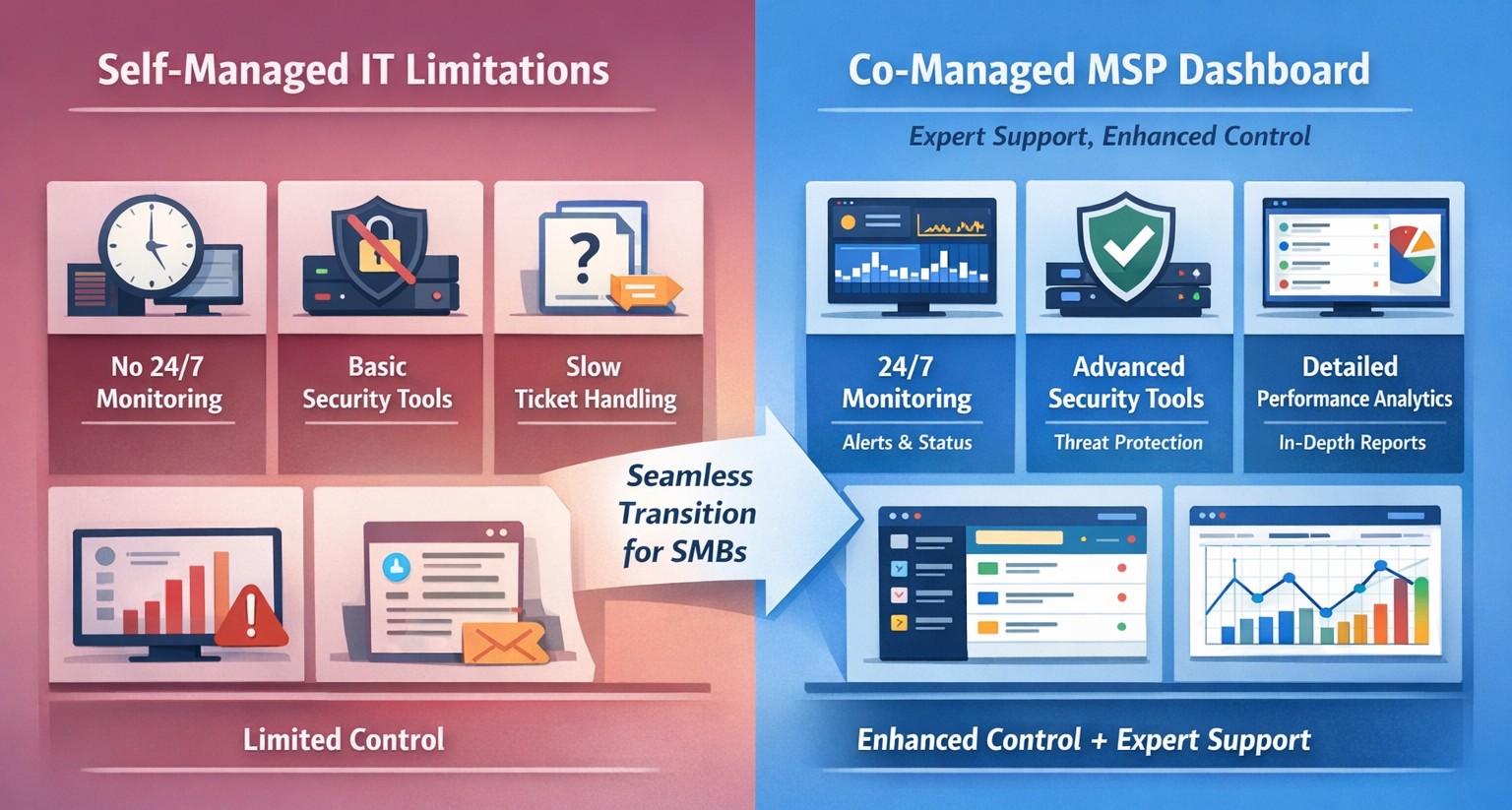
Co-managed IT dashboard with MSP monitoring supplementing internal team.
Managing IT can be a daunting task, especially for businesses that lack dedicated IT personnel or the expertise to handle today’s complex technology. In recent years, more and more organizations have recognized the benefits of outsourcing their IT management to Managed Service Providers (MSPs).
What is an MSP?
A Managed Service Provider, or MSP, is a company that offers a range of IT services to businesses. These services can include network monitoring, infrastructure management, data backup, cybersecurity, and more. By partnering with an MSP, businesses can offload their IT responsibilities to professionals with deep expertise and industry-best practices.
The Challenges of Self-Managed IT
Self-managing your IT can be a significant challenge. Here are some of the common pain points that organizations face:
Lack of Expertise: IT is a complex and ever-evolving field. Keeping up with the latest technologies, security threats, and best practices can be overwhelming, especially for businesses without dedicated IT staff.
Resource Constraints: Managing IT requires time, manpower, and financial resources. Small and medium-sized businesses often struggle to allocate these resources effectively, leading to inefficiencies, downtime, and security vulnerabilities.
Limited Scalability: Growing businesses often find it difficult to scale their IT infrastructure to meet increased demand. Self-managing your IT environment may require significant investments in hardware, software, and additional staff, which can strain budgets and hinder growth.
Cybersecurity Risks: Data breaches and cyber-attacks are on the rise. Without proper security measures in place, businesses face significant financial and reputational risks. Implementing and maintaining robust cybersecurity protocols can be challenging for organizations without the necessary expertise.
The Benefits of MSP-Managed IT
Switching to an MSP-managed IT environment offers several benefits:
Expertise and Support: MSPs have a team of experienced professionals who specialize in different aspects of IT management. They stay up-to-date with the latest industry trends and best practices, providing businesses with access to a breadth of knowledge and expertise.
Proactive Monitoring and Maintenance: MSPs utilize advanced tools and technologies to monitor your IT infrastructure 24/7. They identify potential issues before they become critical, minimizing downtime and ensuring smooth operations.
Scalability and Flexibility: MSPs provide scalable solutions tailored to your business needs. Whether you’re experiencing rapid growth or need to downsize, an MSP can quickly adapt your IT infrastructure to meet changing requirements without additional investments or resources.
Enhanced Security: MSPs employ robust security measures to protect your systems, networks, and data from cyber threats. They implement industry-standard security practices, conduct regular security audits, and ensure compliance with data protection regulations.
Cost Savings: By outsourcing IT management to an MSP, businesses can reduce the overhead costs associated with maintaining an in-house IT department. MSPs work on a subscription-based model, allowing organizations to pay for the services they need, when they need them.
Strategic Planning: MSPs can act as your virtual chief information officer providing project planning services that keep IT spend spread across the years to make the IT budget easier to manage.
Consider making the switch to an MSP today and unlock the benefits of professional IT management, contact us to get started.
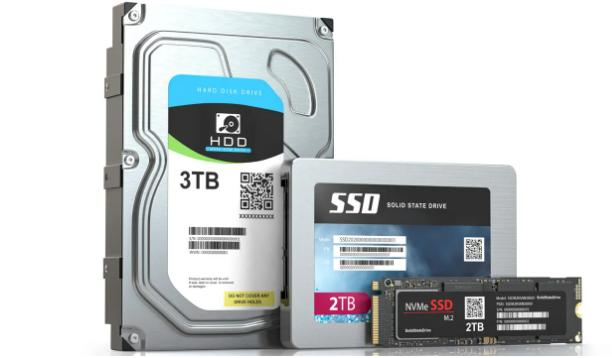
SSD vs HDD speed reliability power comparison chart.
In the world of technology, advancements are constantly being made to enhance the user experience. One such innovation that has revolutionized the storage industry is the solid-state drive (SSD). For years, there has been a debate between skeptics and proponents of SSDs, with the former questioning the true benefits of upgrading from traditional hard disk drives (HDDs). However, empirical evidence has time and again proven that SSDs offer a significant performance boost in various aspects. In this article, we will explore the reasons why upgrading from HDDs to SSDs is worth it, shedding light on the remarkable advantages that SSDs bring to the table.
The Need for Speed
Faster Boot Times and Program Launches
One of the most noticeable benefits of upgrading to an SSD is the drastic reduction in boot times and program launches. Unlike HDDs, SSDs have no moving parts, which means they can access data much faster. When you power on your computer, an SSD can quickly retrieve the necessary files and get your system up and running in a matter of seconds. Similarly, launching resource-intensive programs becomes a breeze with an SSD. Tasks that used to take minutes can now be completed in a matter of seconds, saving you valuable time and increasing efficiency.
Improved File Transfer Speeds
Gone are the days of waiting for files to transfer at a snail’s pace. SSDs excel in delivering lightning-fast file transfer speeds. Whether you’re copying large multimedia files, transferring documents to the server, or backing up your data, an SSD will significantly reduce the time it takes to complete these tasks. With read and write speeds that can be several times faster than traditional HDDs, SSDs provide a seamless and efficient experience when it comes to managing your files.
Enhanced System Responsiveness
A Smoother User Interface
Upgrading to an SSD can transform your overall computing experience by providing a smoother and more responsive user interface. With faster data access times, an SSD ensures that your operating system (OS) responds promptly to your commands. Opening applications, navigating through menus, and multitasking become much more fluid, allowing you to work seamlessly without any frustrating lag or delays. This newfound responsiveness can make a significant difference, especially for professionals who rely on their computers for demanding tasks.
Reduced System Downtime
Slow and unresponsive systems can be a major hindrance to productivity. With an HDD, you may have experienced frequent freezes, crashes, and system slowdowns. SSDs, on the other hand, mitigate these issues by providing a stable and reliable platform for your computing needs. The absence of moving parts in an SSD means that there is less chance of mechanical failure, resulting in improved system stability and reduced downtime. Whether you’re a student, professional, or casual user, upgrading to an SSD can help you avoid frustrating delays and keep your workflow uninterrupted.
Power Efficiency and Durability
Energy-Saving Benefits
In addition to the performance advantages, SSDs also offer notable energy-saving benefits. Unlike HDDs, which require spinning disks and moving parts, SSDs operate using flash memory technology. This means that SSDs consume significantly less power, resulting in improved battery life for laptops and reduced electricity costs for desktop computers. If you’re constantly on the go or looking for ways to reduce your carbon footprint, upgrading to an SSD can be a wise choice.
Enhanced Durability
Another compelling reason to make the switch to SSDs is their enhanced durability. Traditional HDDs are susceptible to damage from physical impacts, as they rely on spinning disks and delicate read/write heads. In contrast, SSDs are built with solid-state components, making them more resistant to shock and vibration. This durability factor makes SSDs ideal for portable devices, such as laptops, where they can withstand the rigors of daily use and transportation without compromising data integrity.
If your company is looking for a boost in performance without replacing all your computers, then contact us for assistance.
MDM dashboard with Android iOS device inventory compliance policies and security controls.
In today’s digital age, mobile devices have become an integral part of our lives, both personally and professionally. With the increasing reliance on smartphones and tablets, businesses, especially small and medium-sized enterprises (SMBs), need to prioritize mobile device security. One effective solution for enhancing Android and iPhone security is Mobile Device Management (MDM). In this article, we will explore the benefits of MDM for SMBs, its role in enhancing Android and iPhone security, and how businesses can implement MDM to safeguard their sensitive data.
1. Understanding the Importance of Android and iPhone Security
Android and iPhone, being the most widely used mobile operating systems globally, have become a prime target for cybercriminals. With its open-source nature and extensive app ecosystem, Android devices are susceptible to various security threats, such as malware, data breaches, and unauthorized access. With its user-friendliness and built-in trust, iPhone users are easily tricked into downloading and installing malware which leads to data breaches and unauthorized access. SMBs, in particular, need to be proactive in securing their Android and iPhone devices to protect sensitive customer information, intellectual property, and maintain regulatory compliance.
2. Introducing Mobile Device Management (MDM)
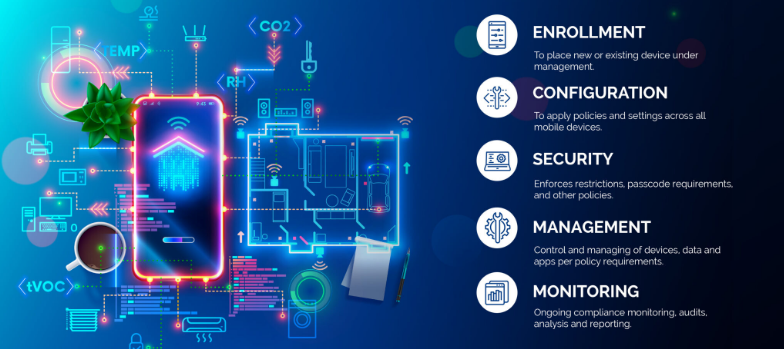
Mobile Device Management (MDM) is a comprehensive solution that enables businesses to centrally manage and secure their fleet of mobile devices, including Android and iPhone smartphones and tablets. MDM provides IT administrators with granular control over device settings, app distribution, security policies, and data management. By implementing MDM, SMBs can streamline device management, enhance data security, and ensure compliance with industry regulations.
2.1 Benefits of MDM for SMBs
Centralized Device Management: MDM allows businesses to manage multiple Android devices from a single console, simplifying device provisioning, configuration, and updates.
Enhanced Security: MDM enables IT administrators to enforce security policies, such as password requirements, encryption, and remote wipe capabilities, ensuring that lost or stolen devices do not compromise sensitive data.
App Distribution and Management: With MDM, businesses can distribute and manage apps on Android devices, ensuring that only authorized and secure applications are installed.
Secure Content and Data Management: MDM provides secure containers or workspaces on Android devices, segregating business data from personal information and enabling seamless data synchronization.
Compliance and Reporting: MDM offers robust reporting capabilities, allowing businesses to monitor device usage, enforce compliance regulations, and generate audit trails.
3. Implementing MDM for Android and iPhone Security
Implementing MDM for Android and iPhone security involves a series of steps to ensure a seamless deployment and effective device management. Let’s explore the key considerations and best practices for SMBs looking to implement MDM.
3.1 Assessing Business Needs and Objectives
Before implementing MDM, SMBs should assess their business needs and objectives. This includes identifying the number of devices to be managed, understanding the security requirements, and evaluating the compatibility with existing IT infrastructure.
3.2 Choosing the Right MDM Solution
There are numerous MDM solutions available in the market, each with its own set of features and capabilities. SMBs should carefully evaluate different MDM vendors, considering factors such as scalability, ease of use, security features, integration capabilities, and cost-effectiveness.
3.3 Defining Security Policies and Configuration
Once the MDM solution is selected, SMBs need to define security policies and configurations. This includes setting password requirements, enabling device encryption, configuring firewall settings, and defining app installation permissions. The policies should align with industry best practices and compliance regulations.
3.4 Device Enrollment and Onboarding
After defining security policies, SMBs can proceed with device enrollment and onboarding. This involves registering Android devices with the MDM system, configuring device settings, and installing necessary security profiles and certificates.
3.5 Monitoring and Maintenance
MDM is an ongoing process that requires continuous monitoring and maintenance. SMBs should regularly review security policies, update device configurations, patch vulnerabilities, and conduct security audits to ensure the effectiveness of the MDM solution.
4. Android vs. iPhone: MDM Considerations
While Android devices are more susceptible to security threats due to their open nature, it is essential to consider the unique security challenges posed by iOS devices, such as iPhones and iPads. Although iOS has built-in security features, SMBs should evaluate MDM solutions that offer comprehensive support for both Android and iOS devices to ensure consistent security across their mobile fleet.
5. The Future of MDM and Android Security
As technology evolves, the landscape of mobile device security continues to change. The future of MDM and Android security holds promising advancements, including:
Machine Learning and AI: MDM solutions can leverage machine learning and AI algorithms to detect and prevent emerging security threats proactively.
IoT Integration: With the rise of the Internet of Things (IoT), MDM will encompass managing and securing a broader range of devices, including wearables and smart home devices.
Biometric Authentication: MDM solutions will increasingly utilize biometric authentication, such as fingerprint and facial recognition, for secure device access.
Containerization and Virtualization: MDM will further enhance data security by implementing advanced containerization and virtualization techniques, isolating business data from personal information.
If your SMB is seeking to enhance Android and iPhone security by leveraging the benefits of MDM, contact us for professional assistance and guidance tailored to your specific needs.
The Power of Standard Operating Procedures for Small to Medium Businesses
SOP management platform with process library training assignments and performance metrics.
Small to medium businesses (SMBs) need increase agility by finding ways to operate more efficiently and minimize errors. One powerful tool that can help achieve these goals is the implementation of Standard Operating Procedures (SOPs). By creating well-defined and documented processes, businesses can boost efficiency, reduce errors, and ensure consistent quality and performance.
What are Standard Operating Procedures (SOPs)?
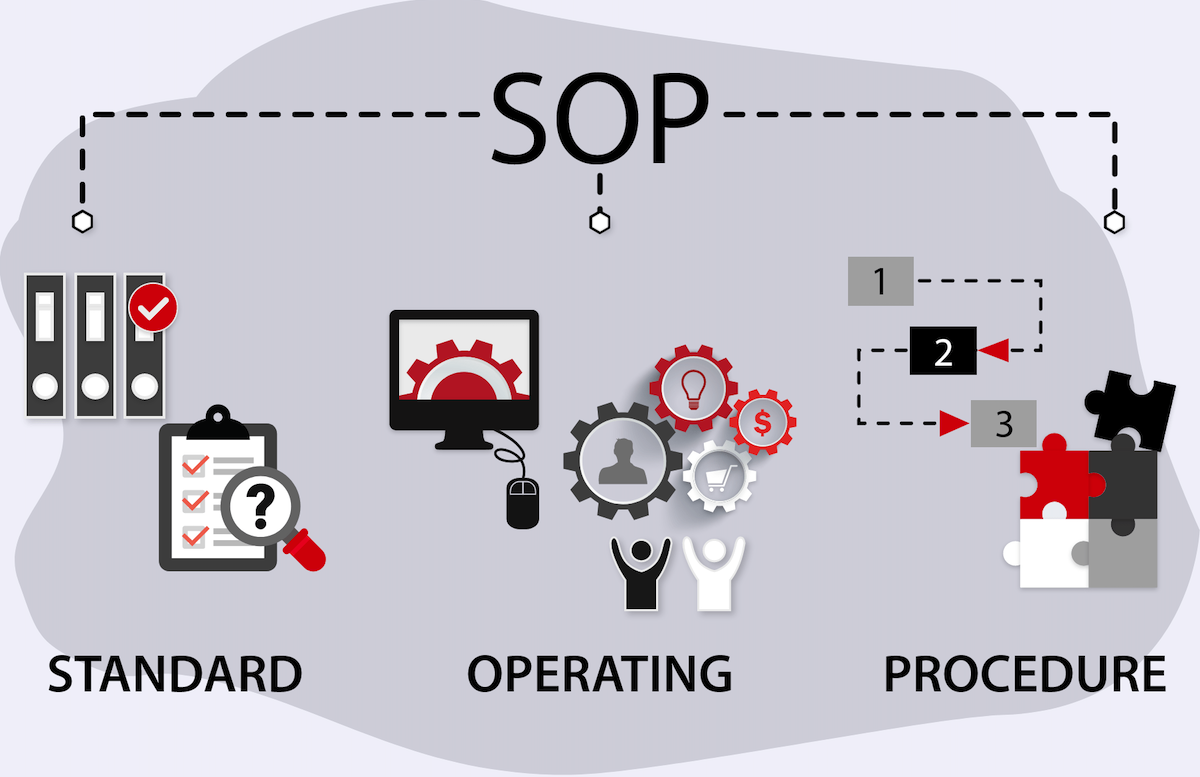
Simply put, SOPs are step-by-step instructions and guidelines that provide detailed explanations of how tasks or processes should be performed within a business. They establish a clear path for employees and vendors to follow, ensuring consistency and reducing the likelihood of errors or mistakes.
SOPs can cover a wide range of areas within a business, including operations, customer service, marketing, finance, HR, and especially IT tasks. No matter the industry or department, establishing SOPs can streamline operations and improve overall performance.
Benefits of Implementing SOPs
1. Boost Efficiency
One of the primary benefits of SOPs is the improvement in efficiency they bring to day-to-day operations. By standardizing processes, employees and vendors can complete tasks more quickly and effectively. SOPs eliminate the need for employees and vendors to figure out the best approach each time a task is performed, reducing the time wasted on trial and error. This, in turn, allows for increased productivity and ensures that deadlines are met consistently.
2. Ensure Consistency and Quality
SOPs help businesses maintain consistent quality and performance across their operations. By providing employees and vendors with clear instructions and guidelines, businesses can ensure that tasks are performed in the same manner, regardless of who is carrying them out. This consistency guarantees that customers receive the same level of service or product quality each time they interact with the business. Consistency also makes it easier to identify and correct errors or deviations from the expected standard.
3. Reduce Errors and Risks
Errors can be costly for businesses, both in terms of time and resources. SOPs play a crucial role in minimizing errors and mitigating risks. By providing employees and vendors with clear instructions and best practices, SOPs significantly reduce the chances of mistakes being made. This is particularly important for tasks that involve compliance, safety, regulatory requirements, or complex IT tasks. By adhering to established SOPs, businesses can ensure that they are operating within legal and ethical boundaries.
4. Facilitate Training and Onboarding
SOPs are invaluable as training tools for new employees and during the onboarding process. They provide a structured and consistent way to train employees on how tasks are to be performed. SOPs outline the necessary steps, tools, and expected outcomes for each task, making it easier for new hires to get up to speed quickly. By reducing the learning curve, SOPs allow businesses to get the most out of their employees from day one.
Implementing SOPs
To effectively implement SOPs, businesses should follow a structured approach:
Identify critical processes: Determine which processes within your business require SOPs. Focus on those that require consistency and have a significant impact on efficiency and customer satisfaction.
Document the processes: Work with relevant stakeholders to document each process step-by-step. Be clear and concise, and include any necessary visuals, charts, or diagrams to aid understanding.
Test and refine: Before implementing SOPs across the entire business, test them on a smaller scale. Solicit feedback from employees involved in the process, and refine the SOPs based on their input. This iterative approach ensures that the final SOPs are practical and effective.
Communicate and train: Once finalized, communicate the SOPs to all relevant employees. Hold training sessions to ensure that everyone understands how to follow the procedures correctly. Make the SOPs easily accessible through a centralized repository or digital platforms.
Monitor and update: SOPs should not be a one-time effort. Continuously monitor their effectiveness and update them as needed. Encourage employees to provide feedback and suggest improvements to keep the SOPs relevant and up to date.
Standard Operating Procedures are powerful tools for small to medium businesses looking to improve efficiency and reduce errors. By establishing clear guidelines and instructions, businesses can boost productivity, ensure consistent quality, and reduce risks. Implementing SOPs may require time and effort, but the benefits in terms of increased efficiency and reduced errors make it a worthwhile investment for any SMB.
Let Farmhouse Networking help you embrace the power of SOPs and pave the way for improved performance and growth – contact us for assistance.
And God will generously provide all you need. Then you will always have everything you need and plenty left over to share with others. As the Scriptures say,
“They share freely and give generously to the poor. Their good deeds will be remembered forever.”
For God is the one who provides seed for the farmer and then bread to eat. In the same way, he will provide and increase your resources and then produce a great harvest of generosity in you. - 2 Corinthians 9:8-10
We use cookies to ensure that we give you the best experience on our website. If you continue to use this site we will assume that you are happy with it.