A small business owner collaborates with an IT security partner to elevate cybersecurity from a technical task to a core business risk management priority.
Across regions and industries, executives now rank cybersecurity as their top external risk, ahead of supply chain issues, regulatory changes, and macroeconomic concerns. For small and mid‑sized businesses, cyber incidents can rapidly translate into operational outages, reputational damage, and long‑term financial loss.
What this means for SMBs
Security has moved out of the server room Leaders are embedding cybersecurity within enterprise risk management, using business continuity plans, risk frameworks, and scenario planning rather than treating it as a pure IT issue. Business owners must therefore own cyber risk in the same way they own cash flow and strategy.
Skill gaps and competing priorities Executives report that talent shortages, workload pressure, and cost constraints make it difficult to execute technology and security plans effectively. Many SMBs rely on a small IT team that spends most of its time on basic maintenance instead of proactive defense.
Vendor pressure and forced upgrades A significant share of executives cite vendor lock‑in and forced upgrades that constrain security planning, delay patching, and divert funds from higher‑value initiatives such as AI and modernization. SMBs need more control over when and how they adopt changes.
Practical action steps for owners and IT
Treat cybersecurity as a business risk
Add cyber risk to your leadership agenda, risk register, and strategic planning sessions.
Define risk scenarios in business terms: downtime costs, lost sales, regulatory penalties, and reputational impact.
Build structured risk, continuity, and investment processes
Implement a risk framework and business continuity plan that cover key systems, suppliers, and customer touchpoints.
Evaluate security investments based on multi‑year business value, including reduced incident costs and improved resilience.
Leverage outsourcing as a strategy
Follow the many organizations that already outsource or are planning to outsource cybersecurity services to stabilize operations and address skill shortages.
Let internal IT prioritize strategic initiatives and innovation while a specialist partner handles monitoring, vulnerabilities, and incident response.
Customer questions – and your answers
“How do you protect our data and services?” Cybersecurity is managed at the leadership level, supported by formal risk management, continuity planning, and external security expertise.
“Can you stay operational if you are attacked?” We create tested business continuity and disaster recovery plans, including backups, alternate processes, and clear responsibilities during incidents.
“Are you keeping up with evolving threats?” We evaluate technology with security as a key criterion, and we work with dedicated security partners to adapt to changing risks.
How Farmhouse Networking helps SMBs
Farmhouse Networking helps business owners turn cybersecurity into a manageable, measurable business function by:
Designing and managing secure, resilient IT environments that align with your risk appetite and growth plans.
Delivering outsourced cybersecurity services to tackle monitoring, patching, and incident response so your internal team can focus on innovation.
Advising on vendor strategies and technology investments so security, cost, and flexibility stay in balance.
Call to action
To find out how Farmhouse Networking can help your business make cybersecurity a strategic advantage, email support@farmhousenetworking.com for more information about how Farmhouse Networking can help improve your business.
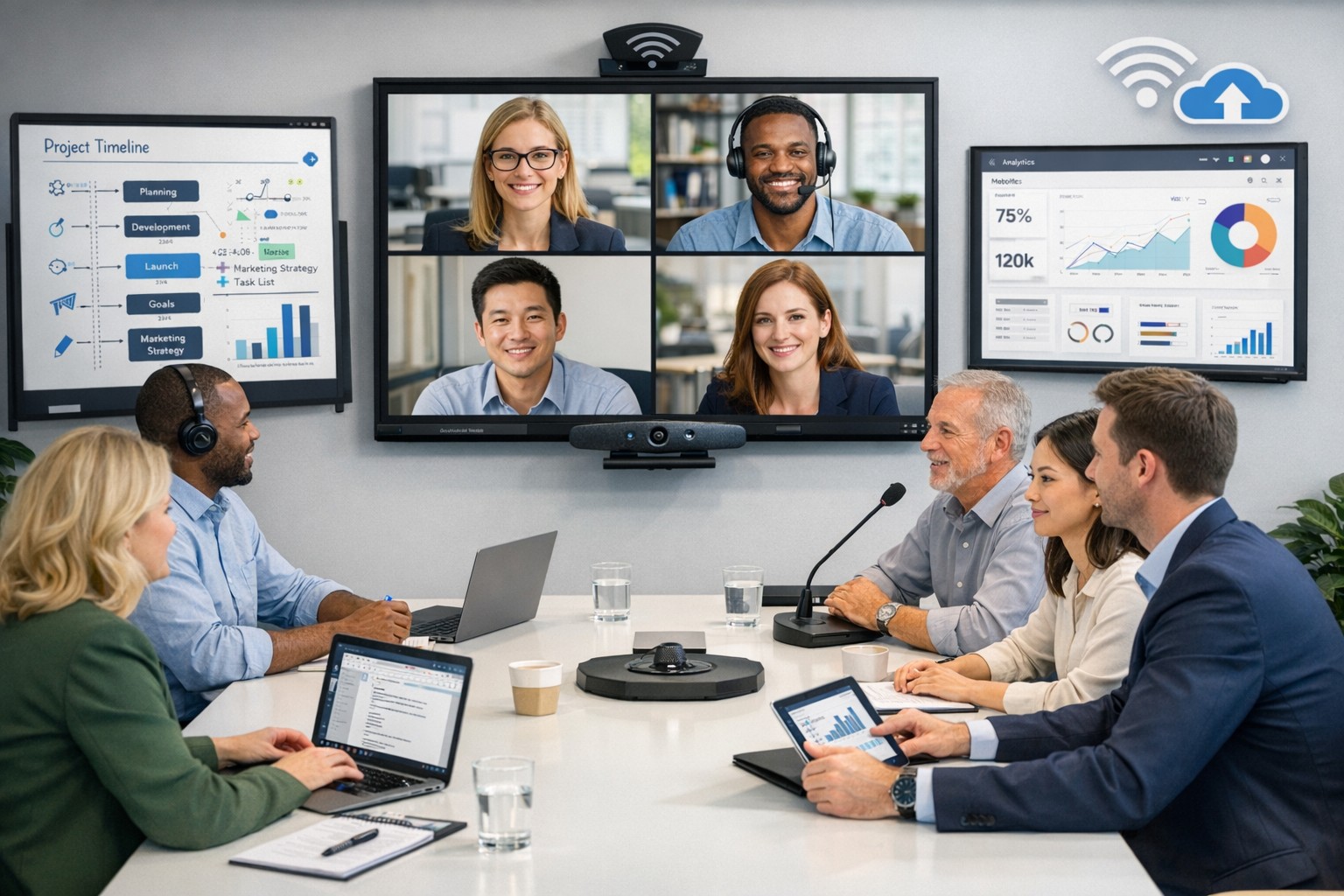
Modern business teams achieve inclusivity and engagement through technology‑driven hybrid meetings
Meetings are where company culture either thrives—or breaks apart. Too often, remote team members feel like silent observers rather than active participants. The solution? Using technology as the binding factor to create inclusive, engaging meetings that inspire teams and drive productivity.
For business owners, embracing the right meeting technology isn’t just an IT upgrade—it’s a strategic move to strengthen collaboration, innovation, and employee satisfaction across every department.
Why Technology Matters for Inclusive Meetings
Inclusivity in meetings means every voice can be heard—regardless of where or how someone works. When done right, meeting technology:
Empowers remote and in‑office employees to collaborate equally.
Improves engagement through real‑time participation tools like polls, shared whiteboards, and chat functions.
Builds a culture of transparency and belonging that fuels retention and innovation.
According to a 2025 Gartner report, companies with highly inclusive communication practices see up to 35% higher employee performance and 25% faster decision‑making. The right technology stack makes inclusion measurable, scalable, and sustainable.
Action Steps for Business Owners and IT Departments
Here are practical steps your organization can take to create inclusive, inspiring meetings:
Audit Your Meeting Tools Evaluate your current software and hardware. Are your video conferencing, messaging, and file‑sharing systems integrated? Do all employees have equal access, regardless of location or device?
Invest in Hybrid‑Ready Technology Use conference room equipment with high‑quality cameras, directional microphones, and smart displays. Platforms like Microsoft Teams or Zoom Rooms ensure both remote and on‑site attendees can see and hear each other clearly.
Adopt Collaboration Platforms That Promote Engagement Look for tools with live polling, breakout rooms, and digital whiteboards. These features keep people involved and give everyone a voice.
Implement an Inclusive Meeting Policy Technology works best when paired with intentional culture. Train employees to use “raise hand” features, share screens respectfully, and rotate facilitation roles.
Ensure Strong IT Infrastructure Reliable connectivity, robust cybersecurity, and consistent software updates are fundamental. Slow connections and glitches exclude people as surely as poor communication does.
Measure and Iterate Capture feedback from employees after meetings. Use that data to refine your collaboration tools and processes.
Common Questions from Business Owners
Q: Our team already uses Zoom—why upgrade? A: Basic video conferencing isn’t enough. True inclusivity requires integrated tools that connect collaboration, chat, scheduling, and project management, so employees engage before, during, and after meetings.
Q: How can we make sure remote employees feel equally valued? A: Combine visual presence (camera quality and layouts), participation (modeled engagement practices), and access (shared digital workspaces). Empower everyone to contribute ideas asynchronously through shared notes or chat.
Q: Will implementing new technology disrupt daily operations? A: Not if it’s done strategically. Partnering with IT professionals ensures a phased rollout, minimal downtime, and custom training so your team quickly gains confidence in the new tools.
How Farmhouse Networking Can Support Your Success
At Farmhouse Networking, we help small and medium‑sized businesses design, deploy, and maintain technology ecosystems that foster inclusivity and engagement. Our team can:
Audit your existing meeting and communication systems.
Recommend scalable, cost‑effective collaboration platforms tailored to your team’s needs.
Configure hybrid meeting rooms for optimal video, audio, and security performance.
Provide employee training on best practices for inclusive meeting culture.
Offer ongoing support so your systems stay secure, compliant, and fully optimized.
With Farmhouse Networking as your IT partner, your technology won’t just connect devices—it will connect people, ideas, and business goals.
Ready to Transform Your Meetings?
Inclusive meetings don’t just happen—they’re built through intentional leadership and smart technology choices. By integrating hybrid meeting tools and IT best practices, your organization can improve communication, strengthen culture, and keep employees inspired.
💡 Email support@farmhousenetworking.com to learn how our team can help you create a more connected and inclusive workplace today.
And God will generously provide all you need. Then you will always have everything you need and plenty left over to share with others. As the Scriptures say,
“They share freely and give generously to the poor. Their good deeds will be remembered forever.”
For God is the one who provides seed for the farmer and then bread to eat. In the same way, he will provide and increase your resources and then produce a great harvest of generosity in you. - 2 Corinthians 9:8-10
We use cookies to ensure that we give you the best experience on our website. If you continue to use this site we will assume that you are happy with it.