How Small Manufacturers Can Benefit from Smart Technologies
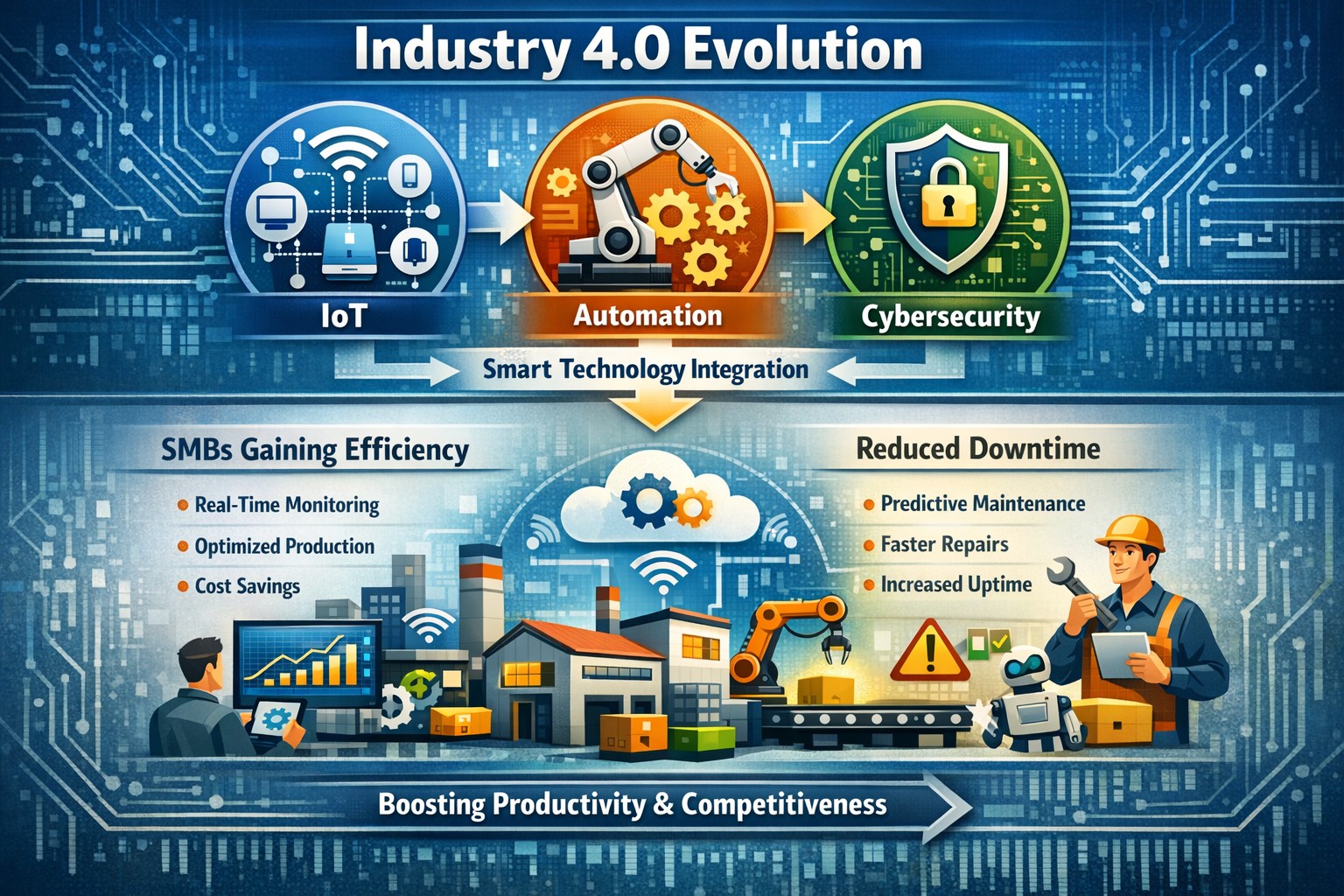
Infographic: Key Industry 4.0 pillars like IoT, AI driving SMB productivity and cost reductions.
Industry 4.0 is at the heart of the rapid transformation of the manufacturing industry. While the term may conjure images of massive, high-tech factories, smart manufacturing technologies are not just for industry giants. Small manufacturers are uniquely positioned to harness the power of Industry 4.0, unlocking new efficiencies, agility, and growth opportunities that were once out of reach.
What Is Industry 4.0?
Industry 4.0 refers to the integration of digital technologies-such as the Internet of Things (IoT), Artificial Intelligence (AI), machine learning, automation, and data analytics-into manufacturing processes. These technologies enable real-time data collection, smarter decision-making, and greater connectivity across the factory floor.
Key Benefits for Small Manufacturers
1. Improved Efficiency and Productivity Smart manufacturing automates repetitive tasks, streamlines workflows, and minimizes manual errors. With real-time monitoring and predictive maintenance, small manufacturers can reduce downtime and keep production running smoothly, leading to higher output and better resource utilization.
2. Cost Reduction and Resource Optimization By leveraging IoT sensors and AI-driven analytics, manufacturers can identify inefficiencies, reduce waste, and optimize energy usage. Predictive maintenance further cuts costs by preventing unexpected equipment failures and extending machinery lifespan.
3. Enhanced Agility and Flexibility Industry 4.0 technologies empower small manufacturers to quickly adapt to changing market demands. Digital tools like 3D printing and flexible automation make it easier to customize products and respond rapidly to customer needs, opening doors to new markets and revenue streams.
4. Superior Quality Control Advanced quality control systems and machine learning models help detect defects early in the production cycle. This minimizes waste, reduces rework, and ensures consistent product quality-strengthening your brand and customer satisfaction.
5. Data-Driven Decision Making With access to real-time data from connected devices, small manufacturers can make informed decisions faster. This visibility enables proactive adjustments, better supply chain management, and strategic planning for long-term growth.
6. Access to Innovation and Collaboration Industry 4.0 levels the playing field, allowing small businesses to adopt cutting-edge technologies and collaborate with partners, research institutions, and technology providers. This fosters innovation and keeps your business competitive in a rapidly changing marketplace.
Smart Technologies Driving the Change
IoT and Sensors: Enable real-time monitoring of equipment and processes.
AI and Machine Learning: Optimize production schedules, predict maintenance needs, and enhance quality control.
Automation and Robotics: Streamline repetitive tasks, reduce labor costs, and improve safety.
3D Printing (Additive Manufacturing): Allows for rapid prototyping and custom, small-batch production.
Augmented Reality (AR) and Digital Twins: Support worker training, remote assistance, and virtual testing of products or processes.
Overcoming Barriers: It’s More Accessible Than You Think
Many small manufacturers worry that Industry 4.0 is too complex or costly. However, the reality is that these technologies are increasingly affordable and scalable. Small steps-like adding IoT sensors or adopting cloud-based analytics-can deliver immediate benefits without the need for massive upfront investments.
“Don’t let the complexities of Industry 4.0 technologies hold you back. Small manufacturers are discovering the transformative power of smart technologies to stay competitive and revolutionize their processes.”
Ready to unlock the full potential of your manufacturing business? Contact Farmhouse Networking today to discover how we can help you embrace Industry 4.0 and achieve smarter, more efficient operations. Let’s build the future of manufacturing-together!
Elevate from MSP tech guru to true business partner driving growth and efficiency
Having a Managed Service Provider (MSP) has become crucial for businesses of all sizes. But not all MSPs are created equal. While many can handle your tech needs, the real value comes from an MSP that truly understands your business. Let’s explore how to distinguish between an MSP that’s merely tech-savvy and one that’s a genuine business partner.
They Speak Your Language, Not Just Tech Jargon
A tech-focused MSP will bombard you with technical terms and specifications. In contrast, a business-savvy MSP translates complex tech concepts into business outcomes. They discuss how technology solutions can drive growth, improve efficiency, and boost your bottom line.
They Ask the Right Questions
Business-centric MSPs will:
Inquire about your business model and competitive landscape
Show interest in your long-term goals and challenges
Seek to understand your industry-specific needs and regulations
They Offer Tailored Solutions, Not One-Size-Fits-All
An MSP that knows your business will:
Provide customized solutions addressing your unique challenges
Adapt their services as your business evolves
Demonstrate flexibility in their approach to meet your changing needs
They’re Proactive, Not Just Reactive
While a tech-focused MSP might wait for problems to arise, a business-oriented partner will:
Monitor your systems to spot potential issues before they escalate
Suggest improvements that align with your business objectives
Provide regular performance updates and strategic recommendations
They Understand Your Industry
A true business partner will:
Have experience in your specific market
Offer insights into industry-specific challenges and opportunities
Provide case studies or references from similar businesses in your sector
They Focus on User Experience
An MSP that prioritizes your business will:
Emphasize the importance of user satisfaction and productivity
Offer flexible support options tailored to your team’s preferences
Provide customized training to help your staff leverage technology effectively
They Align with Your Growth Plans
A business-savvy MSP will:
Discuss how their services can scale with your company
Help you plan for future technological needs as you expand
Offer insights into emerging tech trends relevant to your industry
The Bottom Line
Choosing an MSP that truly understands your business can be the difference between simply maintaining your IT infrastructure and leveraging technology to drive real business growth. Look for a partner who speaks your language, asks the right questions, and aligns their services with your unique business goals.
Ready to find an MSP that’s more than just a tech expert? Contact Farmhouse Networking today to discover how we can be your strategic IT partner, driving your business forward with tailored technology solutions.
Visualizing cloud IT strategies that drive success in government subcontracting competitiveness
Smaller manufacturers often face significant challenges when bidding for contracts. However, by strategically leveraging information technology (IT) solutions, these businesses can enhance their competitiveness and stand out in the bidding process. This article explores various IT strategies that can help small manufacturers gain an edge when pursuing government subcontracts.
Understanding the Competitive Landscape
The government contracting market is vast and complex, characterized by stringent regulations and a diverse pool of competitors. For smaller manufacturers, distinguishing themselves from larger firms requires innovative approaches. The integration of advanced IT solutions can provide the necessary tools to improve efficiency, compliance, and overall competitiveness.
Key IT Solutions for Competitive Advantage
Proposal Management Software: Crafting compelling proposals is critical in government contracting. Utilizing proposal management software can streamline the creation process by providing templates and analytics to track success rates. This allows manufacturers to present well-structured, persuasive bids that highlight their unique capabilities and innovations.
Project Management Tools: Effective project management is essential for meeting government requirements and deadlines. Implementing robust project management software helps small manufacturers keep track of milestones, manage resources efficiently, and ensure compliance with government standards. These tools facilitate collaboration among team members and provide transparency in progress reporting.
Cloud Computing: Cloud-based solutions offer scalability and flexibility that are particularly beneficial for smaller firms. By adopting cloud computing, manufacturers can reduce upfront IT costs while enhancing collaboration through real-time data sharing and communication. This adaptability allows them to respond quickly to changing project requirements or new opportunities.
Customer Relationship Management (CRM) Systems: A strong CRM system enables small manufacturers to manage relationships with government agencies effectively. By tracking interactions and understanding client needs, companies can tailor their proposals and communications to better align with government expectations.
Compliance Management Software: Compliance with regulations such as FAR (Federal Acquisition Regulation) is crucial for government contractors. Investing in compliance management software helps ensure adherence to legal requirements while simplifying documentation processes. This reduces the risk of non-compliance penalties and enhances the company’s reputation.
Data Analytics Tools: Leveraging data analytics can provide insights into market trends, competitor strategies, and customer preferences. Small manufacturers can use these insights to refine their bidding strategies and identify areas for improvement in their offerings.
Emphasizing Innovation
Innovation is a key differentiator in government contracting. Smaller manufacturers should focus on integrating cutting-edge technologies such as artificial intelligence (AI) and automation into their operations:
AI-Driven Solutions: AI can enhance decision-making processes by analyzing large datasets to predict project outcomes or identify potential risks. This capability allows manufacturers to make informed decisions quickly, improving their responsiveness in competitive bids.
Process Automation: Automating routine tasks not only increases efficiency but also minimizes errors. By streamlining operations through automation, small manufacturers can allocate more resources toward strategic activities that enhance their competitive positioning.
Building Strategic Partnerships
Forming partnerships with technology providers or consulting firms can further bolster a small manufacturer’s capabilities. These collaborations can offer access to expertise in implementing IT solutions tailored for government contracting needs, ensuring that smaller firms remain competitive against larger players.
If you’re ready to take your government subcontracting efforts to the next level, don’t navigate this complex landscape alone. At Farmhouse Networking, we specialize in helping small manufacturers leverage IT solutions to enhance their competitiveness and streamline their operations.
B2B leaders embracing Industry 4.0: Connect for smart manufacturing and automation opportunities
Small manufacturers are discovering the transformative power of Industry 4.0 technologies. By leveraging smart technologies like the Internet of Things (IoT), Artificial Intelligence (AI), and machine learning, these businesses are not only staying competitive but also revolutionizing their manufacturing processes. Let’s explore how these cutting-edge tools can benefit small manufacturers and propel them into the future of production.
The Power of Real-Time Data
One of the most significant advantages of smart manufacturing technologies is the ability to harness real-time data. By integrating IoT sensors into production lines, small manufacturers can gain unprecedented visibility into their operations. This continuous stream of information allows for:
Improved Cost Control: Real-time monitoring helps identify inefficiencies, reduce waste, and optimize resource allocation, leading to significant cost savings.
Enhanced Supply Chain Management: With up-to-the-minute data on inventory levels and production rates, manufacturers can make informed decisions to keep their supply chains running smoothly.
Proactive Maintenance: IoT sensors can detect early signs of equipment wear, allowing for predictive maintenance that prevents costly downtime and extends machinery lifespan.
AI-Powered Decision Making
Artificial Intelligence is revolutionizing how small manufacturers approach decision-making and problem-solving. By leveraging AI technologies, businesses can:
Optimize Production Schedules: AI algorithms can analyze complex data sets to create efficient production schedules that maximize resource utilization and meet customer demands.
Enhance Quality Control: Machine learning models can identify subtle patterns in production data, helping to detect and prevent quality issues before they escalate.
Personalize Customer Experiences: AI-powered recommendation engines can offer tailored product suggestions, improving customer satisfaction and driving sales.
Machine Learning for Process Optimization
Machine learning is proving to be a game-changer for small manufacturers looking to streamline their operations. This technology offers several key benefits:
Predictive Analytics: By analyzing historical data, machine learning algorithms can forecast future trends, helping manufacturers make proactive decisions about production, inventory, and maintenance.
Automated Quality Assurance: Machine learning models can be trained to detect defects or anomalies in products with high accuracy, reducing the need for manual inspections.
Process Optimization: Through continuous analysis of production data, machine learning can identify opportunities for process improvements, leading to increased efficiency and reduced costs.
Overcoming Implementation Challenges
While the benefits of Industry 4.0 technologies are clear, small manufacturers may face challenges in adoption. These can include:
Data Security Concerns: As more devices become connected, ensuring the security of sensitive manufacturing data becomes crucial.
Investment Costs: Implementing new technologies often requires upfront investment, which can be daunting for smaller businesses.
Skills Gap: Adopting advanced technologies may require upskilling existing staff or hiring new talent with specialized expertise.
The Path Forward
Despite these challenges, the potential rewards of embracing Industry 4.0 technologies far outweigh the risks. Small manufacturers who invest in smart technologies position themselves for:
– Increased competitiveness in the global market – Improved operational efficiency and cost savings – Enhanced product quality and customer satisfaction – Greater agility in responding to market changes
As we move further into the digital age, the adoption of smart manufacturing technologies is no longer a luxury—it’s a necessity for small manufacturers who want to thrive in an increasingly competitive landscape.
Ready to take your manufacturing operations to the next level? Don’t let the complexities of Industry 4.0 technologies hold you back. Contact Farmhouse Networking today to learn how we can help you implement smart manufacturing solutions tailored to your unique needs. Let’s work together to unlock the full potential of your manufacturing business and pave the way for a smarter, more efficient future.
And God will generously provide all you need. Then you will always have everything you need and plenty left over to share with others. As the Scriptures say,
“They share freely and give generously to the poor. Their good deeds will be remembered forever.”
For God is the one who provides seed for the farmer and then bread to eat. In the same way, he will provide and increase your resources and then produce a great harvest of generosity in you. - 2 Corinthians 9:8-10
We use cookies to ensure that we give you the best experience on our website. If you continue to use this site we will assume that you are happy with it.