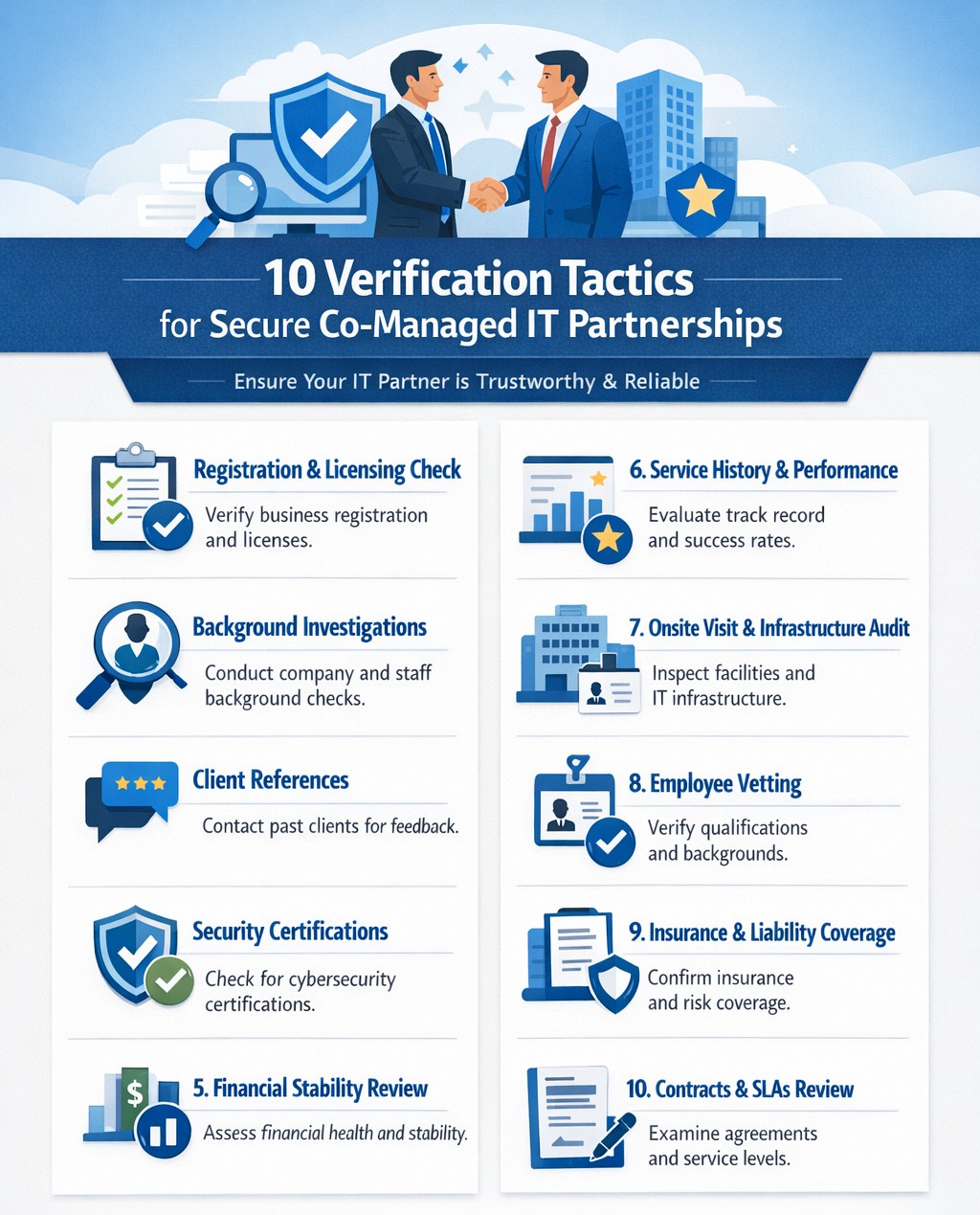
10 Smart Strategies to Verify the Integrity of a Business Before Partnering
Infographic outlines key steps for due diligence and vetting partners effectively.
It’s easier than ever to connect with businesses globally. However, this convenience comes with risks, as fraudulent companies are becoming increasingly sophisticated. Whether you’re considering a new vendor, partner, or service provider, it’s crucial to ensure their integrity before committing. Below are ten actionable strategies to help you assess the legitimacy of a business you’ve never worked with before.
1. Verify Business Registration
Start by checking if the company is officially registered with the appropriate authorities. Search the Secretary of State website for their registration details or consult platforms like the Better Business Bureau (BBB) or Duns & Bradstreet (DUNS) for additional information. A legitimate business will have clear records of incorporation, licenses, and operating permits.
2. Analyze Their Online Presence
A professional online presence is often a hallmark of a credible business. Review their website for up-to-date information, polished design, and clear branding. Also, check their social media activity for consistent engagement and interactions with customers. Inactive or poorly maintained profiles can be red flags. You can also check a websites WHOIS information to see when it was created and if their registration address and name match their company name.
3. Look for Customer Reviews
Customer feedback is invaluable in assessing credibility. Search for reviews on independent platforms like Google Reviews, Yelp, or Trustpilot rather than relying solely on testimonials posted on their website. Look for detailed reviews that reflect real experiences rather than vague or overly positive comments.
4. Check for Awards and Media Mentions
Reputable companies often receive recognition from industry organizations or media outlets. Search for awards, certifications, or mentions in trusted publications to confirm their standing in the market.
5. Assess Employee Feedback
Platforms like Glassdoor can provide insights into how employees view the company. Consistent negative feedback from employees may indicate deeper issues within the organization.
6. Confirm Contact Information
Legitimate businesses provide clear and accessible contact details, including physical addresses, phone numbers, and email addresses. Cross-check these details against Google Maps and other sources to ensure they match up.
7. Conduct Social Proof Checks
Look for signs of social proof such as customer testimonials, case studies, or partnerships with other reputable companies. These indicators can help validate the company’s credibility.
8. Search for Red Flags
Be alert to warning signs such as unprofessional websites, conflicting contact information, or a lack of customer reviews. Additionally, search for the company name alongside terms like “scam” or “fraud” to uncover any potential issues.
9. Use Reputation Monitoring Tools
Leverage tools like media monitoring platforms and sentiment analysis software to gauge public perception of the company across social media and news outlets. A sudden spike in negative mentions could indicate potential problems.
10. Request Documentation
Don’t hesitate to ask for proof of registration, certifications, or client references directly from the company. Legitimate businesses will readily provide this information as part of your due diligence process.
Why Due Diligence Matters
Failing to vet a business properly can lead to financial losses, reputational damage, and even legal complications. By following these steps, you can protect your organization from fraudulent actors and build partnerships rooted in trust.
Need expert IT managed services and want a business with integrity? Farmhouse Networking is the clear choice. Contact us today to learn how we can support your business IT needs and rest assured our partnership is built on trust!
And God will generously provide all you need. Then you will always have everything you need and plenty left over to share with others. As the Scriptures say,
“They share freely and give generously to the poor. Their good deeds will be remembered forever.”
For God is the one who provides seed for the farmer and then bread to eat. In the same way, he will provide and increase your resources and then produce a great harvest of generosity in you. - 2 Corinthians 9:8-10
We use cookies to ensure that we give you the best experience on our website. If you continue to use this site we will assume that you are happy with it.