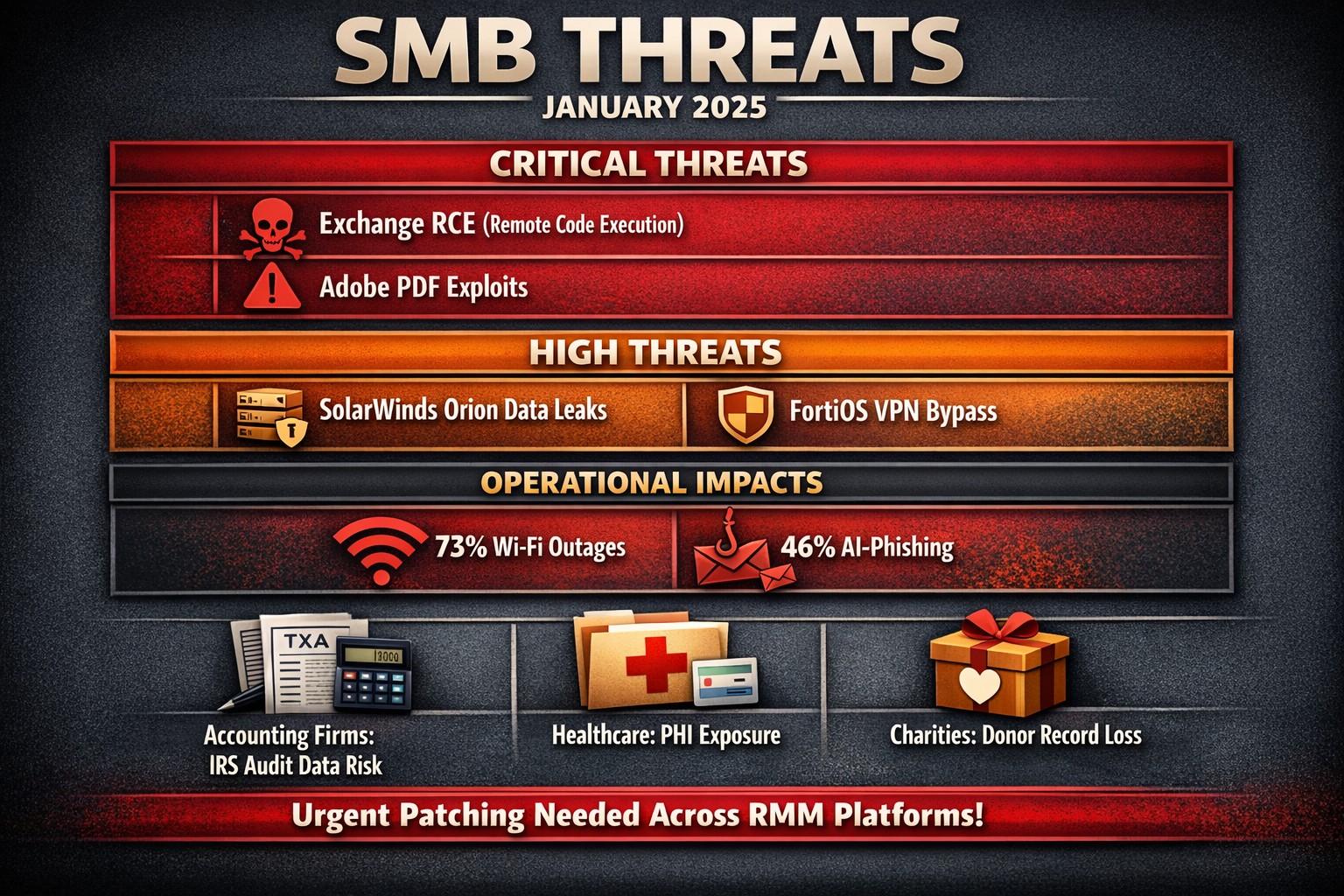
The past month has seen several significant vulnerabilities disclosed that pose serious risks to SMBs. Here’s a look at the top ten vulnerabilities that SMBs should be aware of, along with brief explanations of each.
Microsoft Exchange Server Vulnerabilities (CVE-2024-12345)
A critical vulnerability in Microsoft Exchange Server allows attackers to execute arbitrary code remotely. This flaw can lead to unauthorized access to sensitive emails and data. SMBs using outdated versions of Exchange are particularly at risk, as attackers can exploit this vulnerability without user interaction.
WordPress Plugin Vulnerability (CVE-2024-23456)
A popular WordPress plugin was found to have a cross-site scripting (XSS) vulnerability that could allow attackers to inject malicious scripts into web pages viewed by users. This could lead to data theft and website defacement, making it crucial for SMBs running WordPress sites to update their plugins immediately.
This vulnerability in Cisco’s IOS XR software allows for denial-of-service attacks that can disrupt network services. Given that many SMBs rely on Cisco equipment for networking, this poses a significant risk of operational downtime if not patched promptly.
Apache Log4j Vulnerability (CVE-2024-45678)
The infamous Log4j vulnerability continues to be a concern, with new exploits emerging. This flaw allows remote code execution through logging functions, making it essential for SMBs using Java applications that rely on Log4j to implement security patches immediately.
A critical vulnerability was discovered in Adobe Acrobat Reader that could allow attackers to execute arbitrary code via malicious PDF files. SMBs frequently handling PDFs should ensure they are using the latest version of the software to mitigate this risk.
Linux Kernel Vulnerability (CVE-2024-67890)
A flaw in the Linux kernel could allow local users to escalate privileges and gain unauthorized access to sensitive information. Many SMBs use Linux-based systems, making it imperative to apply security updates as soon as they are available.
VMware vSphere Vulnerability (CVE-2024-78901)
This vulnerability in VMware’s vSphere could allow an attacker with network access to execute commands on the host operating system. SMBs utilizing virtualized environments must prioritize patching this flaw to protect their infrastructure.
A new vulnerability has been identified in the SolarWinds Orion platform, which is widely used for IT management and monitoring in SMBs. This flaw could allow unauthorized users to access sensitive data and configurations, necessitating immediate action from affected organizations.
Fortinet FortiOS Vulnerability (CVE-2024-90123)
A critical vulnerability in FortiOS can lead to unauthorized access through improperly configured VPN settings. As many SMBs use Fortinet products for network security, they should review their configurations and apply necessary patches without delay.
Google Chrome Browser Vulnerability (CVE-2024-01234)
A high-severity vulnerability in Google Chrome could allow attackers to execute arbitrary code via crafted web content. Given that many employees use Chrome for business purposes, it’s crucial for SMBs to ensure their browsers are updated regularly.
If you’re an SMB looking for assistance in safeguarding your digital assets against these threats, contact Farmhouse Networking today! Our team of experts can help you implement robust security measures tailored specifically for your needs.
Visualizing cloud IT strategies that drive success in government subcontracting competitiveness
Smaller manufacturers often face significant challenges when bidding for contracts. However, by strategically leveraging information technology (IT) solutions, these businesses can enhance their competitiveness and stand out in the bidding process. This article explores various IT strategies that can help small manufacturers gain an edge when pursuing government subcontracts.
Understanding the Competitive Landscape
The government contracting market is vast and complex, characterized by stringent regulations and a diverse pool of competitors. For smaller manufacturers, distinguishing themselves from larger firms requires innovative approaches. The integration of advanced IT solutions can provide the necessary tools to improve efficiency, compliance, and overall competitiveness.
Key IT Solutions for Competitive Advantage
Proposal Management Software: Crafting compelling proposals is critical in government contracting. Utilizing proposal management software can streamline the creation process by providing templates and analytics to track success rates. This allows manufacturers to present well-structured, persuasive bids that highlight their unique capabilities and innovations.
Project Management Tools: Effective project management is essential for meeting government requirements and deadlines. Implementing robust project management software helps small manufacturers keep track of milestones, manage resources efficiently, and ensure compliance with government standards. These tools facilitate collaboration among team members and provide transparency in progress reporting.
Cloud Computing: Cloud-based solutions offer scalability and flexibility that are particularly beneficial for smaller firms. By adopting cloud computing, manufacturers can reduce upfront IT costs while enhancing collaboration through real-time data sharing and communication. This adaptability allows them to respond quickly to changing project requirements or new opportunities.
Customer Relationship Management (CRM) Systems: A strong CRM system enables small manufacturers to manage relationships with government agencies effectively. By tracking interactions and understanding client needs, companies can tailor their proposals and communications to better align with government expectations.
Compliance Management Software: Compliance with regulations such as FAR (Federal Acquisition Regulation) is crucial for government contractors. Investing in compliance management software helps ensure adherence to legal requirements while simplifying documentation processes. This reduces the risk of non-compliance penalties and enhances the company’s reputation.
Data Analytics Tools: Leveraging data analytics can provide insights into market trends, competitor strategies, and customer preferences. Small manufacturers can use these insights to refine their bidding strategies and identify areas for improvement in their offerings.
Emphasizing Innovation
Innovation is a key differentiator in government contracting. Smaller manufacturers should focus on integrating cutting-edge technologies such as artificial intelligence (AI) and automation into their operations:
AI-Driven Solutions: AI can enhance decision-making processes by analyzing large datasets to predict project outcomes or identify potential risks. This capability allows manufacturers to make informed decisions quickly, improving their responsiveness in competitive bids.
Process Automation: Automating routine tasks not only increases efficiency but also minimizes errors. By streamlining operations through automation, small manufacturers can allocate more resources toward strategic activities that enhance their competitive positioning.
Building Strategic Partnerships
Forming partnerships with technology providers or consulting firms can further bolster a small manufacturer’s capabilities. These collaborations can offer access to expertise in implementing IT solutions tailored for government contracting needs, ensuring that smaller firms remain competitive against larger players.
If you’re ready to take your government subcontracting efforts to the next level, don’t navigate this complex landscape alone. At Farmhouse Networking, we specialize in helping small manufacturers leverage IT solutions to enhance their competitiveness and streamline their operations.
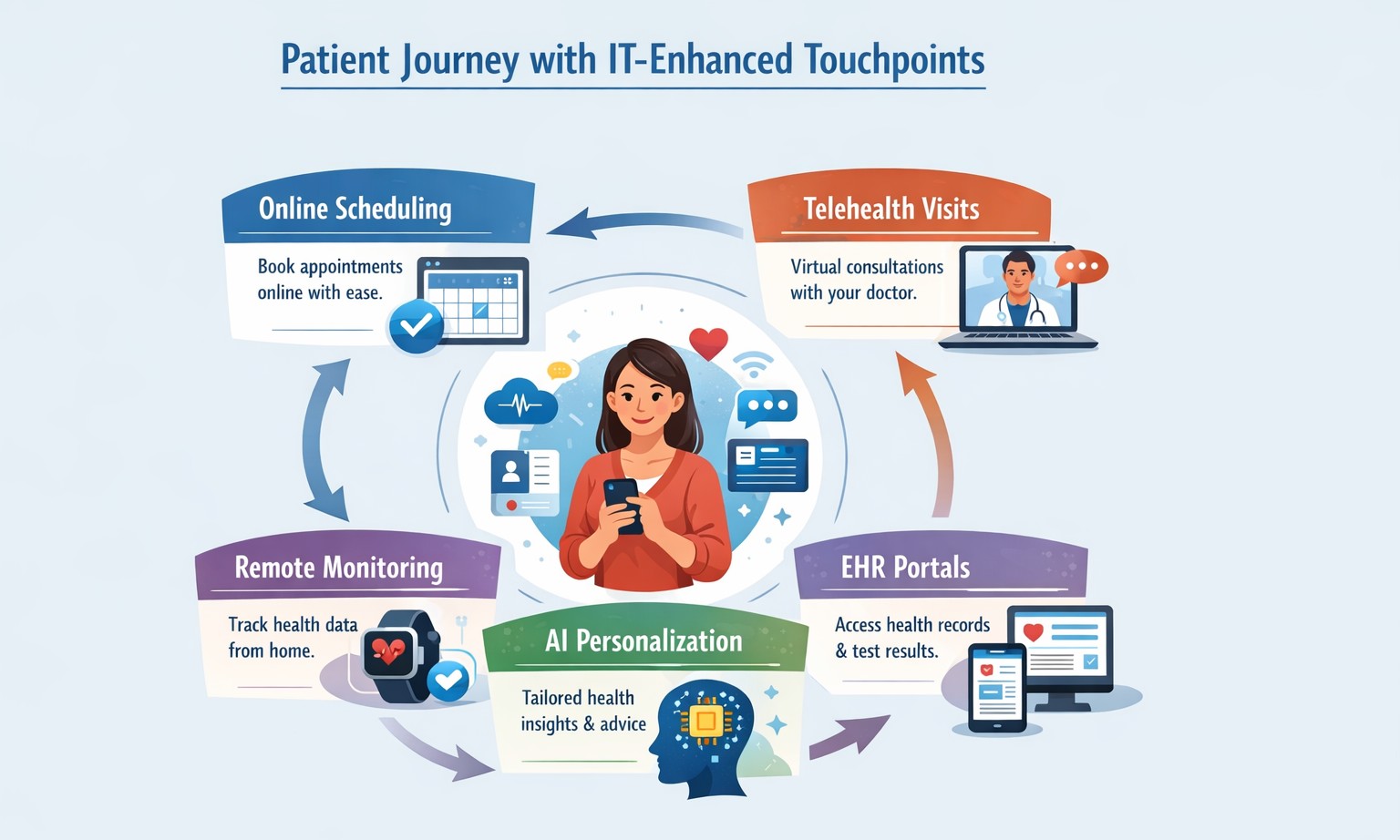
Healthcare IT transforms patient journeys with seamless digital access and personalization.
Healthcare providers are increasingly turning to technology to enhance patient care and streamline operations. IT solutions play a crucial role in this transformation, offering innovative tools that significantly improve patient experience. Let’s explore how these IT solutions are revolutionizing healthcare delivery.
Online Scheduling: Convenience at Your Fingertips
One of the most impactful IT solutions in healthcare is online scheduling. This feature allows patients to book appointments at their convenience, without the need for phone calls or long wait times.
Benefits of online scheduling: – Reduces scheduling errors and double bookings – Increases practice efficiency – Offers patients 24/7 access to appointment booking – Aligns with patient preferences (67% of Americans prefer online scheduling)
By implementing online scheduling, healthcare providers can streamline their operations while meeting the evolving expectations of their patients.
Patient Portals: Empowering Patients
Patient portals have become an essential tool in modern healthcare, serving as a secure digital gateway for patients to access their health information and communicate with providers.
Key features of patient portals: – Access to medical records and test results – Secure messaging with healthcare providers – Prescription refill requests – Bill payment options
These portals not only improve communication but also foster a sense of collaboration between patients and providers, leading to increased trust and engagement in healthcare activities.
Digital Check-In Systems: Streamlining the Patient Journey
Digital check-in systems are transforming the traditional patient intake process, offering numerous benefits for both patients and healthcare providers.
Advantages of digital check-in: – Reduced wait times – Improved data accuracy – Enhanced patient privacy – Increased operational efficiency
By allowing patients to complete pre-visit forms and verify insurance information online, digital check-in systems significantly reduce administrative burdens and improve the overall patient experience.
The Impact on Patient Experience
The integration of these IT solutions has a profound effect on patient satisfaction and healthcare delivery:
Improved Accessibility: Patients can manage their healthcare needs around the clock, enhancing convenience and reducing barriers to care.
Enhanced Communication: Digital tools facilitate better communication between patients and providers, leading to improved care coordination and patient outcomes.
Increased Efficiency: Automated processes reduce wait times and administrative tasks, allowing healthcare staff to focus more on patient care.
Data Accuracy: Digital systems ensure that patient information is up-to-date and easily accessible, reducing errors and improving care quality.
Patient Empowerment: Access to health information and self-service tools encourages patients to take a more active role in their healthcare.
Embracing the Future of Healthcare
As the healthcare landscape continues to evolve, the adoption of IT solutions becomes increasingly crucial for providers looking to enhance patient experience and operational efficiency. These technologies not only meet the expectations of tech-savvy patients but also contribute to better health outcomes and increased patient satisfaction.
Are you ready to transform your healthcare practice with cutting-edge IT solutions? Contact Farmhouse Networking today to learn how we can help you implement these patient-centric technologies and take your practice to the next level. Let us partner with you to create a seamless, efficient, and patient-friendly healthcare experience that sets your practice apart.
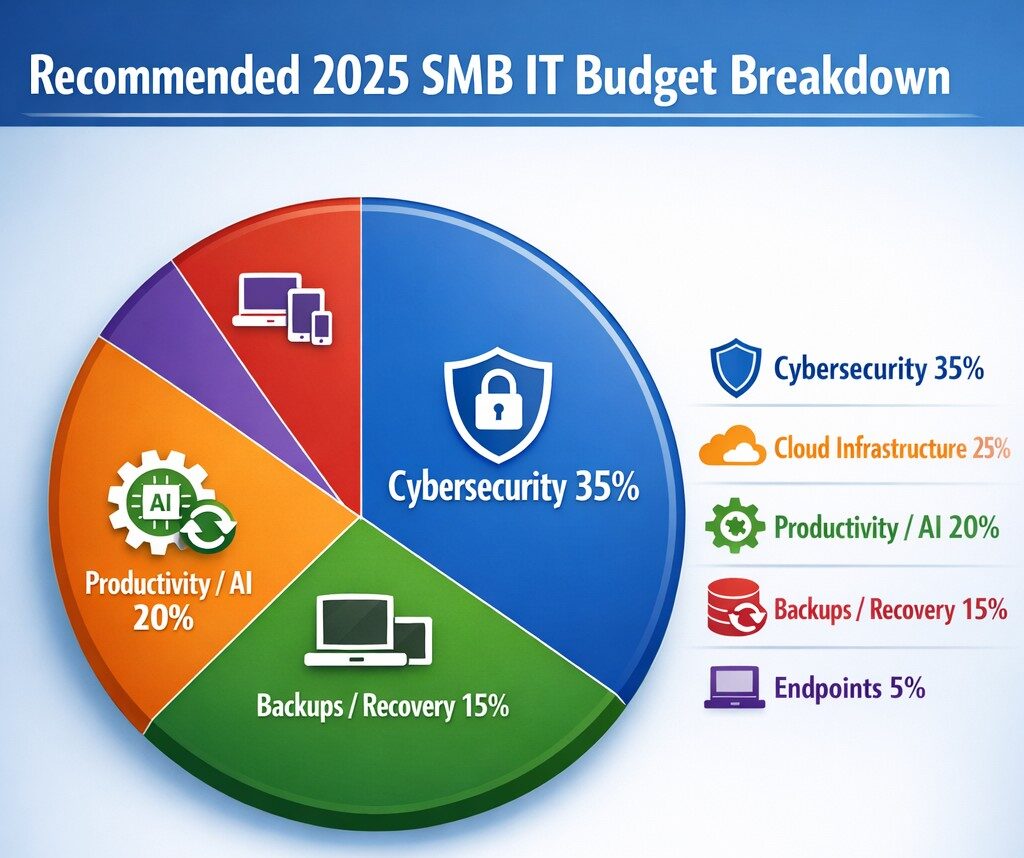
Allocate 30%+ of 2025 IT budget to cybersecurity per industry benchmarks.
Small and medium-sized businesses (SMBs) must strategically plan their IT budgets to stay competitive and efficient. It’s crucial to allocate resources wisely to support both day-to-day operations and long-term growth. Let’s explore the key areas SMBs should focus on when budgeting for tech in 2025.
Cybersecurity Investments
With no end to cyber threats in site, cybersecurity should be a top priority in your 2025 IT budget. Consider allocating funds for:
– Advanced firewalls and intrusion detection systems – Multi-factor authentication (MFA) implementation – Regular security audits and penetration testing
Remember, the cost of preventing a cyber attack is far less than the potential losses from a successful breach.
Artificial Intelligence and Automation
AI is no longer a luxury reserved for large enterprises. In 2025, SMBs should budget for AI-powered tools to enhance efficiency and decision-making. Consider investments in:
– Chatbots for customer support – AI-driven analytics for business insights – Automated workflow tools to streamline operations
These technologies can help SMBs do more with less, improving productivity and customer satisfaction.
Hardware and Device Upgrades
SMBs still need to budget for essential hardware. This includes:
– Laptops and desktops for employees – Mobile devices for remote work – Networking equipment for reliable connectivity
Plan for a hardware refresh cycle to ensure your team has up-to-date tools to work efficiently. (Remember we meet with our clients twice a year in the Spring and Fall to discuss budget and replacement scheduling.)
Software Licenses and Subscriptions
Software is the backbone of modern business operations. Your 2025 IT budget should account for:
– Operating system licenses (Windows 10 is no longer supported as of October 2025) – Productivity suite subscriptions (e.g., Microsoft 365, Google Workspace) – Industry-specific software licenses – Collaboration and communication tools
Regularly review your software subscriptions to ensure you’re only paying for what you need and use.
IT Support and Managed Services
Consider outsourcing some or all of your IT support to a managed service provider (MSP) like Farmhouse Networking to reduce in-house IT costs and gain access to specialized expertise. Budget for:
– Help desk support – Compliance assistance – Network monitoring and management – Backup and disaster recovery services
Employee Cybersecurity Training
Hackers keep getting better at their crimes, so should it is mandatory to invest in your team’s cybersecurity skills. Allocate budget for:
– Yearly assessments of baseline knowledge – Weekly trainings with quizzes to make sure they are paying attention – Interactive or gamified content to keep people interested
Investing in your team’s skills can lead to better technology adoption and improved productivity.
Ready to optimize your IT budget for 2025? Don’t navigate this complex landscape alone. Contact Farmhouse Networking today to help you create a tailored IT budget that aligns with your business goals and maximizes your technology investments. Our experts can guide you through the process, ensuring you’re prepared for the technological challenges and opportunities that lie ahead. Let’s work together to future-proof your business and drive success.
Resolve to strengthen cyber defenses in 2025 with zero trust and employee training.
Stepping into 2025, SMBs face an scary and complex cybersecurity field of battle. With hackers evolving cyber threats at a rapid pace, it’s crucial to make strengthening your digital defenses a top priority. Let’s explore some essential tips to boost your cybersecurity posture in the coming year.
Embrace a Zero Trust Mindset
Start the new year by adopting a Zero Trust approach to cybersecurity. This means verifying every user, device, and application attempting to access your network, regardless of their location. Implement Zero Trust Network Access protocols and use Application Allow/Deny lists to control which software can run on your systems.
Strengthen Your Network Defenses
Secure Your Wi-Fi: Ensure your Wi-Fi network is encrypted and properly configured. Use strong passwords and consider implementing network segmentation to isolate guest networks from your internal systems.
Implement Firewalls and Intrusion Prevention Systems: Deploy robust firewalls to filter incoming and outgoing traffic. Couple this with intrusion prevention systems that actively seek out and block known threats.
Protect Your Data
Encrypt Sensitive Information: Apply encryption to both data at rest and in transit. This includes emails, file transfers, and stored documents.
Implement Data Loss Prevention (DLP) Tools: Use DLP tools to track critical data and prevent unauthorized exfiltration attempts.
Enhance Authentication Measures
Multi-Factor Authentication (MFA): Implement MFA across all your systems, applications, and websites. This additional layer of security significantly reduces the risk of unauthorized access.
Use Password Managers: Encourage the use of password managers to generate and store complex, unique passwords for each account.
Educate Your Employees
Regular Security Awareness Training: Conduct ongoing cybersecurity training for all employees. Focus on recognizing phishing attempts, proper handling of sensitive data, and best practices for remote work.
Prepare for the Worst
Develop an Incident Response Plan: Create a comprehensive plan that outlines procedures for responding to various cybersecurity incidents. Regularly test and update this plan.
Implement Robust Backup Solutions: Establish a regular backup schedule for all critical data and systems. Store backups securely, preferably in multiple locations, including off-site.
Stay Updated and Vigilant
Keep Software and Systems Current: Regularly update all software, applications, and operating systems. Automate updates where possible and conduct periodic audits to ensure nothing is missed.
Implement Real-Time Monitoring: Deploy solutions that provide continuous, real-time monitoring of your network and systems. This allows for immediate detection and response to potential threats.
Secure Your Remote Workforce
With hybrid work models likely to persist, ensure your remote workers are equipped with secure tools:
– Provide Zero Trust VPN access for secure connections – Implement endpoint security measures even on employee’s own laptops – Educate on the risks of using public Wi-Fi
Address IoT Security
As the Internet of Things (IoT) expands, so do the associated risks. Inventory your IoT devices, regularly update their firmware, and implement network segmentation to isolate these devices.
Ready to make cybersecurity your New Year’s resolution? Contact Farmhouse Networking today. Our team of experts is ready to guide you through every step of enhancing your cybersecurity posture, ensuring that your business stays protected throughout 2025 and beyond. Let’s work together to create a robust, tailored cybersecurity strategy that meets your unique needs and keeps your business safe in the digital age.
For those that missed us this week, our CEO Scott Carr was one of the guest speaking panel and the event pictured above. During our discussion, the question was asked – “What is the one thing business owners can do to protect themselves from ransomware?” Scott’s answer was – “If you do nothing else, at the very least have a backup of your data. If anything goes wrong you will be able to go back to your previous data and skip paying the ransom.”
Why Backup?
Ransomware attacks have become an increasingly prevalent threat to businesses of all sizes. As cybercriminals continue to evolve their tactics, it’s crucial for organizations to implement robust defense strategies. One of the most effective ways to protect your business from the devastating effects of ransomware is through a comprehensive backup strategy.
The Rising Threat of Ransomware
Ransomware attacks have surged dramatically in recent years, with 2024 seeing unprecedented levels of both frequency and sophistication. In the first half of 2024 alone, the average extortion demand per ransomware attack exceeded $5.2 million, with a record-breaking payment of $75 million in March. These staggering figures underscore the critical need for businesses to fortify their defenses against such attacks.
The Role of Backups in Ransomware Protection
Data backups serve as a crucial line of defense against ransomware threats. They provide a safety net that can help your company prevent irreparable damage in the event of an attack. Here’s why backups are so important:
Added Data Security: By maintaining backups of your critical data, you remove one of the primary vectors for ransomware attacks. If you can still access your data from a backup, hackers lose their leverage in demanding a ransom
Recovery Options: Reliable and well-tested backups give ransomware victims more options. Without backups, organizations have limited choices for recovery. However, with confidence in their ability to restore from backups, businesses can make more nuanced decisions during ransomware recovery and negotiations.
Best Practices for Ransomware-Resilient Backups
To ensure your backups provide effective protection against ransomware, consider implementing these best practices:
Implement the 3-2-1 Backup Strategy: This strategy involves maintaining at least three copies of your data on two different storage types, with one copy kept offsite. This approach significantly reduces the risk of losing all your data in a single attack
Use Immutable Storage: Immutable backups cannot be modified, altered, or deleted for a specified period. This ensures that your backup data remains intact and tamper-proof, protecting against both accidental and malicious changes
Maintain Offline Backups: Keep a secondary offline backup copy that ransomware cannot reach. Network attached storage devices can be an effective method for this purpose.
Increase Backup Frequency: Consider backing up mission-critical data at least once per hour. This reduces the amount of data that could potentially be lost in a ransomware attack.
Employ Endpoint Protection: Use modern endpoint protection platforms that can detect ransomware processes as they begin, even if the type of ransomware is new and unknown.
The Business Impact of Ransomware
The consequences of a ransomware attack extend far beyond the immediate financial loss. Businesses may experience:
Extensive downtime, leading to significant revenue loss
Damaged reputation among customers and partners
Delayed project timelines
Potential loss of sensitive customer data
These impacts underscore the importance of a robust backup strategy as part of your overall cybersecurity plan.
Don’t wait until it’s too late to protect your business from the devastating effects of ransomware. Contact Farmhouse Networking today to develop a comprehensive backup and cybersecurity strategy tailored to your organization’s needs. Our expert team can help you implement robust protection measures, ensuring your business remains resilient in the face of evolving cyber threats. Secure your data, protect your reputation, and safeguard your bottom line—reach out to Farmhouse Networking now.
TaaS delivers scalable cloud infrastructure for future-ready accounting firms.
The accounting industry is on the cusp of a technological revolution, with emerging trends set to reshape how firms operate and deliver value to their clients. As we look ahead to 2025 and beyond, it’s crucial for accounting practices to stay ahead of the curve and embrace these innovations. Let’s explore the key technologies that are poised to transform the accounting landscape and discuss how firms can prepare for this exciting future.
Artificial Intelligence and Machine Learning
Artificial Intelligence (AI) and Machine Learning (ML) are at the forefront of the accounting technology revolution. The AI in accounting market is expected to reach $4.791 billion by 2024, growing at an impressive compounded annual growth (CAGR) of 48.4%. This rapid growth is driven by AI’s ability to automate repetitive tasks, streamline workflows, and provide valuable insights.
Key applications of AI in accounting include:
Automated data entry and reconciliation
Intelligent fraud detection
Advanced financial forecasting
Natural language processing for document analysis
To prepare for this AI-driven future, firms should invest in AI-powered accounting software and prioritize training programs to help staff leverage these new tools effectively.
Cloud-Based Accounting Solutions
Cloud technology has already transformed the accounting industry, and its importance will only grow in the coming years. The global Cloud Accounting Software market is projected to reach $7567.54 million by 2028, expanding at a CAGR of 10.56%.
Benefits of cloud-based accounting include:
Real-time collaboration and data access
Enhanced data security and backup
Scalability and cost-efficiency
Seamless integration with other business systems
Accounting firms should consider migrating their operations to cloud-based platforms to improve efficiency and provide better service to clients.
Blockchain Technology
While often associated with cryptocurrencies, blockchain technology has far-reaching implications for the accounting industry. The accounting blockchain market is expected to reach $868 million by 2025.
Potential applications of blockchain in accounting:
Enhanced transaction transparency and security
Streamlined auditing processes
Improved record-keeping and data integrity
Simplified reconciliations
Firms should start exploring blockchain technology and its potential applications to stay ahead of this emerging trend.
Data Analytics and Forecasting Tools
As businesses generate more data than ever before, the ability to analyze and derive insights from this information is becoming crucial. Advanced data analytics tools are enabling accountants to provide more strategic advice to their clients.
Key areas where data analytics can add value:
Predictive financial modeling
Risk assessment and management
Performance benchmarking
Identifying cost-saving opportunities
Accounting practices should invest in robust data analytics tools and develop their team’s skills in data interpretation and visualization.
Cybersecurity and Data Protection
With the increasing digitization of financial data, cybersecurity has become a top priority for accounting firms. Protecting sensitive client information is not just a legal requirement but also a crucial aspect of maintaining trust and credibility.
Essential cybersecurity measures:
Implementing multi-factor authentication
Regular security audits and penetration testing
Employee training on cybersecurity best practices
Adoption of managed detection and response technologies
Firms must prioritize cybersecurity investments and stay updated on the latest threats and protection measures.
Robotic Process Automation (RPA)
RPA is set to revolutionize routine accounting tasks by automating repetitive processes. This technology can significantly improve efficiency and reduce errors in areas such as accounts payable, receivable, and financial close processes.
Benefits of RPA in accounting:
Increased accuracy in data entry and processing
Faster completion of routine tasks
Reduced operational costs
Improved compliance and audit trails
Accounting practices should identify processes that can be automated using RPA and implement these solutions to boost productivity.
The Evolving Role of Accountants
As technology automates many traditional accounting tasks, the role of accountants is evolving. Future-focused firms will need to shift their focus from number-crunching to providing high-value advisory services.
Skills for the future accountant:
Strategic financial planning
Data analysis and interpretation
Technology proficiency
Soft skills such as communication and problem-solving
Firms should invest in continuous learning and development programs to help their staff adapt to these changing roles.
Preparing for the Future
To future-proof your accounting practice, consider the following steps:
Conduct a technology audit to identify areas for improvement
Develop a digital transformation strategy aligned with your firm’s goals
Invest in staff training and development to build necessary skills
Stay informed about emerging technologies and industry trends
Collaborate with technology partners to implement new solutions
The accounting industry is on the brink of a technological revolution, and firms that embrace these emerging technologies will be well-positioned for success in the years to come.
Ready to navigate the complex world of accounting technology and future-proof your practice? Contact Farmhouse Networking today. Our expert team can help you assess your current technology stack, identify areas for improvement, and implement cutting-edge solutions tailored to your firm’s unique needs. Don’t let your practice fall behind – take the first step towards a technologically advanced future by reaching out to Farmhouse Networking now.
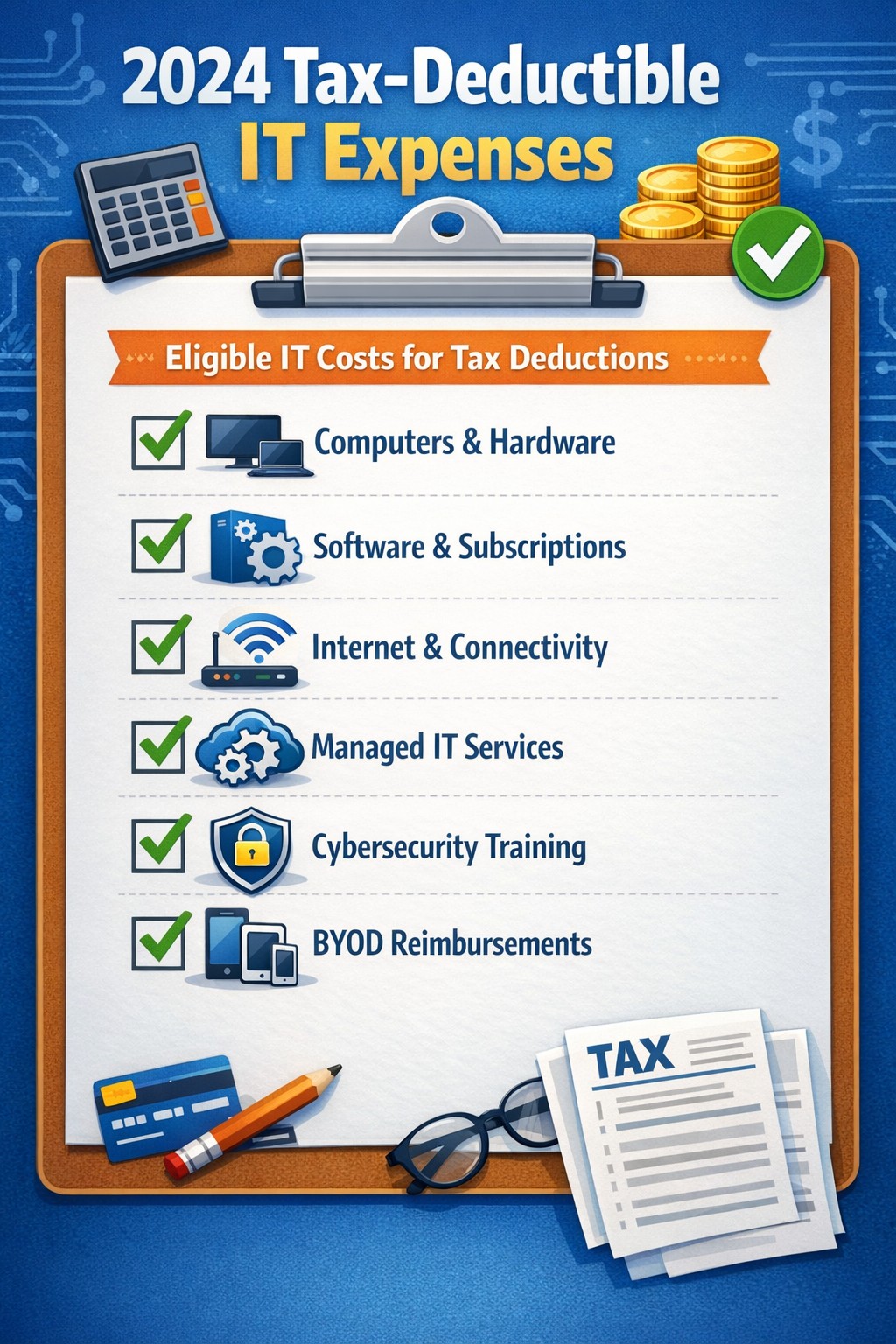
Claim Section 179, cloud subscriptions, cybersecurity as business tax deductions.
As we approach the end of the year, it’s crucial for businesses to understand the tax deductions available for their IT expenses. Maximizing these deductions can significantly reduce your tax burden and free up capital for further investment in your company’s technology infrastructure. Let’s explore the top tax-deductible IT expenses for 2024 that every business should be aware of.
Hardware and Equipment
Computers and Devices
Investing in new computers, tablets, or smartphones for your business can provide substantial tax benefits. The entire cost of these devices can be deducted from your taxable income. However, if the equipment is used partially for personal purposes, you may only be able to deduct a portion of the cost.
Office Equipment
Printers, scanners, and other office equipment are 100% tax-deductible in the year of purchase. This includes any IT-related furniture, such as ergonomic chairs or standing desks for your tech team.
Software and Services
Business Software
Software used for business purposes is eligible for tax deductions. This includes:
The deductible amount will depend on whether the software is purchased outright or subscribed to on a monthly basis.
Cloud Services
As more businesses move their operations to the cloud, it’s important to note that cloud service subscriptions are tax-deductible. This includes services like:
– Data storage – Backup solutions – Cloud-based productivity suites
Telecommunications
Internet Expenses
Internet services are crucial for most businesses today. You can deduct the full cost of your business internet connection[. If you work from home, you may be able to deduct a portion of your home internet expenses based on the percentage used for business purposes.
Phone Systems
All telecommunications fees within a commercial space can be deducted[1]. This includes:
– Business phone lines – VoIP systems – Cell phone contracts used for business
IT Services and Support
Managed IT Services
Fees paid for managed IT services, including network management, cybersecurity monitoring, and help desk support, are fully deductible as a business expense.
IT Consulting and Training
Any costs associated with IT consulting or training for your staff to use new technologies are tax-deductible. This can include workshops, online courses, or one-on-one training sessions.
Cybersecurity Measures
With the increasing importance of data protection, investments in cybersecurity are not only wise but also tax-deductible. This includes:
– Firewalls and antivirus software – Security audits – Employee cybersecurity training programs
Website Expenses
Development and Maintenance
Costs related to developing, hosting, and maintaining your business website are tax-deductible. This includes domain registration fees, hosting costs, and payments to web developers or designers.
E-commerce Solutions
If your business sells products online, the expenses for e-commerce platforms and payment processing systems are also deductible.
Home Office Technology
For those running businesses from home or with remote workers, the home office deduction can apply to technology expenses. You can deduct a portion of your home internet, personal computer use, and other tech equipment based on the percentage of your home used exclusively for business.
Ready to optimize your IT infrastructure while maximizing your tax benefits? Contact Farmhouse Networking today. Our expert team can help you implement cutting-edge IT solutions that not only boost your productivity but also provide substantial tax advantages. Don’t leave money on the table – let us help you navigate the complex world of IT expenses and tax deductions. Reach out now to schedule a consultation and start saving!
B2B leaders embracing Industry 4.0: Connect for smart manufacturing and automation opportunities
Small manufacturers are discovering the transformative power of Industry 4.0 technologies. By leveraging smart technologies like the Internet of Things (IoT), Artificial Intelligence (AI), and machine learning, these businesses are not only staying competitive but also revolutionizing their manufacturing processes. Let’s explore how these cutting-edge tools can benefit small manufacturers and propel them into the future of production.
The Power of Real-Time Data
One of the most significant advantages of smart manufacturing technologies is the ability to harness real-time data. By integrating IoT sensors into production lines, small manufacturers can gain unprecedented visibility into their operations. This continuous stream of information allows for:
Improved Cost Control: Real-time monitoring helps identify inefficiencies, reduce waste, and optimize resource allocation, leading to significant cost savings.
Enhanced Supply Chain Management: With up-to-the-minute data on inventory levels and production rates, manufacturers can make informed decisions to keep their supply chains running smoothly.
Proactive Maintenance: IoT sensors can detect early signs of equipment wear, allowing for predictive maintenance that prevents costly downtime and extends machinery lifespan.
AI-Powered Decision Making
Artificial Intelligence is revolutionizing how small manufacturers approach decision-making and problem-solving. By leveraging AI technologies, businesses can:
Optimize Production Schedules: AI algorithms can analyze complex data sets to create efficient production schedules that maximize resource utilization and meet customer demands.
Enhance Quality Control: Machine learning models can identify subtle patterns in production data, helping to detect and prevent quality issues before they escalate.
Personalize Customer Experiences: AI-powered recommendation engines can offer tailored product suggestions, improving customer satisfaction and driving sales.
Machine Learning for Process Optimization
Machine learning is proving to be a game-changer for small manufacturers looking to streamline their operations. This technology offers several key benefits:
Predictive Analytics: By analyzing historical data, machine learning algorithms can forecast future trends, helping manufacturers make proactive decisions about production, inventory, and maintenance.
Automated Quality Assurance: Machine learning models can be trained to detect defects or anomalies in products with high accuracy, reducing the need for manual inspections.
Process Optimization: Through continuous analysis of production data, machine learning can identify opportunities for process improvements, leading to increased efficiency and reduced costs.
Overcoming Implementation Challenges
While the benefits of Industry 4.0 technologies are clear, small manufacturers may face challenges in adoption. These can include:
Data Security Concerns: As more devices become connected, ensuring the security of sensitive manufacturing data becomes crucial.
Investment Costs: Implementing new technologies often requires upfront investment, which can be daunting for smaller businesses.
Skills Gap: Adopting advanced technologies may require upskilling existing staff or hiring new talent with specialized expertise.
The Path Forward
Despite these challenges, the potential rewards of embracing Industry 4.0 technologies far outweigh the risks. Small manufacturers who invest in smart technologies position themselves for:
– Increased competitiveness in the global market – Improved operational efficiency and cost savings – Enhanced product quality and customer satisfaction – Greater agility in responding to market changes
As we move further into the digital age, the adoption of smart manufacturing technologies is no longer a luxury—it’s a necessity for small manufacturers who want to thrive in an increasingly competitive landscape.
Ready to take your manufacturing operations to the next level? Don’t let the complexities of Industry 4.0 technologies hold you back. Contact Farmhouse Networking today to learn how we can help you implement smart manufacturing solutions tailored to your unique needs. Let’s work together to unlock the full potential of your manufacturing business and pave the way for a smarter, more efficient future.
Cybersecurity Skills Through Innovative Funding Program
Innovative funding accelerates cybersecurity training for stronger team defenses.
Farmhouse Networking, a leading provider of managed IT services, today announced a groundbreaking initiative to enhance its cybersecurity capabilities by leveraging the Rogue Business Elevate program to fund comprehensive cybersecurity training for all employees through TryHackMe. Farmhouse Networking is taking proactive steps to fortify its clients’ defenses and cultivate a culture of cybersecurity awareness across all the organization it supports. By partnering with Rogue Business Elevate and TryHackMe, the company is demonstrating its commitment to staying ahead of potential security risks while investing in the professional development of its workforce.
Empowering Employees with Cutting-Edge Skills The TryHackMe platform offers an innovative, gamified approach to cybersecurity education, making the learning process both engaging and effective .Employees will have access to:
Interactive lessons that bridge theory and practice
Simulated network environments for hands-on experience
Real-world challenges based on actual cybersecurity scenarios
This comprehensive training program will equip Farmhouse Networking’s staff with the skills to identify, prevent, and respond to a wide range of cyber threats.
Investing in the Future of Cybersecurity “At Farmhouse Networking, we recognize that our employees are our first line of defense against cyber attacks for many businesses throughout Oregon,” said Scott G. Carr II, CEO of Farmhouse Networking. “By investing in their skills through this innovative funding program and partnering with TryHackMe, we’re not just enhancing our clients’ security posture; we’re also providing our team with valuable, career-advancing knowledge.” The initiative aligns with Farmhouse Networking’s long-term strategy to build a resilient and knowledgeable workforce capable of addressing the complex cybersecurity challenges faced by businesses today.
Community and Collaboration Beyond individual skill development, this program will foster a sense of community among Farmhouse Networking’s employees. TryHackMe’s platform encourages collaboration, allowing team members to connect with like-minded professionals, share knowledge, and learn from each other’s experiences. Farmhouse Networking’s innovative approach to employee development and cybersecurity preparedness sets a new standard in the industry. By leveraging the Rogue Business Elevate program to fund this initiative, the company is maximizing its investment in both its people and its technological defenses.
Cybersecurity isn’t just an option—it’s a necessity. At Farmhouse Networking, we’re not only enhancing our own security measures but we’re also ready to help you fortify your defenses. Don’t wait for a breach to happen. Take proactive steps to protect your business today. Contact Farmhouse Networking today for a free consultation. Let’s work together to create a robust security strategy that safeguards your business, your data, and your peace of mind.
And God will generously provide all you need. Then you will always have everything you need and plenty left over to share with others. As the Scriptures say,
“They share freely and give generously to the poor. Their good deeds will be remembered forever.”
For God is the one who provides seed for the farmer and then bread to eat. In the same way, he will provide and increase your resources and then produce a great harvest of generosity in you. - 2 Corinthians 9:8-10
We use cookies to ensure that we give you the best experience on our website. If you continue to use this site we will assume that you are happy with it.