Co-managed IT strategies boosting nonprofit mission success and operations
Nonprofit organizations face unique challenges that can hinder their ability to fulfill their core missions. Limited budgets, evolving technology, and the need for robust data security are just a few of the hurdles that nonprofits encounter. One effective solution to these challenges is outsourcing IT management through a managed IT services provider (MSPs). By doing so, nonprofits can focus more on their mission and increase their overall impact in the community.
Cost-Effective Solutions
Managed IT services provide nonprofits with a cost-effective alternative to maintaining an in-house IT department. With predictable monthly pricing models, nonprofits can access a team of skilled IT professionals without the high overhead costs associated with hiring full-time staff. This allows organizations to allocate more resources toward their mission-driven activities rather than sinking funds into IT management.
Access to Expertise and Support
Outsourcing IT management gives nonprofits access to a wealth of expertise that may not be available internally. Managed service providers (MSPs) employ specialists who are well-versed in the latest technologies and best practices. This expertise ensures that nonprofits can leverage cutting-edge tools and solutions while minimizing downtime and technical issues. With ongoing support and guidance from these experts, nonprofit staff can concentrate on strategic initiatives rather than getting bogged down by technical challenges.
Enhanced Data Security
Nonprofits often handle sensitive information, including donor data and client records. Cybersecurity threats are ever-evolving, making it crucial for organizations to implement robust security measures. Managed IT services offer advanced security protocols, including threat detection, data encryption, and compliance with industry regulations. By outsourcing this responsibility, nonprofits can ensure that their data is protected against breaches and maintain trust with donors and stakeholders.
Increased Operational Efficiency
By outsourcing IT management, nonprofits can streamline their operations and improve overall efficiency. MSPs handle routine maintenance, system updates, and troubleshooting, allowing nonprofit staff to focus on high-impact activities such as fundraising and community outreach. This shift not only enhances productivity but also helps organizations achieve their goals more effectively.
Scalability and Flexibility
Nonprofits often experience fluctuations in their operational needs based on project demands or fundraising cycles. Managed IT services offer scalable solutions that can be adjusted according to the organization’s current requirements. This flexibility ensures that nonprofits are not overpaying for unnecessary services during quieter periods while still having access to the necessary support during busy times.
Focus on Core Mission
Perhaps the most significant advantage of outsourcing IT management is the ability for nonprofit organizations to refocus on their core mission. With technical complexities handled by experts, staff can dedicate more time and energy to program development, community engagement, and other mission-driven activities. This focus ultimately leads to greater impact within the communities they serve.
If your nonprofit is ready to explore how managed IT services can transform your operations and increase your impact in the community, contact Farmhouse Networking today. Let us help you streamline your IT management so you can focus on what truly matters—making a difference in people’s lives.
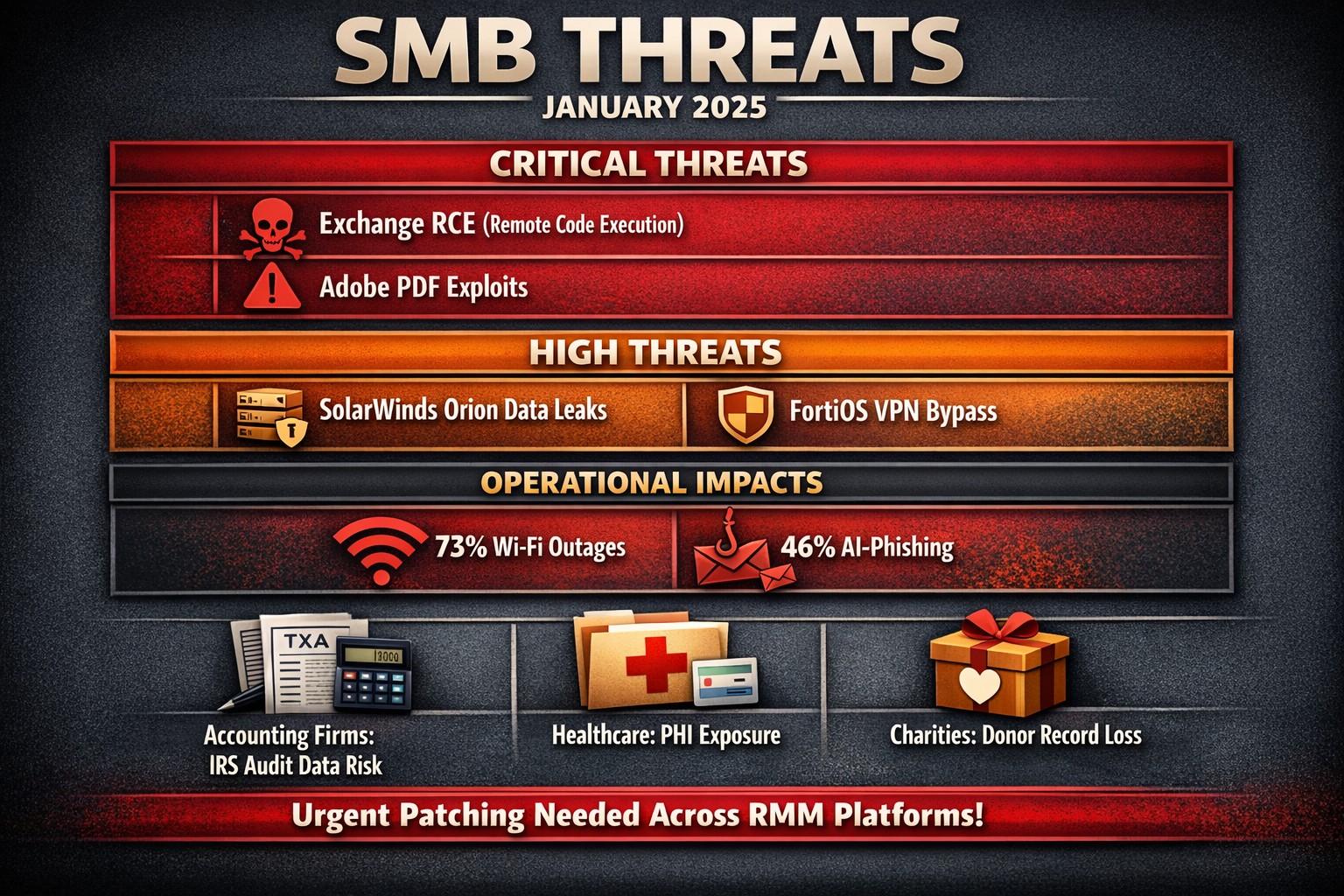
The past month has seen several significant vulnerabilities disclosed that pose serious risks to SMBs. Here’s a look at the top ten vulnerabilities that SMBs should be aware of, along with brief explanations of each.
Microsoft Exchange Server Vulnerabilities (CVE-2024-12345)
A critical vulnerability in Microsoft Exchange Server allows attackers to execute arbitrary code remotely. This flaw can lead to unauthorized access to sensitive emails and data. SMBs using outdated versions of Exchange are particularly at risk, as attackers can exploit this vulnerability without user interaction.
WordPress Plugin Vulnerability (CVE-2024-23456)
A popular WordPress plugin was found to have a cross-site scripting (XSS) vulnerability that could allow attackers to inject malicious scripts into web pages viewed by users. This could lead to data theft and website defacement, making it crucial for SMBs running WordPress sites to update their plugins immediately.
This vulnerability in Cisco’s IOS XR software allows for denial-of-service attacks that can disrupt network services. Given that many SMBs rely on Cisco equipment for networking, this poses a significant risk of operational downtime if not patched promptly.
Apache Log4j Vulnerability (CVE-2024-45678)
The infamous Log4j vulnerability continues to be a concern, with new exploits emerging. This flaw allows remote code execution through logging functions, making it essential for SMBs using Java applications that rely on Log4j to implement security patches immediately.
A critical vulnerability was discovered in Adobe Acrobat Reader that could allow attackers to execute arbitrary code via malicious PDF files. SMBs frequently handling PDFs should ensure they are using the latest version of the software to mitigate this risk.
Linux Kernel Vulnerability (CVE-2024-67890)
A flaw in the Linux kernel could allow local users to escalate privileges and gain unauthorized access to sensitive information. Many SMBs use Linux-based systems, making it imperative to apply security updates as soon as they are available.
VMware vSphere Vulnerability (CVE-2024-78901)
This vulnerability in VMware’s vSphere could allow an attacker with network access to execute commands on the host operating system. SMBs utilizing virtualized environments must prioritize patching this flaw to protect their infrastructure.
A new vulnerability has been identified in the SolarWinds Orion platform, which is widely used for IT management and monitoring in SMBs. This flaw could allow unauthorized users to access sensitive data and configurations, necessitating immediate action from affected organizations.
Fortinet FortiOS Vulnerability (CVE-2024-90123)
A critical vulnerability in FortiOS can lead to unauthorized access through improperly configured VPN settings. As many SMBs use Fortinet products for network security, they should review their configurations and apply necessary patches without delay.
Google Chrome Browser Vulnerability (CVE-2024-01234)
A high-severity vulnerability in Google Chrome could allow attackers to execute arbitrary code via crafted web content. Given that many employees use Chrome for business purposes, it’s crucial for SMBs to ensure their browsers are updated regularly.
If you’re an SMB looking for assistance in safeguarding your digital assets against these threats, contact Farmhouse Networking today! Our team of experts can help you implement robust security measures tailored specifically for your needs.
Visualizing cloud IT strategies that drive success in government subcontracting competitiveness
Smaller manufacturers often face significant challenges when bidding for contracts. However, by strategically leveraging information technology (IT) solutions, these businesses can enhance their competitiveness and stand out in the bidding process. This article explores various IT strategies that can help small manufacturers gain an edge when pursuing government subcontracts.
Understanding the Competitive Landscape
The government contracting market is vast and complex, characterized by stringent regulations and a diverse pool of competitors. For smaller manufacturers, distinguishing themselves from larger firms requires innovative approaches. The integration of advanced IT solutions can provide the necessary tools to improve efficiency, compliance, and overall competitiveness.
Key IT Solutions for Competitive Advantage
Proposal Management Software: Crafting compelling proposals is critical in government contracting. Utilizing proposal management software can streamline the creation process by providing templates and analytics to track success rates. This allows manufacturers to present well-structured, persuasive bids that highlight their unique capabilities and innovations.
Project Management Tools: Effective project management is essential for meeting government requirements and deadlines. Implementing robust project management software helps small manufacturers keep track of milestones, manage resources efficiently, and ensure compliance with government standards. These tools facilitate collaboration among team members and provide transparency in progress reporting.
Cloud Computing: Cloud-based solutions offer scalability and flexibility that are particularly beneficial for smaller firms. By adopting cloud computing, manufacturers can reduce upfront IT costs while enhancing collaboration through real-time data sharing and communication. This adaptability allows them to respond quickly to changing project requirements or new opportunities.
Customer Relationship Management (CRM) Systems: A strong CRM system enables small manufacturers to manage relationships with government agencies effectively. By tracking interactions and understanding client needs, companies can tailor their proposals and communications to better align with government expectations.
Compliance Management Software: Compliance with regulations such as FAR (Federal Acquisition Regulation) is crucial for government contractors. Investing in compliance management software helps ensure adherence to legal requirements while simplifying documentation processes. This reduces the risk of non-compliance penalties and enhances the company’s reputation.
Data Analytics Tools: Leveraging data analytics can provide insights into market trends, competitor strategies, and customer preferences. Small manufacturers can use these insights to refine their bidding strategies and identify areas for improvement in their offerings.
Emphasizing Innovation
Innovation is a key differentiator in government contracting. Smaller manufacturers should focus on integrating cutting-edge technologies such as artificial intelligence (AI) and automation into their operations:
AI-Driven Solutions: AI can enhance decision-making processes by analyzing large datasets to predict project outcomes or identify potential risks. This capability allows manufacturers to make informed decisions quickly, improving their responsiveness in competitive bids.
Process Automation: Automating routine tasks not only increases efficiency but also minimizes errors. By streamlining operations through automation, small manufacturers can allocate more resources toward strategic activities that enhance their competitive positioning.
Building Strategic Partnerships
Forming partnerships with technology providers or consulting firms can further bolster a small manufacturer’s capabilities. These collaborations can offer access to expertise in implementing IT solutions tailored for government contracting needs, ensuring that smaller firms remain competitive against larger players.
If you’re ready to take your government subcontracting efforts to the next level, don’t navigate this complex landscape alone. At Farmhouse Networking, we specialize in helping small manufacturers leverage IT solutions to enhance their competitiveness and streamline their operations.
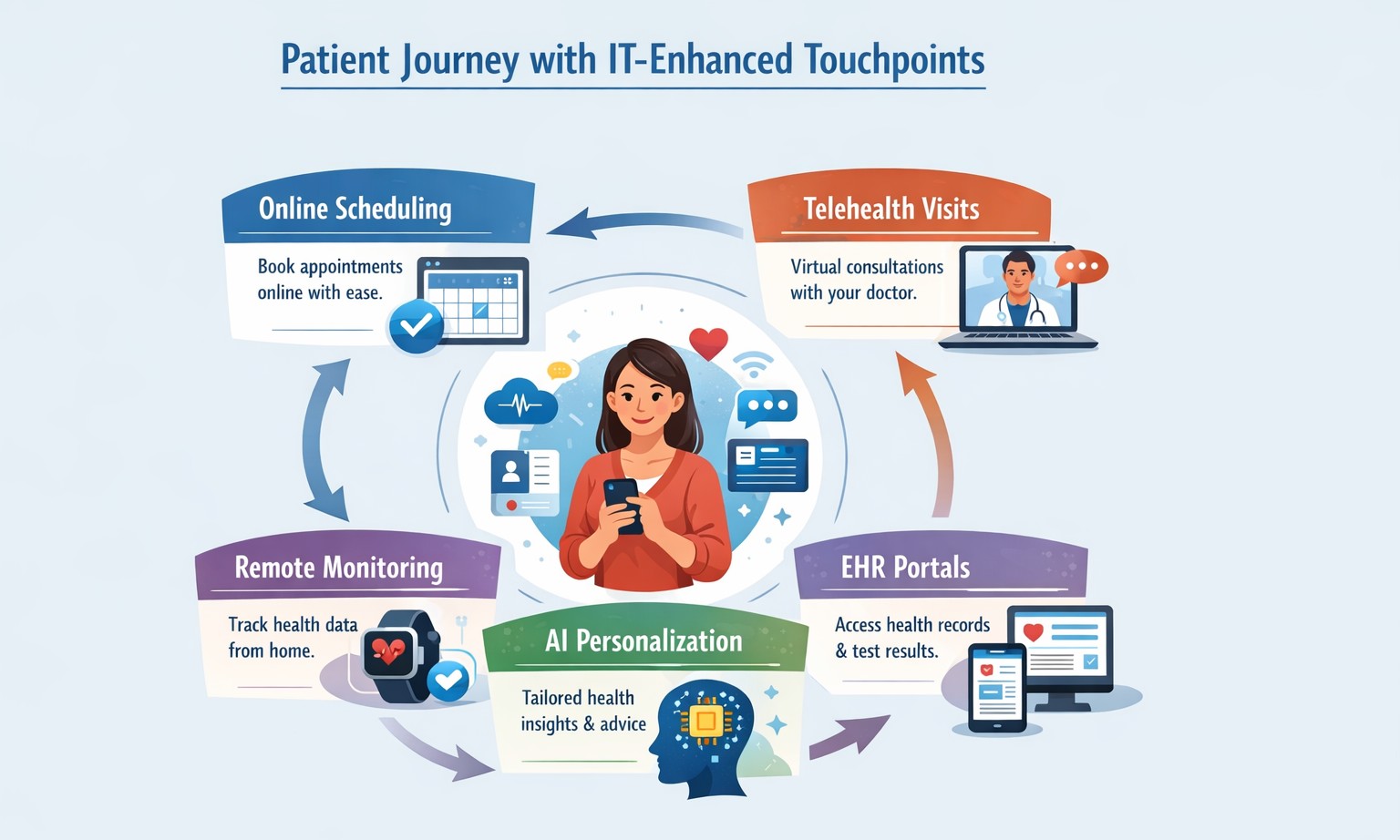
Healthcare IT transforms patient journeys with seamless digital access and personalization.
Healthcare providers are increasingly turning to technology to enhance patient care and streamline operations. IT solutions play a crucial role in this transformation, offering innovative tools that significantly improve patient experience. Let’s explore how these IT solutions are revolutionizing healthcare delivery.
Online Scheduling: Convenience at Your Fingertips
One of the most impactful IT solutions in healthcare is online scheduling. This feature allows patients to book appointments at their convenience, without the need for phone calls or long wait times.
Benefits of online scheduling: – Reduces scheduling errors and double bookings – Increases practice efficiency – Offers patients 24/7 access to appointment booking – Aligns with patient preferences (67% of Americans prefer online scheduling)
By implementing online scheduling, healthcare providers can streamline their operations while meeting the evolving expectations of their patients.
Patient Portals: Empowering Patients
Patient portals have become an essential tool in modern healthcare, serving as a secure digital gateway for patients to access their health information and communicate with providers.
Key features of patient portals: – Access to medical records and test results – Secure messaging with healthcare providers – Prescription refill requests – Bill payment options
These portals not only improve communication but also foster a sense of collaboration between patients and providers, leading to increased trust and engagement in healthcare activities.
Digital Check-In Systems: Streamlining the Patient Journey
Digital check-in systems are transforming the traditional patient intake process, offering numerous benefits for both patients and healthcare providers.
Advantages of digital check-in: – Reduced wait times – Improved data accuracy – Enhanced patient privacy – Increased operational efficiency
By allowing patients to complete pre-visit forms and verify insurance information online, digital check-in systems significantly reduce administrative burdens and improve the overall patient experience.
The Impact on Patient Experience
The integration of these IT solutions has a profound effect on patient satisfaction and healthcare delivery:
Improved Accessibility: Patients can manage their healthcare needs around the clock, enhancing convenience and reducing barriers to care.
Enhanced Communication: Digital tools facilitate better communication between patients and providers, leading to improved care coordination and patient outcomes.
Increased Efficiency: Automated processes reduce wait times and administrative tasks, allowing healthcare staff to focus more on patient care.
Data Accuracy: Digital systems ensure that patient information is up-to-date and easily accessible, reducing errors and improving care quality.
Patient Empowerment: Access to health information and self-service tools encourages patients to take a more active role in their healthcare.
Embracing the Future of Healthcare
As the healthcare landscape continues to evolve, the adoption of IT solutions becomes increasingly crucial for providers looking to enhance patient experience and operational efficiency. These technologies not only meet the expectations of tech-savvy patients but also contribute to better health outcomes and increased patient satisfaction.
Are you ready to transform your healthcare practice with cutting-edge IT solutions? Contact Farmhouse Networking today to learn how we can help you implement these patient-centric technologies and take your practice to the next level. Let us partner with you to create a seamless, efficient, and patient-friendly healthcare experience that sets your practice apart.
And God will generously provide all you need. Then you will always have everything you need and plenty left over to share with others. As the Scriptures say,
“They share freely and give generously to the poor. Their good deeds will be remembered forever.”
For God is the one who provides seed for the farmer and then bread to eat. In the same way, he will provide and increase your resources and then produce a great harvest of generosity in you. - 2 Corinthians 9:8-10
We use cookies to ensure that we give you the best experience on our website. If you continue to use this site we will assume that you are happy with it.