Case Study – From Two Practices to One: Supporting a Multi-State Acquisition Without Missing a Beat
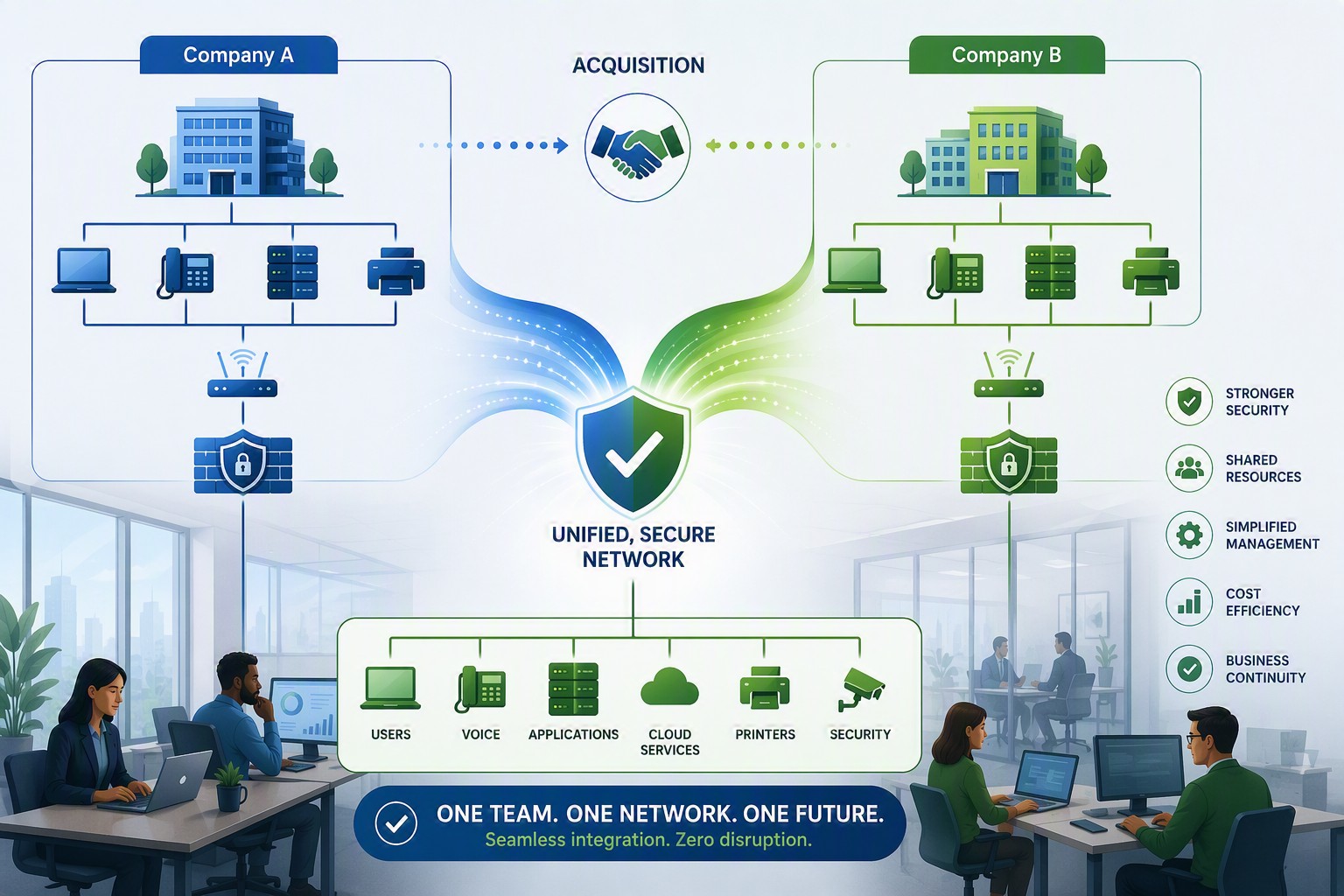
When an Oregon-based orthotics and prosthetics practice acquired a smaller Nevada clinic, the project involved far more than merging networks — it meant taking over IT management from a previous provider, switching phone systems, and rebuilding the practice’s web presence, all while keeping patient care running smoothly in both states.
The Situation
Business acquisitions bring plenty of moving parts: contracts, staffing, patient records, billing. For healthcare and O&P practices specifically, one of the most overlooked risks is technology. Two organizations rarely run the same systems, the same network setup, or the same security standards — and stitching them together carelessly can mean downtime, data exposure, or disruption to patient care.
Our client faced this challenge on multiple fronts at once. After acquiring a single-location O&P practice in Nevada, the newly combined organization needed to:
- Transition IT management away from their previous provider
- Unify two separate networks and systems into one
- Replace outdated phone infrastructure across both locations
- Refresh their website to reflect the newly expanded practice
The Challenge
The two practices had grown up independently, which meant:
- A previous IT provider transition. Taking over management mid-acquisition meant inheriting undocumented systems, unclear configurations, and the need to quickly build a full picture of what was actually in place.
- Different core systems. The acquired practice ran its own practice management and records software, separate from what the Oregon location used day to day.
- Mismatched network architecture. Different hardware, different vendors, and no shared directory or security framework meant the two locations couldn’t simply be connected — they had to be re-architected to work as one.
- Outdated phone systems. Legacy phone infrastructure needed to be replaced with a solution that could support both locations consistently.
- An outdated web presence. The practice’s website no longer reflected its expanded footprint or capabilities.
Left unaddressed, this kind of mismatch creates real risk: inconsistent security policies, gaps in patient data protection, and a fragmented experience for staff and patients across locations.
The Approach
Farmhouse Networking worked directly with the client to plan and execute a full transition and systems consolidation, with patient care continuity as the top priority throughout. Our approach covered:
- Taking over IT management. We assumed full management responsibility from the practice’s previous provider, auditing existing systems and closing gaps in documentation and oversight.
- Assessing both environments. Before touching anything, we mapped out both networks — hardware, software, user access, and data flow — to understand exactly what needed to move, merge, or be replaced.
- Building a unified network architecture. Rather than forcing one location’s setup onto the other, we designed a consistent structure both locations could operate on securely going forward.
- Migrating systems with zero disruption to scheduling or care. Data and account migrations were sequenced and tested so that staff in both states kept working, and patients never noticed a gap in service.
- Switching phone providers. We coordinated a full transition to a new phone system, giving both locations reliable, consistent communication.
- Partnering with a web developer. We worked alongside a web developer to launch a new website reflecting the practice’s expanded, multi-state presence.
- Standardizing security and access controls. With both locations now on one network, we made sure the combined organization had consistent protections in place — closing gaps that often appear during a rushed integration.
The Result
Within two months, the two practices were operating on a single, unified system managed entirely by Farmhouse Networking — with new phone infrastructure in place and a refreshed website representing the practice’s growth. There was no interruption to patient care in either location throughout the transition. Staff gained one consistent set of tools and a single point of contact for IT, instead of juggling two systems and an outgoing provider.
Why It Matters for Growing Practices
Acquisitions are a common growth path for healthcare and O&P practices, but the IT side of a merger is often planned last — if at all. A managed IT partner who understands healthcare environments can mean the difference between a smooth transition and months of friction, security gaps, or frustrated staff. That partner can also help tie together the practical details — like phone systems and web presence — that make a newly combined practice feel and function like one organization.
If your practice is considering an acquisition, expansion, or multi-location merger, the technology side deserves the same careful planning as the legal and financial side. Reach out to support@farmhousenetworking.com to talk through what a smooth systems transition could look like for your organization.
Get Your IT Project Started Today!
Give us a call. It’s that easy.